
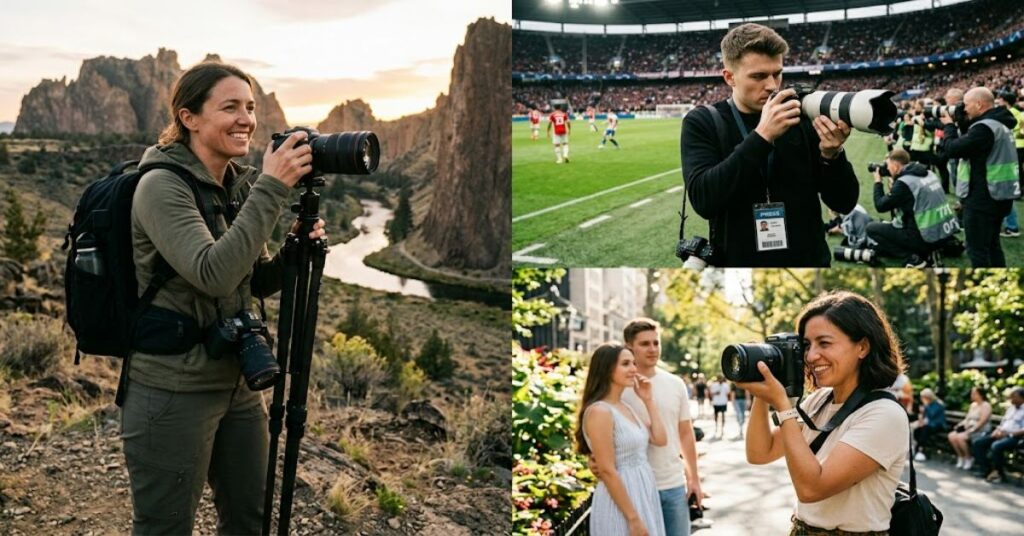
Photography jobs are available across many industries, making photography a flexible career choice for people with creative and technical skills. Opportunities exist in e-commerce, corporate branding, weddings and events, advertising, media production, fashion, real estate, food, and freelance marketplaces. Depending on experience and location, photographers may work as employees, contractors, studio assistants, or independent professionals.
In local markets, photography positions can offer monthly salaries of around Rs. 50,000 to Rs. 95,000 or more, depending on experience, employer, portfolio strength, and specialisation. Freelancers can potentially earn more by serving multiple clients or working with international businesses.
The most important difference between photography and many other careers is that employers often judge ability through visible work. A strong portfolio can sometimes carry more weight than formal qualifications. However, professional success requires more than knowing how to operate a camera. Photographers increasingly need skills in lighting, image editing, digital asset management, client communication, marketing, and social media content production.
What Types of Photography Jobs Are Available?
Photography has developed into a broad professional field. Different sectors require different technical approaches and creative styles.
| Photography Role | Typical Work | Useful Skills |
| E-commerce Photographer | Product and catalogue images | Lighting, composition, editing |
| Event Photographer | Weddings, conferences and celebrations | Fast shooting, people skills |
| Corporate Photographer | Headshots and business campaigns | Portraiture, professionalism |
| Fashion Photographer | Clothing and editorial campaigns | Styling, lighting, visual direction |
| Real Estate Photographer | Homes, offices and property listings | Wide-angle shooting, editing |
| Freelance Photographer | Client-based assignments | Marketing, pricing, networking |
E-commerce is particularly important because online retailers need consistent product images. A photographer may be responsible for photographing hundreds of products while maintaining the same lighting, framing, colour balance, and background.
Event photography is different. The photographer must react quickly and capture important moments without interrupting the event. This requires preparation, technical confidence, and strong interpersonal skills.
Skills Employers Look For
A professional camera is only one part of the job. Employers and clients generally want someone who can produce reliable results.
Technical skills include exposure control, composition, lighting, colour management, lens selection, and post-production. Knowledge of software such as Adobe Lightroom or Photoshop can also improve employability.
Soft skills matter just as much. A photographer may work directly with business owners, models, wedding clients, marketing teams, or art directors. Clear communication helps prevent misunderstandings about deadlines, deliverables, revisions, and usage rights.
A useful career insight is that specialisation can make a portfolio easier to sell. A photographer who presents themselves as an expert in product photography may appear more relevant to an online retailer than someone whose portfolio contains unrelated images from ten different genres.
Salaries and Earning Potential
Photography income varies considerably. Employment provides greater predictability, while freelance work can produce irregular but potentially higher earnings.
| Career Stage | Main Income Pattern | Growth Opportunity |
| Beginner | Assistant or small assignments | Build portfolio |
| Intermediate | Regular clients or employment | Develop specialisation |
| Experienced | Commercial and premium projects | Higher-value contracts |
| Specialist | Corporate, fashion or advertising work | International clients |
For local positions, the supplied brief indicates that salaries can range from approximately Rs. 50,000 to Rs. 95,000+ per month. Actual earnings depend on the employer, location, experience, responsibilities, and market demand. Freelancers should also account for equipment costs, software subscriptions, transport, studio expenses, taxes, and periods without bookings.
This creates an important distinction: a freelancer charging a high project fee does not necessarily earn that amount as personal income. Business expenses and unpaid administrative time can significantly reduce the effective hourly rate.
How to Build a Photography Career
A strong portfolio should come before expensive equipment upgrades. Beginners can start by creating focused projects that demonstrate a particular skill. For example, a product photographer can build a portfolio around cosmetics, clothing, food, or electronics.
Real client experience is also valuable. Small businesses often need photographs for websites, menus, social media, advertisements, and online shops. Completing several well-managed projects can provide evidence of professional reliability.
Another practical advantage comes from learning basic business operations. Photographers should understand quotations, contracts, deposits, cancellation policies, delivery deadlines, image licensing, and revision limits.
The market also rewards photographers who can produce content efficiently. Businesses increasingly need photographs alongside short-form video and social media material. A photographer who understands several content formats may therefore become more useful to a marketing team.
Freelance Photography vs Employment
The two routes offer different advantages.
Employment generally provides predictable working hours, a regular salary, and access to an established organisation. The trade-off is less control over projects and creative direction.
Freelancing provides flexibility and the ability to select clients. It can also open international opportunities through digital communication and remote client acquisition. However, freelancers must handle marketing, invoicing, equipment, scheduling, negotiations, and client support themselves.
For many beginners, employment or assisting an experienced photographer can provide valuable exposure before moving into full-time freelance work.
The Future of Photography Jobs in 2027
By 2027, photography work is likely to become even more integrated with digital marketing. E-commerce companies, social media teams, advertising agencies, and businesses will continue to need original visual content.
Artificial intelligence may automate some routine editing and image-production tasks, but this does not remove the need for professional photographers. Instead, it may shift value towards creative direction, authentic brand imagery, specialised shoots, and the ability to manage complete visual campaigns.
The strongest professionals are likely to combine photographic technique with marketing awareness, efficient workflows, and strong client relationships. Routine work may face greater price pressure, while specialised commercial assignments can remain more defensible.
Key Takeaways
- Photography offers career opportunities across numerous industries.
- Portfolio quality is often more important than owning expensive equipment.
- E-commerce and commercial photography can provide repeat business.
- Freelancing offers flexibility but requires business discipline.
- Editing and digital content skills can increase employability.
- Specialisation can help photographers stand out in crowded markets.
Conclusion
Photography remains a practical creative career because businesses and individuals continue to need professional visual content. The modern photographer can work in a studio, office, event venue, retail environment, property market, advertising agency, or independently from project to project.
The strongest career path depends on individual goals. Someone seeking stability may prefer an in-house position, while someone who values independence may build a freelance business. Both routes require technical ability, a convincing portfolio, reliability, and continuous learning.
The supplied career brief highlights local earning potential of Rs. 50,000 to Rs. 95,000+ per month, while international freelance work can create additional opportunities. Ultimately, photography is not only about taking attractive pictures. Sustainable success comes from producing consistent work, understanding clients, managing projects professionally, and developing a clear specialisation.
Frequently Asked Questions
What are the most common photography jobs?
Common roles include e-commerce photographer, event photographer, corporate photographer, product photographer, fashion photographer, real estate photographer, and freelance photographer.
Can beginners find photography jobs?
Yes. Beginners can start through assistant positions, internships, small commercial assignments, events, or freelance projects while developing a professional portfolio.
How much can photographers earn?
The supplied brief gives a local salary range of approximately Rs. 50,000 to Rs. 95,000+ per month. Actual earnings vary by experience, location, employer, specialisation, and client demand.
Is freelance photography a good career?
Freelancing can provide flexibility and access to a wider client base, but income can fluctuate. Photographers must also manage marketing, contracts, expenses, scheduling, and client relationships.
Do photographers need formal qualifications?
Not always. A strong portfolio and demonstrated technical ability can be highly important, although formal training can provide useful knowledge and professional foundations.
Which photography specialisation has strong business potential?
E-commerce, commercial, corporate, product, real estate, and event photography can offer recurring demand because businesses and organisations regularly require visual content.
Methodology
This article is based primarily on the supplied Postcard.fm editorial brief and its stated keyword detail for photography jobs. The source identifies opportunities across e-commerce, corporate branding, events, and freelance markets and provides an indicative local salary range of Rs. 50,000 to Rs. 95,000+ per month.
No firsthand photography testing, interviews, or independent salary survey was supplied with the source material. Therefore, claims requiring original field verification have not been presented as firsthand observations. Salary figures should be independently checked against current local vacancies before publication.