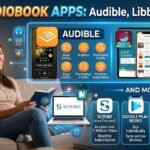
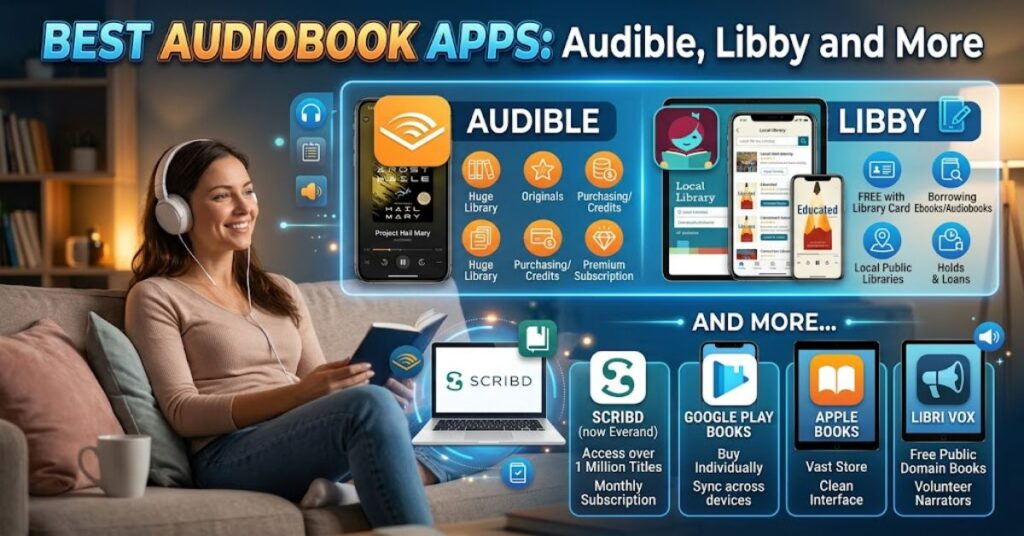
The best audiobook apps make it easy to enjoy stories, learn new skills and listen while travelling, exercising or completing household tasks. Audible is the best overall choice for catalogue size and new releases, while Libby is the leading free option for people with access to a participating public library.
However, the right service depends on more than the number of titles available. Some apps use monthly subscriptions, others let you borrow audiobooks for free, and some sell individual titles. These differences affect the real cost of listening over time.
Listeners also need to consider practical features. Adjustable playback speed, sleep timers, bookmarks, offline downloads and synchronisation between devices can make a substantial difference during everyday use. Regional restrictions matter, too: a service available in the United Kingdom may offer a different catalogue or pricing structure from its American counterpart.
This guide compares leading audiobook platforms by their strengths, limitations and intended audiences. It also explains how to estimate the cost of listening, when a free library service makes more sense than a subscription, and what to check before committing to a paid plan.
The aim is not to identify one app that suits every listener. It is to establish which service offers the best combination of choice, value and convenience for different needs.
Best audiobook apps compared
Each platform solves a different problem. Audible focuses on paid listening and premium releases, whereas library apps prioritise borrowing. Other services are better for people who prefer buying individual titles or keeping entertainment in one place.
| App | Best for | Payment model | Main limitation |
| Audible | New releases and exclusives | Subscription and credits | Ongoing cost |
| Libby | Free audiobooks | Eligible library card | Waiting lists and limited selection |
| Spotify | Music, podcasts and audiobooks | Premium plans with listening limits | Monthly audiobook allowance |
| Apple Books | Buying individual titles | Pay per audiobook | Costs can add up |
| Google Play Books | Flexible purchases across devices | Pay per audiobook | No standard unlimited audiobook subscription |
1. Audible: Best overall
Audible is a strong choice for listeners who want an extensive catalogue, bestselling releases and exclusive audio productions. Its UK service offers different membership options, including plans that provide a monthly audiobook selection and access to additional included content.
Audible’s Standard membership offers one selected audiobook each month, while Premium membership includes credits for eligible titles and access to a separate catalogue of included listening. The distinction matters because not every title is available for unlimited streaming. (Audible, 2026a).
The principal advantage is flexibility when choosing popular books. Credits can be particularly useful for expensive new releases, although their value depends on the price of the title selected.
Best for: Regular listeners who want new releases and a dependable premium catalogue.
Main drawback: A subscription may offer poor value if you finish only one short audiobook every few months.
2. Libby: Best free option
Libby, developed by OverDrive, connects readers with digital collections offered by participating public libraries. Users sign in with an eligible library card, borrow available audiobooks and download them for offline listening through the mobile app.
Borrowing is free, and loans return automatically on their due dates, avoiding conventional late fees. However, library collections vary according to the institution’s purchasing decisions and digital lending arrangements. Popular titles may require a hold rather than immediate access. (OverDrive, 2026).
This creates an important trade-off: Libby can eliminate subscription costs, but it cannot guarantee immediate access to a particular bestseller.
Best for: Budget-conscious listeners who are happy to plan their listening around library availability.
Main drawback: Access depends on your library, location and the availability of each title.
3. Spotify: Best for existing music subscribers
Spotify combines music, podcasts and audiobooks in one app. In the UK, eligible Premium plans include 15 hours of audiobook listening per month from a catalogue advertised at more than 700,000 titles. Additional listening options are available through paid add-ons. (Spotify, 2026).
The monthly allowance makes Spotify appealing for people who already pay for Premium and listen to a modest amount of spoken-word content. However, unused audiobook hours do not roll over, and longer books can exceed the allowance.
Best for: People who want music and audiobooks together without managing several apps.
Main drawback: Listening limits can make it less economical for heavy audiobook users.
4. Apple Books: Best for individual purchases
Apple Books lets users purchase audiobooks without committing to a recurring subscription. Its catalogue includes new releases, bestsellers and classics, with listening supported across compatible Apple devices. Family sharing is available for eligible purchases and content. (Apple, 2026).
This model suits occasional listeners who prefer paying only for titles they actually want. The disadvantage is that buying several expensive releases can cost more than a carefully chosen subscription.
Best for: Apple users who want straightforward purchases and no monthly commitment.
5. Google Play Books: Best for flexible purchasing
Google Play Books provides audiobooks alongside ebooks, with purchased content accessible across supported devices. Its Android integration and offline download capabilities make it useful for listeners who want to maintain a digital collection without a recurring audiobook subscription. (Google, 2026).
Its pay-per-title approach offers control over spending, but frequent buyers should compare individual prices before deciding whether it beats a subscription.
Best for: Android users and people who prefer purchasing titles individually.
Which app offers the best value?
The cheapest option depends on listening frequency, not just the advertised monthly fee.
| Listening habit | Best starting point | Why |
| One or two books a year | Libby or individual purchases | Avoids unnecessary subscriptions |
| One book most months | Audible Standard or Premium | Predictable monthly access |
| Frequent bestsellers | Audible Premium | Credits can cover eligible new releases |
| A few hours alongside music | Spotify Premium | Combines existing entertainment services |
| A permanent personal collection | Individual purchases | Avoids dependence on a subscription for access to purchased titles |
A useful calculation is to divide the total monthly cost by the number of audiobooks you realistically expect to finish. For example, a hypothetical £9 monthly subscription used for one book costs £9 per completed title. If you listen to three books, the effective cost falls to £3 per title, excluding any additional purchases.
This calculation has two limitations. First, subscription catalogues and purchased libraries do not provide identical rights. Second, the value of a book depends on its length, quality and availability elsewhere, not simply its price.
Important risks and practical considerations
The biggest mistake is treating all audiobook access as ownership. A title purchased through a store is different from a library loan or a title available only while a subscription remains active.
Three practical considerations deserve attention:
- Access after cancellation: Check the terms before subscribing. Audible distinguishes purchased titles from content included only through an active membership.
- Library availability: OverDrive explains that many digital titles use one-copy, one-user lending, so another reader may need to finish a loan before you can borrow the same audiobook.
- Regional restrictions: Catalogue availability, membership prices and payment methods differ between countries. Check local terms before comparing advertised prices.
These details affect long-term value more than a large headline catalogue. They also explain why keeping a library account alongside a paid app can be a sensible strategy.
The Future of Audiobook Apps in 2027
Audiobook platforms are likely to compete through personalised discovery, exclusive productions and integration with other entertainment services. Spotify’s existing combination of music, podcasts and audiobooks demonstrates how platforms can bundle different listening formats.
Library lending should remain an important alternative because it provides access without requiring individual subscriptions. However, digital lending depends on publisher licensing models and the budgets libraries can allocate to collections. OverDrive’s documented lending arrangements show that not every title can be borrowed by unlimited users simultaneously.
Further changes are possible, but the scale and timing of new features cannot be predicted confidently. For listeners, the practical priorities will remain affordability, catalogue access, accessible playback controls and the ability to listen offline.
Key Takeaways
- Audible is the strongest starting point for listeners who prioritise bestselling releases and a broad paid catalogue.
- Libby can reduce audiobook spending to zero when a suitable participating library offers the titles you want.
- Spotify works best when its audiobook allowance matches your listening habits.
- Apple Books and Google Play Books suit people who prefer individual purchases.
- Compare the total annual cost rather than relying on introductory offers.
- Check cancellation rules and access rights before building a large digital library.
- Keep a free borrowing option alongside a subscription to improve flexibility.
Frequently Asked Questions
What are the best audiobook apps overall?
Audible is a leading option for new releases and catalogue breadth. Libby is best for free library borrowing, while Spotify, Apple Books and Google Play Books suit different listening and purchasing habits.
Which audiobook app is completely free?
Libby is free to use with an eligible card from a participating library. There are no standard subscription fees or late fees, although access depends on the library’s digital collection.
Is Audible better than Libby?
Audible generally offers more predictable access to its paid catalogue and eligible new releases. Libby is better for avoiding subscription costs, but popular titles may have waiting lists.
Can I listen to audiobooks offline?
Yes. Audible, Libby, Apple Books and Google Play Books support downloads for relevant titles. Spotify also offers offline listening features subject to its plan and content conditions.
Do I keep Audible books after cancelling?
Audiobooks purchased with eligible credits remain yours to access after cancellation. Content available only through an active membership may no longer be accessible.
Is Spotify Premium worth it for audiobooks?
It can be worthwhile if you already use Spotify and remain within the monthly audiobook allowance. Heavy listeners should compare additional costs with dedicated audiobook subscriptions.
Can I use audiobook apps in the UK?
Yes, several major services operate in the UK, including Audible, Libby, Spotify, Apple Books and Google Play Books. Specific features, titles and prices vary by service and region.
References
Apple. (2026). Apple Books. Apple UK.
Audible. (2026a). Membership plans and pricing. Audible UK.
Google. (2026). How to buy and listen to audiobooks on Google Play. Google Play Help.
OverDrive. (2026). Getting started with Libby. Libby Help.
OverDrive. (n.d.). OverDrive lending models. OverDrive Developer Portal.
Spotify. (2026). Audiobooks in Spotify Premium. Spotify UK.
Methodology
This guide best audiobook apps was prepared by comparing official product descriptions, help documentation and published membership information from Audible, Apple, Google, OverDrive and Spotify. The comparison focuses on catalogue access, payment models, offline listening and the limitations that influence value.
No independent hands-on testing or controlled performance benchmarks were conducted. Prices, catalogue sizes and plan features can change, and availability differs by country. Readers should verify current local terms before purchasing a membership.
The article best audiobook apps was drafted with AI assistance and requires human editorial review before publication. The editor should independently verify all claims, references, prices and product features, and confirm the publication’s author credentials and disclosure requirements.