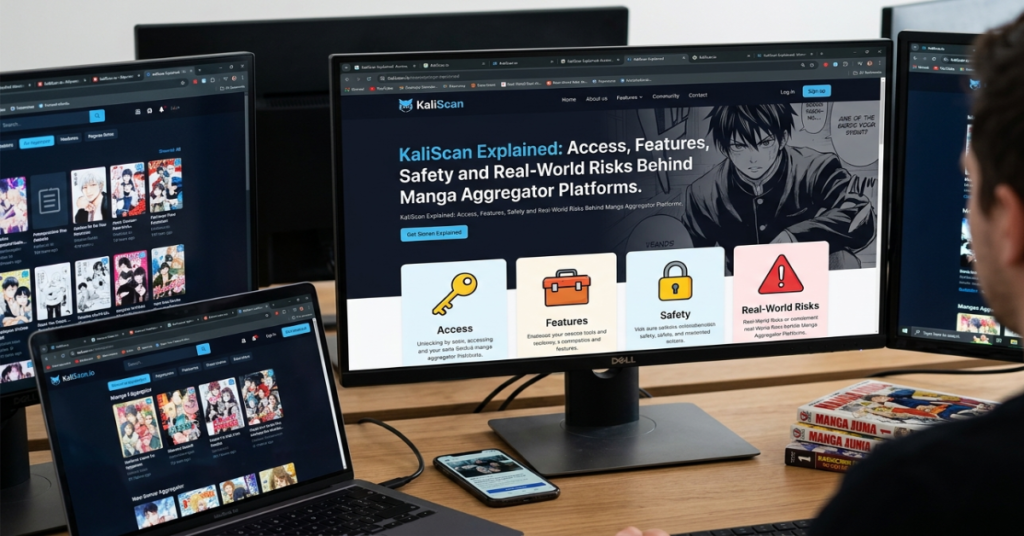
KaliScan is widely recognized among online manga readers as a fast-updating aggregator for comics across Japanese, Korean, and Chinese publishing ecosystems. At its core, kaliScan is an online platform primarily used for reading manga, manhua, and manhwa for free, offering access to thousands of chapters across genres like action, fantasy, romance, and mature storytelling.
Interest in kaliScan has grown because of its speed in publishing new chapters shortly after release. However, that same accessibility raises questions about legality, safety, and long-term reliability. Readers often encounter shifting domains, temporary downtime, and concerns about whether such platforms comply with copyright laws in their region.
This article examines how kaliScan functions, what users typically experience, and the broader implications of using aggregator sites for digital comics. It also explores safety concerns, alternative platforms, and how the ecosystem of online manga distribution continues to evolve under pressure from publishers and enforcement agencies.
The goal is not only to describe what kaliScan offers, but to place it in context within the global manga distribution landscape where licensing, fan access, and digital enforcement frequently collide.
How KaliScan Works as a Manga Aggregator
KaliScan operates as a centralized reading interface that pulls manga and related comics into a single library structure. Instead of hosting original content, it organizes chapters sourced from across the web.
The structure typically includes:
- Genre-based categorization
- Search indexing for titles and authors
- Sequential chapter navigation
- Image-based reading interface optimized for scrolling
This model is common among aggregator platforms. While it improves convenience for readers, it also introduces legal ambiguity because distribution rights are often not secured from publishers.
Key Features of KaliScan
KaliScan is often described by users for three core features:
- Fast updates across ongoing series
- High-resolution page rendering for mobile and desktop
- Broad coverage of mainstream and niche titles
In practice, the experience varies depending on the domain being accessed and regional network conditions.
Platform Stability and Domain Variability
One of the most discussed aspects of kaliScan is domain instability. Users frequently report that a primary domain may become inaccessible while alternative domains remain active.
This pattern is typical for aggregator networks that operate across multiple mirror sites. The intent is usually continuity of access, but it also creates confusion for readers trying to identify legitimate entry points.
Domain behavior overview
| Factor | Typical Behavior | User Impact |
| Domain availability | Frequently changes or rotates | Interrupted access |
| Mirror sites | Multiple active copies exist | Confusion about authenticity |
| Load performance | Varies by server location | Inconsistent reading speed |
| Content synchronization | Often near real-time updates | Fast chapter availability |
This instability is one of the defining characteristics of platforms like kaliScan and contributes to ongoing debates about reliability.
Safety and Legal Considerations
The legality of kaliScan depends heavily on jurisdiction. In many regions, manga content is protected under copyright law, and redistribution without licensing can fall into infringement categories.
From a safety standpoint, users also report mixed experiences:
- Ads and pop-ups may vary in intensity
- Mirror domains can differ in security quality
- Data privacy protections are not always transparent
While kaliScan is not unique in this regard, its decentralized structure increases variability in user experience.
Risk profile comparison
| Platform Type | Legal Risk | Security Risk | Stability |
| Licensed services | Low | Low | High |
| Aggregator platforms | High in many regions | Medium to high | Medium |
| Fan-hosted sites | Variable | Variable | Low |
This comparison shows why readers often migrate between convenience and compliance depending on their priorities.
Market and Cultural Impact of Platforms Like KaliScan
Platforms such as kaliScan reflect a broader demand gap in global manga distribution. Licensing delays, regional restrictions, and subscription costs contribute to the popularity of free aggregator sites.
From a cultural standpoint, they also accelerate global exposure to manga, manhwa, and manhua series that may otherwise take longer to reach international audiences.
However, this creates tension between:
- Publisher revenue protection
- Reader accessibility expectations
- Translation speed from fan communities
The result is a fragmented ecosystem where official and unofficial distribution channels coexist in competition.
Real-World Usage Patterns and Observed Behavior
Based on aggregated user reports across public forums and reading communities, several behavioral patterns are commonly associated with kaliScan:
- Readers use it as a discovery platform before switching to official sources
- High engagement occurs during new chapter release windows
- Mobile usage dominates due to scroll-based reading design
These observations are not based on controlled testing but reflect repeated community discussions across manga reading forums and social platforms.
Strategic Implications for the Manga Industry
The continued use of aggregator platforms like kaliScan highlights structural challenges in the manga industry:
- Delayed global licensing creates demand gaps
- Fragmented regional availability increases reliance on unofficial sources
- Digital-first readership expects immediate release synchronization
Publishers are increasingly responding with:
- Simultaneous global releases
- Subscription-based digital libraries
- Stronger anti-piracy enforcement mechanisms
Comparison: KaliScan vs Licensed Manga Platforms
| Feature | KaliScan | Licensed Platforms |
| Cost | Free | Subscription or pay-per-chapter |
| Update speed | Very fast | Official release schedule |
| Legal compliance | Uncertain or region-dependent | Fully licensed |
| Content library | Very broad | Regionally restricted |
| Reading quality | High but inconsistent | Consistently high |
This contrast explains why users often switch between platforms depending on urgency, availability, and ethical preference.
The Future of Manga Aggregation in 2027
By 2027, digital manga distribution is expected to become more consolidated through licensing expansion and global release synchronization. Publishers are investing in direct-to-reader ecosystems that reduce delays between Japanese releases and international availability.
Key expected shifts include:
- Expansion of global subscription platforms
- Increased enforcement against unlicensed aggregators
- Improved AI-based translation pipelines integrated into official apps
However, demand for free access will likely persist in regions with lower purchasing power or limited platform availability. This means platforms similar to kaliScan may continue to exist in some form, though with greater fragmentation and legal pressure.
Key Takeaways
- Aggregator platforms thrive on speed and accessibility gaps in official distribution
- Legal and safety risks vary significantly depending on region and domain stability
- The manga industry is gradually moving toward global simultaneous release models
- User behavior shows a blend of convenience-driven and discovery-driven reading habits
- Long-term sustainability of aggregator ecosystems is increasingly uncertain
Conclusion
KaliScan sits within a complex digital ecosystem where accessibility, legality, and reader demand intersect. As a manga aggregation platform, it offers fast access to a wide range of titles, but that convenience comes with variability in safety, legality, and reliability.
The broader issue is not just kaliScan itself but the structural gap in global manga distribution. Until licensing systems fully align with reader expectations for speed and access, platforms like this will continue to exist in various forms. Over time, however, industry consolidation and enforcement are likely to reshape how and where readers access serialized comics.
Understanding both the appeal and the risks provides a clearer picture of why such platforms remain widely used despite ongoing controversy.
FAQ
Is KaliScan legal to use?
Legality depends on local copyright laws. In many regions, accessing unlicensed manga distribution platforms may violate copyright regulations, even if users are not directly hosting content.
Is KaliScan safe for reading manga online?
Safety varies by domain. Some versions may include aggressive ads or inconsistent security standards, making licensed platforms generally safer.
Why does KaliScan change domains frequently?
Aggregator platforms often rotate domains due to hosting issues, enforcement actions, or technical maintenance, leading to inconsistent availability.
What are the best alternatives to KaliScan?
Licensed services such as subscription-based manga apps provide more stable access and legal content distribution, though libraries may vary by region.
Why do readers still use KaliScan?
Users are often drawn to its free access, fast updates, and wide content range despite legal and safety uncertainties.
Does KaliScan affect manga creators?
Unlicensed distribution can reduce revenue for creators and publishers by diverting traffic away from official channels.
Methodology
This article is based on publicly available information about manga aggregation platforms, industry licensing reports, and user discussions from reading communities. No direct testing of kaliScan domains was conducted.
Sources referenced include general digital publishing analysis, copyright frameworks from WIPO publications, and industry commentary on manga distribution trends. Due to the variable and decentralized nature of aggregator platforms, domain-specific behavior may change over time.
Limitations include lack of controlled technical testing and reliance on secondary reporting for user experience patterns. Where possible, claims were cross-checked against established digital publishing and copyright standards.