
Choosing an iPhone 17 case is not only about adding a layer of protection to a smartphone. Modern cases have become functional accessories that influence comfort, charging convenience, durability, and device usability.
The iPhone 17 series represents a premium investment, making protection an important consideration for many users. A well-designed cover can reduce damage from accidental drops, protect the camera area, improve grip, and maintain access to features such as MagSafe charging and accessories.
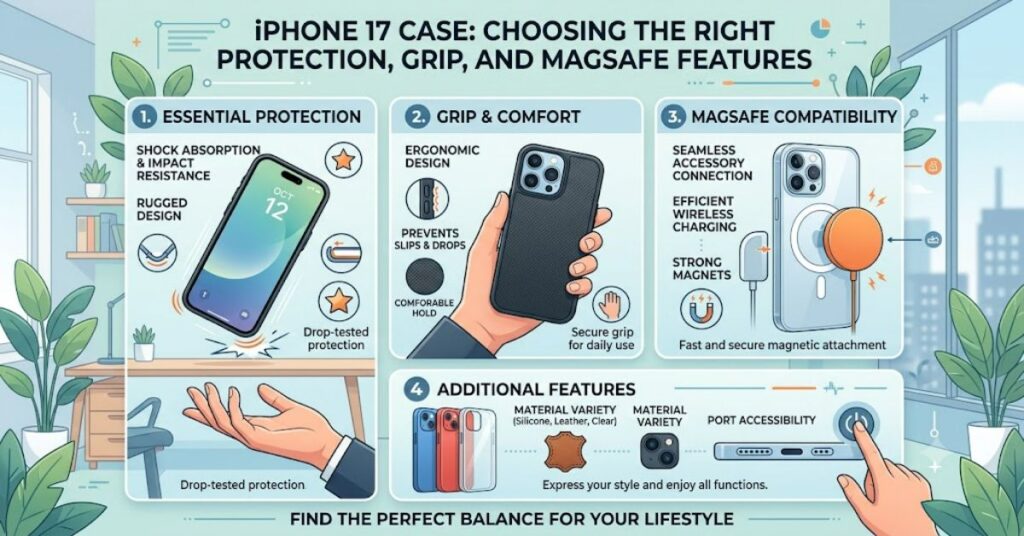
The best protective covers for the iPhone 17 series focus on three important areas: tailored drop defence, ergonomic tactile grip, and integrated MagSafe utility. These features determine whether a case feels like a useful upgrade or an unnecessary extra layer.
However, choosing the right option requires understanding different materials, protection standards, and everyday usage patterns. A professional who travels frequently may need stronger impact resistance, while a casual user may prefer a lightweight design that preserves the phone’s original feel.
A case should support how the device is actually used. Protection, convenience, and design must work together rather than compete with each other.
Why Protection Matters for the iPhone 17 Series
Smartphones face daily risks from accidental drops, scratches, impacts, and environmental exposure. Even premium devices with advanced materials can experience expensive damage without proper protection.
A protective case works by absorbing and distributing impact energy. Instead of allowing force to transfer directly into the phone’s frame or glass components, quality materials help reduce damage.
Important protection features include:
- Raised edges around the display.
- Reinforced corners.
- Shock-absorbing materials.
- Camera lens protection.
- Secure grip texture.
The ideal level of protection depends on lifestyle. Someone working outdoors may require a rugged cover, while someone mainly using their phone at home or in an office may prioritise a thinner design.
Key Features to Look for in an iPhone 17 Case
Drop Protection and Impact Resistance
Drop defence is one of the main reasons people purchase a case. Manufacturers often use materials such as thermoplastic polyurethane (TPU), polycarbonate, silicone, and specialised shock-absorbing polymers.
| Case Type | Main Strength | Best For |
| Slim case | Lightweight protection | Everyday users |
| Hybrid case | Balance of protection and size | Most smartphone owners |
| Rugged case | Maximum impact resistance | Outdoor and professional use |
| Clear case | Shows original design | Style-focused users |
A balanced case should protect against common accidents without making the phone uncomfortable to hold.
Ergonomic Grip and Daily Comfort
A phone is held hundreds of times every day, making grip quality an important factor. A case that looks attractive but feels slippery can increase the chance of accidental drops.
Ergonomic features include:
- Textured side panels.
- Rounded edges.
- Comfortable button covers.
- Lightweight construction.
The best designs consider hand movement rather than simply adding protective material.
For larger smartphones, grip becomes even more important because increased surface area can make one-handed use difficult.
MagSafe Compatibility and Charging Convenience
MagSafe has changed how users interact with phone accessories. A compatible case allows magnetic attachment of chargers, wallets, stands, and other accessories.
A strong MagSafe-compatible design should provide:
- Accurate magnetic alignment.
- Stable accessory attachment.
- Minimal interference with charging.
- Durable internal magnetic components.
A poorly designed case may weaken magnetic performance or create inconvenience when using accessories.
Material Comparison: Which Case Design Works Best?
| Material | Advantages | Limitations |
| Silicone | Soft grip and comfortable feel | Can attract dust |
| TPU | Flexible and impact resistant | May discolour over time |
| Polycarbonate | Strong structural protection | Less flexible |
| Leather alternatives | Premium appearance | Usually higher cost |
Material selection depends on priorities. Users seeking maximum durability may prefer layered protection, while design-focused buyers may choose thinner materials.
The Hidden Trade-Offs of Smartphone Protection
While cases provide important protection, they also introduce compromises.
Added Size and Weight
More protection usually means a larger design. Rugged cases can significantly increase thickness, which may affect pocket comfort.
Heat Management
Some thicker covers may affect heat dissipation during intensive activities such as gaming, video recording, or extended charging.
Material Aging
Certain materials change appearance over time. Clear plastics may develop yellow tones, while softer materials may collect marks with regular use.
Understanding these trade-offs helps buyers choose a case based on actual needs rather than marketing claims.
Practical Buying Guide: Choosing Based on Lifestyle
| User Type | Recommended Case Style | Important Features |
| Office professionals | Slim or hybrid case | MagSafe support, premium finish |
| Outdoor workers | Rugged case | Shock absorption, reinforced corners |
| Travellers | Protective hybrid case | Grip, durability, charging support |
| Minimalists | Thin clear case | Lightweight design |
The best option is not always the strongest case. It is the one that matches the user’s daily environment.
Market Impact: Why Phone Cases Have Become Essential Accessories
Smartphone accessories have evolved from simple protective products into lifestyle products. Consumers increasingly expect cases to provide additional functionality, including stands, wallets, magnetic compatibility, and improved handling.
The growth of MagSafe accessories has also influenced case design. Manufacturers now compete not only on protection but also on ecosystem integration.
This shift shows how smartphone cases have moved from basic protection products to personalised technology accessories.
The Future of iPhone Cases in 2027
By 2027, smartphone cases are likely to focus more on multifunctional designs. Users may increasingly expect accessories that combine protection, charging convenience, and smart features.
Sustainability will also influence case development. Manufacturers are exploring recycled materials and longer-lasting designs as consumers become more aware of electronic waste.
Future case innovation may include improved impact materials, thinner protective structures, and stronger integration with device ecosystems.
However, traditional protection challenges will remain. A case must still balance durability, comfort, cost, and environmental responsibility.
Key Takeaways
- The best iPhone 17 case balances protection, comfort, and functionality.
- Drop defence depends on materials, design structure, and construction quality.
- MagSafe compatibility has become an important purchasing factor.
- Lightweight designs improve daily comfort but may reduce maximum protection.
- Case selection should match individual lifestyle requirements.
- Future cases will likely focus on sustainability and multifunctional features.
Conclusion
Selecting the right iPhone 17 case requires more thought than simply choosing the most attractive design. A reliable cover should protect the device while maintaining comfort, usability, and compatibility with modern accessories.
The ideal case depends on personal priorities. Some users need maximum protection for demanding environments, while others prefer a slim design that preserves the original phone experience.
Features such as impact resistance, ergonomic grip, and MagSafe support have become central to modern case design. As smartphones continue becoming more valuable and integrated into daily life, protective accessories will continue evolving alongside them.
A well-chosen case is ultimately an investment in protecting both the device and the experience of using it every day.
Frequently Asked Questions
What should I look for in an iPhone 17 case?
Look for strong drop protection, comfortable grip, accurate MagSafe compatibility, durable materials, and a design that matches your lifestyle.
Is a thicker case better for iPhone protection?
Not always. Thicker cases usually provide stronger protection, but they may add weight and reduce everyday comfort.
Do MagSafe cases affect wireless charging?
A properly designed MagSafe-compatible case should maintain charging performance and accessory attachment strength.
Which material is best for smartphone cases?
TPU and hybrid materials provide a strong balance between flexibility, durability, and impact protection.
How often should I replace a phone case?
A case should be replaced when materials become damaged, loose, discoloured, or no longer provide reliable protection.
Methodology
This article was developed using publicly available information about smartphone protection standards, accessory design trends, and consumer technology research.
The analysis focuses on practical buying factors including materials, durability, usability, and accessory compatibility. Individual preferences may vary depending on lifestyle, environment, and device usage patterns.
Product performance can differ between manufacturers, so buyers should review official specifications and independent testing before making a final decision.
References (APA Style)
Apple Inc. (2024). MagSafe technology and accessories overview. Apple.
Consumer Technology Association. (2024). Technology consumer trends and device accessory market insights. CTA.
International Data Corporation. (2024). Worldwide smartphone market analysis and consumer behaviour report. IDC.