
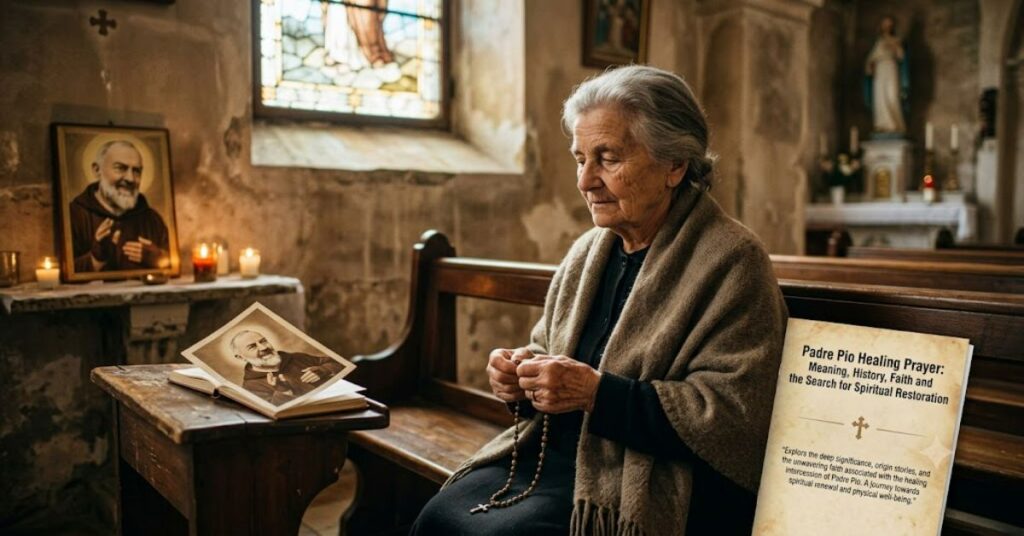
The Padre Pio healing prayer is among the most widely recognised Catholic prayers associated with physical, emotional, and spiritual restoration. Connected to St. Padre Pio of Pietrelcina, an Italian Capuchin friar who lived from 1887 to 1968, this devotion reflects his lifelong emphasis on faith, suffering, compassion, and reliance on God.
St. Padre Pio became internationally known because of his ministry as a priest, his dedication to hearing confessions, and accounts from followers who believed they experienced spiritual or physical healing through his prayers. Canonised by Pope John Paul II in 2002, Padre Pio continues to inspire millions of people worldwide.
The popularity of prayers attributed to him comes from their focus on surrender, hope, and complete restoration of the human person. For many believers, healing is understood not only as recovery from illness but also as peace of mind, strengthened faith, and emotional renewal.
Understanding this tradition requires examining its historical background, religious meaning, and modern role in Catholic communities.
The Origins of Padre Pio’s Healing Ministry
St. Padre Pio was born Francesco Forgione on May 25, 1887, in Pietrelcina, Italy. He joined the Capuchin Franciscan order and was ordained a priest in 1910.
Throughout his life, Padre Pio became known for spiritual counselling and dedication to prayer. His ministry at the monastery of San Giovanni Rotondo attracted visitors from across the world seeking confession, guidance, and blessings.
Many followers associated his prayers with healing experiences. However, within Catholic teaching, such events are viewed through the broader understanding of God’s grace rather than as supernatural power controlled by an individual.
| Aspect | Religious Understanding |
| Prayer purpose | Seeking God’s comfort, guidance, and healing |
| Associated figure | St. Padre Pio of Pietrelcina |
| Religious tradition | Catholic Christianity |
| Historical period | 20th century |
| Canonisation | June 16, 2002 |
Understanding the Spiritual Meaning of the Prayer
The most common prayers connected with Padre Pio focus on trust in God, acceptance of suffering, and hope during difficult circumstances.
A well-known prayer associated with his spirituality includes the idea of placing worries and struggles into God’s hands. This reflects Padre Pio’s teaching that prayer should create a deeper relationship with God rather than simply serve as a request for immediate solutions.
The spiritual themes commonly found in these prayers include:
- Faith during hardship
- Patience through suffering
- Compassion toward others
- Inner peace and emotional strength
For many people, prayer becomes a daily practice that provides structure during periods of uncertainty.
Padre Pio Healing Prayer Compared With Other Catholic Healing Traditions
Healing prayers exist throughout Christianity, but different traditions emphasise different approaches.
| Prayer Tradition | Main Focus | Historical Connection |
| Padre Pio devotion | Trust, surrender, spiritual comfort | 20th-century Catholic spirituality |
| Prayer to St. Raphael | Healing and guidance | Biblical tradition |
| Anointing of the Sick | Sacramental support during illness | Early Christian practice |
| Marian prayers | Intercession and hope | Centuries of Catholic devotion |
The distinctive feature of Padre Pio’s prayer tradition is its connection with his personal example. Followers often remember his compassion, long hours in confession, and commitment to serving those experiencing suffering.
Faith, Healing and Real-World Impact
The influence of Padre Pio extends beyond individual prayer. The hospital he helped establish, Casa Sollievo della Sofferenza (Home for the Relief of Suffering), opened in San Giovanni Rotondo in 1956 and continues to operate as a medical institution.
This connection between spirituality and healthcare represents an important aspect of Padre Pio’s legacy. His approach did not reject medicine; instead, it combined spiritual care with practical assistance for people facing illness.
| Area of Impact | Example |
| Spiritual support | Prayer groups worldwide |
| Healthcare | Casa Sollievo della Sofferenza hospital |
| Community | Padre Pio prayer groups and pilgrimages |
| Cultural influence | Books, documentaries, and religious events |
Risks, Limitations and Balanced Understanding
A responsible understanding of healing prayer requires recognising its role and limitations.
Prayer can provide emotional support, hope, and a sense of connection for believers. Research into spirituality and wellbeing has examined how religious practices may influence coping, resilience, and mental health.
However, prayer should not be presented as a guaranteed medical treatment. Serious health conditions require qualified healthcare advice, diagnosis, and evidence-based treatment.
The most balanced approach recognises prayer as a spiritual practice that may support a person emotionally while working alongside appropriate medical care.
The Future of Padre Pio Healing Prayer in 2027
By 2027, devotion to St. Padre Pio is likely to continue through digital religious communities, online prayer groups, livestreamed services, and global Catholic networks.
Religious organisations are increasingly using digital platforms to reach younger audiences while preserving traditional practices. This trend may introduce Padre Pio’s spirituality to people who discover faith-based resources online.
At the same time, future discussions will likely focus on maintaining a balance between spiritual traditions and modern healthcare understanding.
The continued relevance of Padre Pio’s prayers will depend on their ability to address timeless human experiences: suffering, uncertainty, hope, and the search for meaning.
Key Takeaways
- Padre Pio’s healing prayers are centred on faith, surrender, and spiritual comfort.
- The devotion grew because of his reputation as a compassionate priest and spiritual guide.
- Catholic tradition views healing prayer as an expression of faith rather than a replacement for medicine.
- Padre Pio’s legacy combines religious devotion with humanitarian work.
- Modern technology is helping religious communities preserve and share traditional prayers.
- The appeal of these prayers comes from their message of hope during difficult moments.
Conclusion
The tradition surrounding the Padre Pio healing prayer represents a powerful example of how faith practices can influence personal experiences of hope and resilience. Rooted in the life and ministry of St. Padre Pio, these prayers continue to provide comfort for millions of believers.
Their meaning extends beyond requests for physical healing. They reflect a broader spiritual understanding of restoration that includes emotional peace, acceptance, and trust in God.
While prayer remains a deeply personal religious practice, its value for many people lies in the strength and reassurance it provides during challenging periods. Padre Pio’s legacy continues because it connects spiritual devotion with compassion, service, and humanity.
Frequently Asked Questions
What is the Padre Pio healing prayer?
The Padre Pio healing prayer refers to devotional prayers inspired by St. Padre Pio’s spirituality, focusing on faith, comfort, and seeking God’s help during illness or hardship.
Can Padre Pio’s prayer heal physical illnesses?
Many believers share personal experiences of healing, but Catholic teaching does not present prayer as a guaranteed replacement for medical treatment.
Why is Padre Pio associated with healing?
Padre Pio became associated with healing because followers reported spiritual and physical benefits connected with his prayers and blessings.
When was Padre Pio canonised?
St. Padre Pio was canonised by Pope John Paul II on June 16, 2002.
How should someone pray for healing?
Many Christians approach healing prayer with faith, humility, and trust while also seeking appropriate professional support when needed.
Methodology
This article was prepared using historical records from Catholic institutions, information about St. Padre Pio’s life, and publicly available religious sources. The analysis focuses on historical context, spiritual meaning, and cultural impact.
Limitations include the personal nature of religious experiences and the inability to independently verify individual claims of miraculous healing. Religious beliefs and interpretations may differ among communities.
References (APA Style)
Capuchin Franciscan Friars. (2024). Saint Padre Pio: Life and spirituality. Capuchin Franciscan Province.
Vatican News. (2022). Saint Padre Pio and his witness of faith. Vatican Media.
Holy See. (2002). Canonisation of Blessed Padre Pio of Pietrelcina. Vatican Archives.
Casa Sollievo della Sofferenza. (2024). History and mission of the hospital founded by Padre Pio. San Giovanni Rotondo.