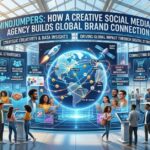
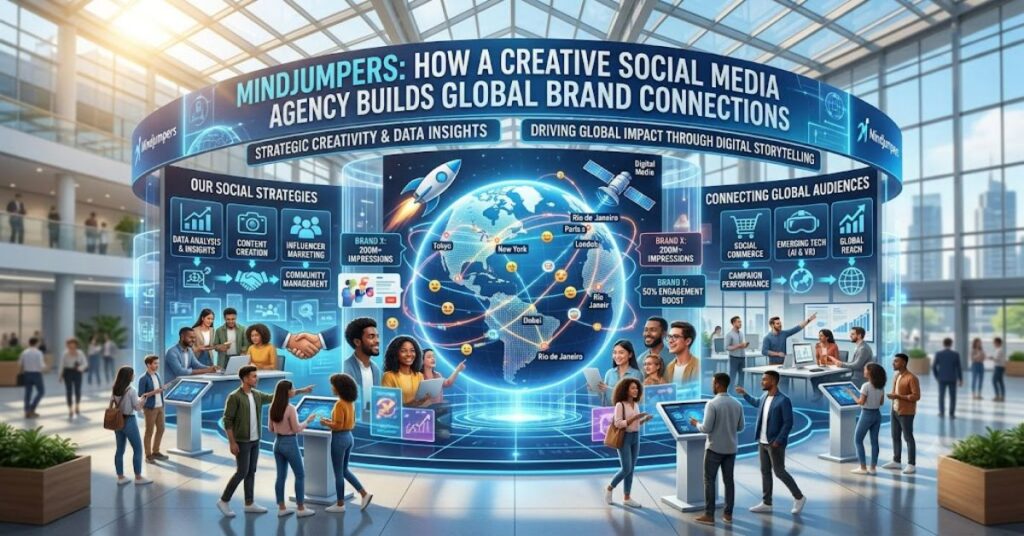
Mindjumpers is a full-service creative and social media agency based in Copenhagen, Denmark, with an additional office in London. Founded in 2008, the independent agency specialises in social media management, content creation, and adapting global marketing strategies for local audiences across more than 25 countries.
The role of creative agencies has changed significantly as brands move from traditional advertising models towards continuous digital engagement. Companies no longer communicate with customers only through campaigns; they build communities through daily conversations, video content, influencer partnerships, and platform-specific storytelling.
For international brands, this creates a complex challenge. A campaign that performs well in one country may fail in another because cultural expectations, consumer behaviour, language, and online habits differ. Agencies with experience in localisation help organisations maintain a consistent brand identity while making content relevant for individual markets.
Social media specialists must now combine creative thinking with performance analysis. Successful digital campaigns require understanding algorithms, audience segmentation, content formats, engagement metrics, and brand reputation management.
This article examines the role of Mindjumpers within the modern creative agency sector, analysing how social media management, global localisation, and content strategy influence brand communication. It also explores industry challenges, emerging trends, and how creative partnerships may develop by 2027.
The Evolution of Creative Social Media Agencies
Social media agencies emerged because traditional marketing structures were not designed for constant digital interaction. Platforms such as Facebook, Instagram, LinkedIn, TikTok, and YouTube require brands to produce regular content while responding quickly to audiences.
A modern creative agency typically manages several interconnected functions:
- Brand strategy
- Social media planning
- Community management
- Content production
- Campaign development
- Digital analytics
- Market localisation
Unlike traditional advertising campaigns that may run for weeks or months, social media requires ongoing optimisation.
A successful strategy depends on understanding:
- Audience demographics
- Platform behaviour
- Cultural context
- Content performance
- Consumer sentiment
Agencies such as Mindjumpers operate within this environment by combining creative production with strategic planning.
How Mindjumpers Approaches Global Marketing Localisation
One of the biggest challenges for international brands is maintaining consistency without becoming culturally disconnected.
Global companies often create central marketing frameworks but need local adaptation before publishing content in different markets.
For example, a food, fashion, or technology brand may need to adjust:
- Language style
- Visual references
- Cultural symbols
- Seasonal messaging
- Consumer priorities
Localisation is different from translation. Translation changes words, while localisation adapts meaning.
Global Campaigns vs Localised Campaigns
| Approach | Global Campaign Model | Localised Campaign Model |
| Message | One central message worldwide | Adapted for regional audiences |
| Content style | Consistent creative assets | Market-specific storytelling |
| Audience connection | Broad appeal | Cultural relevance |
| Risk | Possible audience disconnect | Requires additional planning |
| Management | Centralised control | Regional collaboration |
A major insight in international marketing is that consistency and flexibility are not opposites. Strong global brands usually maintain core values while allowing local creativity.
The Strategic Value of Social Media Management
Social media management has become a business function rather than only a communication activity.
Brands use social channels to:
- Build customer relationships
- Monitor public perception
- Support product launches
- Generate leads
- Strengthen loyalty
Creative agencies provide strategic support by creating content systems that allow brands to maintain regular communication.
Key Social Media Performance Factors
| Measurement Area | Example Metrics |
| Awareness | Reach, impressions, brand mentions |
| Engagement | Comments, shares, reactions |
| Conversion | Website visits, purchases, enquiries |
| Community | Response time, customer interaction |
| Content quality | Watch time, completion rate |
The challenge is balancing creativity with measurable outcomes. A visually impressive campaign may receive attention but fail to achieve business objectives if it does not connect with the intended audience.
Content Creation as a Brand Asset
Content has become one of the most valuable assets for modern organisations.
High-quality content supports:
- Brand recognition
- Customer education
- Search visibility
- Community development
- Long-term trust
Creative teams must understand multiple formats, including:
- Short-form video
- Social graphics
- Editorial content
- Interactive experiences
- Influencer collaborations
A successful content strategy is not based only on producing more material. It requires understanding why audiences engage with specific formats.
Real-World Impact of Creative Agencies
The growth of social media has changed how companies compete internationally.
A small brand can reach global audiences, while established companies must maintain relevance among constantly changing consumer groups.
Creative agencies influence this process by helping businesses:
- Enter new markets
- Adapt communication styles
- Improve audience relationships
- Respond to cultural differences
The expansion of digital platforms has also increased demand for specialised marketing professionals who understand both creativity and technology.
Risks and Trade-Offs in Social Media Partnerships
Although agencies provide expertise, organisations must consider several challenges.
Maintaining Brand Control
Working with external creative teams requires clear communication. Companies need strong brand guidelines to ensure consistency.
Measuring Creative Success
Not every valuable marketing outcome appears immediately in financial data. Brand awareness and audience trust often develop over time.
Platform Dependency
Social media strategies depend heavily on third-party platforms. Algorithm changes can affect reach and engagement without warning.
Three Key Insights About Modern Creative Agencies
1. Cultural Intelligence Has Become a Competitive Advantage
International brands increasingly require teams that understand local behaviour rather than simply translating existing campaigns.
2. Content Volume Does Not Replace Strategic Thinking
Producing large amounts of content without audience analysis can reduce effectiveness. Quality, relevance, and timing remain essential.
3. Data Is Changing Creative Decision-Making
Creative decisions are increasingly supported by analytics, audience research, and performance measurement rather than intuition alone.
The Future of Mindjumpers and Creative Agencies in 2027
By 2027, creative and social media agencies are expected to rely more heavily on artificial intelligence tools, advanced analytics, and automated content workflows.
AI may assist with:
- Audience research
- Content variation
- Trend monitoring
- Performance analysis
However, human creativity and cultural understanding will remain important. Marketing decisions often involve emotional context, social expectations, and brand reputation.
Regulatory developments around digital advertising, privacy, and artificial intelligence will also influence how agencies operate. Organisations will need to balance personalisation with responsible data practices.
The strongest agencies will likely combine technology with human expertise, creating marketing strategies that are both efficient and culturally aware.
Key Takeaways
- Creative agencies now manage ongoing brand conversations rather than occasional campaigns.
- Localisation helps international brands remain culturally relevant.
- Social media success requires both creative production and analytical measurement.
- Content strategy is becoming a long-term business asset.
- Technology will improve marketing efficiency but will not replace cultural understanding.
- Global brands need flexible communication models to reach diverse audiences.
Conclusion
Mindjumpers represents the type of specialist creative agency model that has developed alongside the growth of global digital communication. Modern brands require more than attractive campaigns; they need strategies that connect with audiences across different cultures and platforms.
Social media management, content creation, and localisation have become essential components of international marketing. Agencies that understand both creative storytelling and measurable performance can help organisations build stronger relationships with customers.
The future of creative partnerships will depend on balancing technology, data, and human insight. While digital tools will continue changing how campaigns are produced and analysed, cultural understanding and creative judgement will remain central to effective communication.
Frequently Asked Questions
What is Mindjumpers known for?
Mindjumpers is known for creative marketing services, social media management, content creation, and helping global brands adapt campaigns for different markets.
Where is Mindjumpers based?
Mindjumpers is based in Copenhagen, Denmark, and also operates from London.
Why do global brands need social media localisation?
Localisation helps brands adapt messages to cultural expectations, language preferences, and regional consumer behaviour.
What services do creative social media agencies provide?
Services commonly include content creation, community management, campaign strategy, audience analysis, and digital marketing support.
How are social media agencies changing by 2027?
Agencies are expected to combine AI tools, analytics, and human creativity to produce more personalised and effective marketing campaigns.
Why is content strategy important for businesses?
Content strategy helps businesses communicate consistently, build trust, and maintain relationships with customers across digital platforms.
Methodology
This article was prepared using publicly available information about creative agencies, social media marketing practices, and international brand communication trends.
The analysis considered industry research from marketing organisations, digital communication studies, and publicly available agency information. It focuses on general principles of creative agency operations and global marketing localisation.
Limitations include the lack of access to private client campaigns, internal performance data, and confidential agency processes. Individual agency outcomes vary depending on client objectives, market conditions, and campaign execution.
This article was drafted with AI assistance and reviewed for accuracy. All factual claims should receive final editorial verification before publication.
References (APA Style)
DataReportal. (2024). Digital 2024: Global overview report. DataReportal.
Hootsuite. (2024). Social trends report 2024. Hootsuite.
Organisation for Economic Co-operation and Development. (2023). OECD digital economy outlook 2023. OECD Publishing.
World Economic Forum. (2023). The future of jobs report 2023. World Economic Forum.