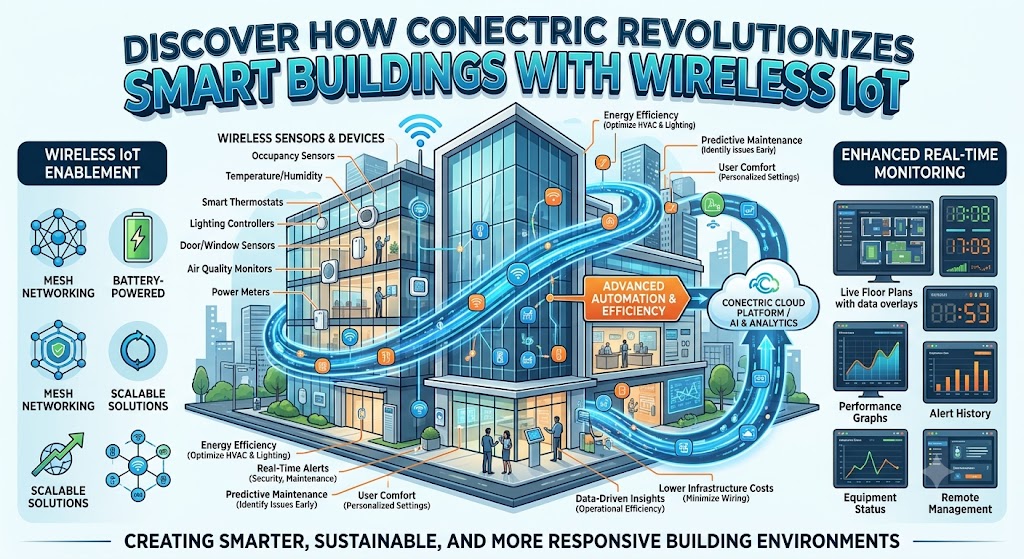
Conectric refers to a technology approach centred around wireless IoT solutions that help buildings collect, analyse, and respond to real-time data. Conectric Networks has developed systems aimed at improving building intelligence through connected sensors, automated controls, and energy optimisation.
Modern buildings are becoming increasingly dependent on digital infrastructure. Facility managers, property owners, and businesses are looking for ways to reduce energy costs while improving comfort and operational visibility. Traditional building management systems often require expensive installation and complex wiring, creating barriers for smaller upgrades.
Wireless IoT technology provides an alternative by allowing sensors and devices to communicate without extensive physical infrastructure. These systems can monitor conditions such as temperature, occupancy, lighting usage, and energy consumption.
The importance of smart building technology has grown as organisations face rising energy prices, sustainability targets, and increasing demand for efficient workplaces. Platforms like Conectric demonstrate how connected technology can support better decision-making while helping buildings adapt to changing requirements.
Understanding Conectric and Smart Building Technology
Smart building systems use connected devices to gather information from the physical environment. These devices typically include sensors, controllers, communication networks, and cloud-based analytics platforms.
A wireless IoT solution removes many installation challenges associated with traditional building automation. Instead of replacing existing infrastructure, organisations can introduce connected devices gradually and expand their systems over time.
The core components usually include:
- Wireless sensors that measure environmental conditions.
- Data platforms that analyse building performance.
- Automation systems that adjust equipment based on real-time information.
- Dashboards that allow managers to monitor operations remotely.
For energy management, these capabilities are particularly valuable. Buildings can identify unnecessary consumption, detect inefficient equipment behaviour, and automate responses.
How Wireless IoT Improves Energy Automation
Energy efficiency has become a major priority for commercial buildings. According to the International Energy Agency, buildings account for a significant share of global energy demand, making efficiency improvements essential for reducing emissions.
Smart IoT networks help address this challenge by providing detailed information about how energy is used.
| Traditional Building Systems | Wireless IoT-Based Systems |
| Require extensive cabling | Easier sensor installation |
| Limited real-time monitoring | Continuous data collection |
| Expensive upgrades | Flexible expansion |
| Manual adjustments | Automated responses |
For example, occupancy sensors can identify unused spaces and reduce unnecessary heating, cooling, or lighting. Environmental sensors can detect changes in temperature and allow automated climate adjustments.
This creates a more responsive building environment where energy consumption matches actual requirements rather than fixed schedules.
Practical Applications of Smart Building IoT Networks
The applications of connected building technology extend beyond energy savings. Organisations use IoT solutions for multiple operational purposes.
Environmental Monitoring
Sensors can monitor temperature, humidity, air quality, and other conditions. This information helps maintain comfortable indoor environments while supporting health and productivity.
Predictive Maintenance
Connected equipment can provide early warnings when performance changes. Instead of waiting for equipment failure, maintenance teams can address potential problems before they become expensive disruptions.
Occupancy Management
Smart buildings can analyse how spaces are used. This helps organisations optimise office layouts, meeting rooms, and facility resources.
Energy Reporting
Detailed consumption data allows businesses to measure sustainability progress and identify areas where improvements are possible.
Benefits and Challenges of Wireless Smart Building Systems
The advantages of IoT-based building automation are significant, but organisations must also consider potential limitations.
| Benefits | Challenges |
| Lower energy consumption | Cybersecurity risks |
| Improved operational visibility | Data management complexity |
| Easier installation | Device compatibility issues |
| Better user comfort | Maintenance requirements |
One important consideration is cybersecurity. Connected devices create additional digital access points that require proper protection. Organisations must implement secure authentication, software updates, and network monitoring.
Another challenge involves integrating different technologies. Buildings often contain equipment from multiple manufacturers, meaning compatibility can become a technical issue.
Real-World Impact of Smart Infrastructure
Smart building technology is influencing commercial property, education facilities, healthcare environments, and industrial spaces.
Property owners increasingly view digital infrastructure as a way to increase building value. Efficient buildings can reduce operating expenses and meet sustainability expectations from tenants and regulators.
The growth of smart infrastructure also connects with wider environmental goals. Governments and organisations are placing greater emphasis on reducing carbon emissions and improving energy performance.
In the UK, initiatives around energy efficiency and building performance have encouraged businesses to explore technologies that support lower energy consumption and improved monitoring.
The Future of Conectric and Smart Buildings in 2027
By 2027, smart building technology is expected to become more integrated with artificial intelligence, advanced analytics, and automated energy management.
Future systems will likely focus on greater interoperability, allowing different devices and platforms to communicate more effectively. Artificial intelligence may help buildings predict energy demand and automatically optimise performance.
However, adoption will depend on practical factors such as cybersecurity standards, investment costs, and industry readiness. Not every building will immediately become fully autonomous, particularly older properties with limited digital infrastructure.
The strongest opportunities are likely to come from flexible systems that allow gradual upgrades rather than requiring complete replacements.
Key Takeaways
- Wireless IoT networks are making smart building upgrades more accessible.
- Energy automation can reduce waste by responding to real-time conditions.
- Security and compatibility remain important challenges for connected infrastructure.
- Smart buildings provide operational benefits beyond energy savings.
- Future systems will rely on stronger integration between sensors, analytics, and automation.
Conclusion
Conectric represents the wider movement towards intelligent buildings where technology, data, and automation work together to improve efficiency. Wireless IoT solutions provide organisations with new ways to monitor performance, reduce energy waste, and create more adaptable environments.
The success of smart building systems will depend on more than installing connected devices. Businesses must also consider cybersecurity, long-term maintenance, and integration with existing infrastructure.
As energy efficiency becomes increasingly important, IoT-based automation will continue to influence how buildings operate. Solutions built around reliable data collection and practical automation can help organisations create spaces that are more efficient, sustainable, and responsive.
Frequently Asked Questions
What is Conectric?
Conectric refers to wireless IoT technology solutions associated with smart buildings and energy automation. These systems use connected sensors and data platforms to improve building management.
How does Conectric support energy efficiency?
It supports energy efficiency by collecting real-time information about building conditions and enabling automated adjustments to lighting, heating, cooling, and other systems.
Are wireless IoT systems suitable for older buildings?
Yes. Wireless systems can often be installed with fewer structural changes compared with traditional wired automation systems, making them suitable for retrofit projects.
What are the main risks of smart building technology?
The main risks include cybersecurity concerns, device compatibility issues, and the need for ongoing system maintenance.
Will smart buildings become fully automated by 2027?
Some buildings may achieve higher levels of automation, but widespread adoption will depend on costs, regulations, and technological development.
Methodology
This article was prepared using publicly available information about smart building technologies, wireless IoT infrastructure, and energy automation trends. Industry research from organisations such as the International Energy Agency and smart building technology reports were reviewed to understand market direction.
The analysis considers both benefits and limitations, including cybersecurity challenges and implementation barriers. Specific product performance claims should be verified directly with manufacturers and technology providers before investment decisions are made.