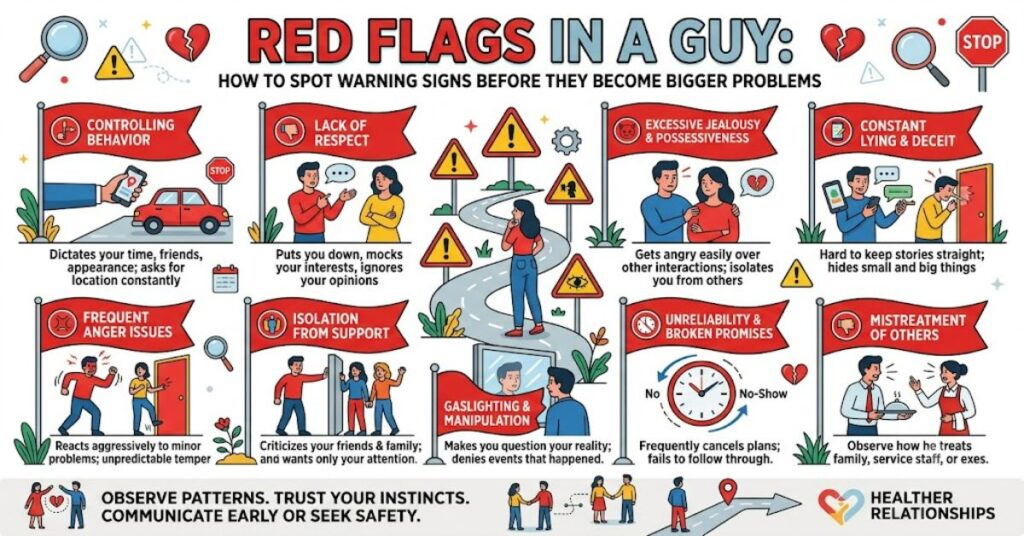
Understanding red flags in a guy is one of the most valuable skills anyone can develop before committing to a relationship. Red flags are early warning signs that someone may struggle to maintain a healthy, respectful partnership. They often include a chronic lack of accountability, controlling behavior, inconsistency between words and actions, and repeated disrespect for personal boundaries. While nobody is perfect and everyone makes mistakes, consistent patterns of unhealthy behavior deserve attention.
A healthy relationship is built on trust, mutual respect, honest communication, and emotional maturity. When these foundations are missing, conflicts become harder to resolve, and emotional safety can suffer. Learning to identify warning signs doesn’t mean assuming the worst about every person—it means making informed decisions based on behavior rather than promises.
Why Red Flags Matter
Relationships often begin with excitement, making it easy to overlook concerning behaviors. During the early stages, people may justify warning signs as stress, misunderstandings, or temporary issues.
However, relationship experts consistently note that repeated patterns are far more important than isolated incidents. If unhealthy behaviors continue despite conversations and opportunities to improve, they deserve serious consideration.
Recognizing these signs early can help protect emotional well-being, financial security, and long-term happiness.
Common Red Flags to Watch For
Lack of Accountability
One of the strongest warning signs is refusing to accept responsibility.
Instead of admitting mistakes, someone may:
- Blame other people
- Make excuses repeatedly
- Shift responsibility onto their partner
- Never apologize sincerely
Healthy individuals recognize their mistakes and work to improve.
Controlling Behavior
Control often begins subtly before becoming more obvious.
Examples include:
- Monitoring your location constantly
- Deciding who you can spend time with
- Criticizing your clothing or appearance
- Pressuring you to change your interests
- Expecting immediate responses to every message
Control is not the same as caring.
Words Don’t Match Actions
Consistency builds trust.
Someone who repeatedly promises change but never follows through may struggle with reliability or honesty.
Examples include:
- Cancelling plans frequently
- Breaking commitments
- Making promises without action
- Saying one thing while doing another
Reliable behavior matters more than impressive promises.
Disrespecting Boundaries
Healthy relationships respect personal limits.
Warning signs include:
- Ignoring “no”
- Pressuring physical intimacy
- Reading private messages
- Showing up unexpectedly after being asked not to
- Making jokes after you’ve expressed discomfort
Respect for boundaries demonstrates emotional maturity.
Comparison Table: Healthy Behaviors vs Red Flags
| Healthy Relationship | Potential Red Flag |
| Honest communication | Frequent lying |
| Accepts responsibility | Blames everyone else |
| Respects independence | Attempts to control decisions |
| Keeps promises | Repeatedly breaks commitments |
| Supports personal growth | Discourages goals or friendships |
| Respects privacy | Invades personal space or devices |
Other Warning Signs
Some behaviors may not seem serious individually but become concerning when they occur repeatedly.
These include:
- Extreme jealousy
- Constant criticism
- Mood swings used to manipulate others
- Refusing to communicate after disagreements
- Financial irresponsibility
- Disrespect toward service workers
- Speaking negatively about every former partner
- Gaslighting or making you question reality
Patterns matter more than isolated incidents.
Real-World Impact
Relationship counselors frequently report that unhealthy dynamics often begin with relatively small behaviors before escalating over time.
For example, someone may initially criticize harmless friendships, then gradually discourage outside relationships altogether. Over months or years, this can create emotional isolation.
Likewise, repeated dishonesty about minor issues may eventually undermine trust in more significant aspects of the relationship.
Recognizing these developments early often allows individuals to make healthier choices before becoming deeply emotionally invested.
Structured Insight Table
| Behavior | Possible Meaning | Suggested Response |
| Constant jealousy | Insecurity or control | Discuss boundaries openly |
| Never apologizes | Low accountability | Observe future behavior |
| Ignores personal limits | Lack of respect | Reinforce boundaries |
| Frequent dishonesty | Trust concerns | Verify consistency over time |
| Isolates you from others | Controlling tendencies | Maintain outside support networks |
| Emotional manipulation | Poor emotional regulation | Seek trusted advice if patterns continue |
Practical Considerations
Not every difficult behavior automatically means someone is unhealthy.
People experience stress, grief, career challenges, and personal setbacks that may temporarily affect communication.
The difference lies in whether someone:
- Listens to feedback
- Accepts responsibility
- Makes genuine improvements
- Respects your feelings consistently
Growth is possible when both people communicate honestly and work together.
Risks of Ignoring Red Flags
Ignoring repeated warning signs can lead to:
- Emotional exhaustion
- Loss of self-confidence
- Increased anxiety
- Social isolation
- Difficulty rebuilding trust
Many unhealthy relationships do not become harmful overnight. Instead, they develop gradually through repeated patterns that seem minor individually but significant collectively.
The Future of Relationship Awareness in 2027
By 2027, relationship education is expected to become more accessible through digital learning platforms, workplace wellness initiatives, and mental health awareness campaigns. Greater public understanding of emotional intelligence, healthy communication, and boundary-setting may help people recognize unhealthy relationship patterns earlier.
However, experts also caution that online advice should not replace professional counseling or individualized support. Social media trends can oversimplify complex situations, making balanced, evidence-based guidance increasingly important.
Key Takeaways
- Look for consistent patterns rather than isolated mistakes.
- Accountability is one of the strongest indicators of emotional maturity.
- Respect for boundaries is essential in healthy relationships.
- Actions consistently matter more than promises.
- Honest communication strengthens trust over time.
- Healthy partners encourage independence instead of control.
Conclusion
Learning to recognize red flags in a guy is not about becoming overly suspicious or expecting perfection. Every person has flaws, and every relationship experiences challenges. What matters most is whether unhealthy behaviors become recurring patterns that damage trust, communication, or emotional safety.
Strong relationships are built on accountability, respect, consistency, empathy, and mutual support. When someone repeatedly ignores boundaries, avoids responsibility, or attempts to control another person’s choices, these behaviors deserve careful attention. Paying attention to actions rather than words can help people make healthier relationship decisions and build connections based on trust instead of uncertainty.
Frequently Asked Questions
What are the biggest red flags in a guy?
Common warning signs include controlling behavior, dishonesty, disrespect for boundaries, refusing accountability, emotional manipulation, and repeated inconsistency between words and actions.
Can people change after showing red flags?
Some people can improve if they acknowledge their behavior, seek help when needed, and consistently demonstrate lasting change. Genuine improvement requires actions, not promises.
Are occasional mistakes considered red flags?
No. Everyone makes mistakes. Red flags refer to repeated patterns of unhealthy behavior rather than isolated incidents.
How can I tell if someone is emotionally mature?
Emotionally mature people communicate honestly, accept responsibility, respect boundaries, handle disagreements respectfully, and show consistency over time.
Should I end a relationship after noticing red flags?
That depends on the severity and frequency of the behavior. Serious issues involving abuse, coercion, or repeated manipulation should be taken seriously. For less severe concerns, honest communication and professional relationship counseling may help if both partners are committed to change.
Methodology
This article was developed using guidance from relationship psychology research, educational resources from recognized mental health organizations, and peer-reviewed literature on healthy relationship behaviors. The analysis focuses on commonly recognized warning signs rather than diagnosing individuals. Readers should remember that relationship dynamics vary, and professional counseling may be appropriate for complex situations involving emotional abuse, manipulation, or safety concerns.
Editorial Disclosure: This article Red Flags in a Guy was drafted with AI assistance and should be reviewed and verified by the editorial team at Postcard.fm before publication.
References (APA)
- American Psychological Association. (2023). Healthy relationships. https://www.apa.org
- Gottman, J., & Gottman, J. (2024). The Gottman Institute: Relationship advice and research. https://www.gottman.com
- National Domestic Violence Hotline. (2024). Warning signs of unhealthy relationships. https://www.thehotline.org
- World Health Organization. (2023). Violence against women. https://www.who.int/topics/violence-against-women