
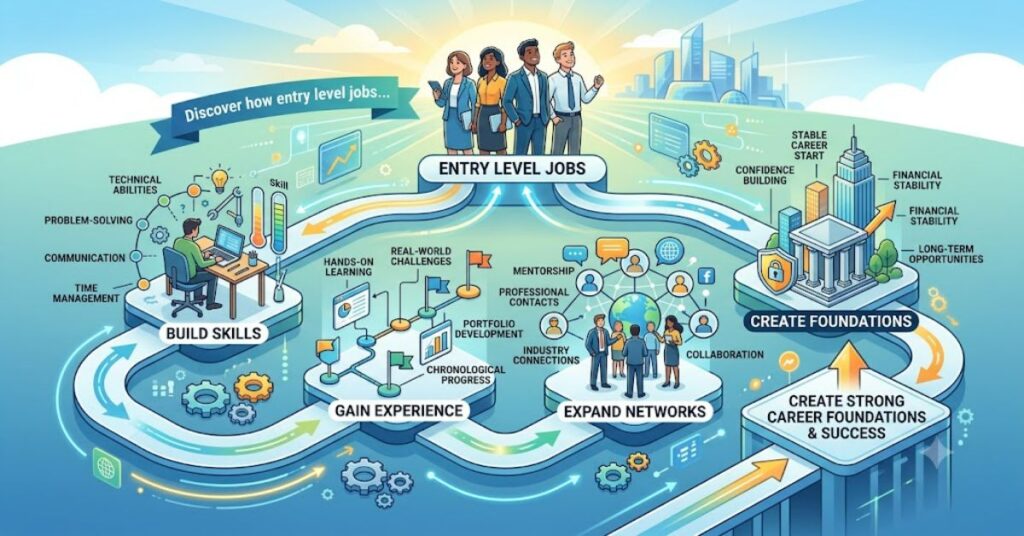
Entry-level jobs provide one of the most important starting points for building a career. These roles allow individuals to gain workplace experience, develop professional skills, and create networks that can influence future opportunities. For many people entering the workforce for the first time, an entry-level position is the first step towards long-term career progression.
The purpose of these roles extends beyond earning an income. They introduce employees to professional systems, workplace communication, industry expectations, and practical problem-solving. While some positions require limited prior experience, they often provide structured learning opportunities that help workers understand how organisations operate.
Finding an entry-level job has become more complex as employers increasingly look for candidates who can demonstrate adaptability, digital awareness, and communication skills. A university qualification alone may not guarantee employment, while practical experience gained through internships, volunteering, apprenticeships, and junior roles can improve career prospects.
The modern employment market has also changed the meaning of “starting out”. Many companies now use skills-based recruitment, focusing on what candidates can do rather than only where they studied or how many years they have worked.
This article examines the role of early-career employment, how different types of beginner positions compare, the challenges candidates face, and how these opportunities may develop by 2027.
Understanding the Purpose of Entry Level Jobs
Entry-level positions are designed for people who are beginning their professional journey or moving into a new industry. They typically involve learning responsibilities, receiving supervision, and developing skills through practical experience.
Common examples include:
- Administrative assistants
- Junior marketing assistants
- Customer service representatives
- Graduate trainees
- Sales associates
- Technical support specialists
- Healthcare assistants
- Apprenticeship roles
Although these jobs are often associated with younger workers, they are not limited to recent graduates. Career changers, returning workers, and people developing new skills may also use entry-level roles to transition into different industries.
The main value of these positions comes from workplace exposure. Employees learn how decisions are made, how teams collaborate, and how professional standards are maintained.
How Entry-Level Roles Create Career Foundations
A strong early-career role usually provides three important benefits:
| Benefit | Career Impact |
| Practical experience | Helps employees apply theoretical knowledge |
| Professional networks | Creates relationships with colleagues and industry contacts |
| Transferable skills | Builds communication, organisation and problem-solving abilities |
These advantages often become more valuable over time. A first role may not define an entire career, but it can influence future opportunities.
The Changing Hiring Environment for Beginners
The recruitment process for early-career workers has changed significantly.
Companies increasingly use skills-based hiring methods, where candidates are assessed on abilities rather than traditional qualifications alone. According to research from organisations studying labour market trends, employers are placing greater emphasis on adaptability, digital skills, and evidence of practical capability.
This shift has created opportunities for candidates who build experience outside formal education.
For example, someone applying for a junior digital marketing position may strengthen their application through:
- Personal projects
- Social media campaigns
- Online certifications
- Volunteer work
- Freelance assignments
The ability to demonstrate skills can sometimes compensate for limited professional history.
Comparing Different Types of Entry-Level Opportunities
Not all beginner roles provide the same career benefits. The best option depends on personal goals, industry expectations, and opportunities for development.
| Role Type | Main Skills Developed | Growth Potential |
| Graduate programmes | Professional knowledge and structured training | High |
| Apprenticeships | Technical skills and workplace learning | High in specialised industries |
| Internships | Industry exposure and networking | Medium to high |
| Customer service roles | Communication and problem-solving | Medium |
| Administrative positions | Organisation and business processes | Medium |
A common misconception is that only jobs directly connected to a desired career path are valuable. In reality, many employers recognise transferable abilities gained from different industries.
For example, customer service experience can demonstrate communication skills, conflict resolution, and customer understanding.
The Role of Skills Development in Early Careers
Modern workplaces require a combination of technical and human skills.
Technical abilities may include:
- Data analysis
- Software knowledge
- Digital marketing tools
- Industry-specific systems
Human skills include:
- Communication
- Team collaboration
- Time management
- Critical thinking
A successful early-career strategy often combines both categories.
Key Skills Employers Look For
| Skill Area | Why Employers Value It |
| Communication | Supports teamwork and customer relationships |
| Digital confidence | Helps employees adapt to modern systems |
| Problem-solving | Improves independent decision-making |
| Learning ability | Allows faster development |
| Reliability | Builds employer trust |
One important insight is that early-career workers often underestimate the value of basic professional behaviours. Showing reliability, meeting deadlines, and communicating clearly can differentiate candidates in competitive hiring markets.
Challenges Facing New Job Seekers
Although entry-level positions provide opportunities, candidates face several challenges.
Limited Experience Requirements
Many employers advertise beginner roles but still request previous experience. This creates a difficult situation where applicants need experience to get a job but need a job to gain experience.
A practical solution is building evidence through:
- Short-term projects
- Volunteering
- Training programmes
- Portfolio development
Wage and Cost Pressures
Young workers and career starters often face financial challenges, especially in regions with high living costs.
The value of an entry-level position should therefore be evaluated beyond salary alone. Training quality, progression opportunities, and workplace stability also matter.
Automation and Technology Changes
Automation is affecting many routine tasks traditionally performed by junior employees.
However, technology is also creating new opportunities in areas such as:
- Digital support
- Data management
- Artificial intelligence operations
- Technology-assisted customer services
The key challenge is developing skills that complement technology rather than compete directly with it.
Real-World Impact of Early Career Employment
Entry-level employment has broader economic importance.
When people successfully enter the workforce, they contribute through:
- Increased economic participation
- Higher future earning potential
- Professional skill development
- Industry talent pipelines
Employers also benefit because junior workers can become future specialists, managers, and organisational leaders.
Many successful professionals begin with roles that appear modest but provide valuable knowledge about business operations.
The Future of Entry Level Jobs in 2027
By 2027, early-career employment is expected to continue changing due to technology, workplace flexibility, and evolving recruitment practices.
Several trends are likely to influence the market:
Skills-Based Recruitment Growth
Employers are expected to continue moving towards evaluating demonstrated abilities rather than relying only on traditional credentials.
Artificial Intelligence Assistance
AI tools may automate some routine administrative tasks, but they are also likely to create demand for workers who can manage, interpret, and apply technology effectively.
More Flexible Career Paths
Career development may become less linear. Workers may combine employment, freelance projects, certifications, and online learning to build experience.
However, uncertainty remains. Some industries may reduce junior hiring because of automation, while others may create new beginner opportunities around emerging technologies.
The strongest candidates will likely be those who combine adaptability with continuous learning.
Key Takeaways
- Entry-level jobs provide essential experience for professional development.
- Skills and practical achievements are becoming increasingly important in hiring decisions.
- Beginner roles can create valuable networks that influence future opportunities.
- Employers benefit from developing talent internally through training programmes.
- Technology is changing early-career work but also creating new skill demands.
- Career starters should focus on learning opportunities as well as immediate salary.
Conclusion
Entry-level jobs remain a vital part of professional development, offering individuals the chance to gain experience, confidence, and workplace knowledge. Although the employment environment has become more competitive, early-career opportunities continue to provide valuable pathways into different industries.
The most successful approach is not simply finding the first available position but choosing roles that offer learning, mentorship, and opportunities to develop transferable skills. As employers continue adopting skills-based recruitment and technology-driven workflows, adaptability will become increasingly important.
For organisations, investing in junior talent creates future workforce strength. For individuals, early roles provide the foundation for building long-term professional success.
The future of work may look different, but the importance of gaining practical experience remains unchanged.
Frequently Asked Questions
What are entry-level jobs?
Entry-level jobs are positions designed for people with limited professional experience. They help workers develop skills, understand workplace expectations, and begin building their careers.
How can I get an entry-level job without experience?
Candidates can improve their chances by gaining practical experience through volunteering, internships, personal projects, certifications, and demonstrating transferable skills.
Are entry-level jobs only for graduates?
No. These roles are also suitable for career changers, returning workers, and people entering a new industry.
Which skills help with entry-level jobs?
Communication, teamwork, digital literacy, problem-solving, and willingness to learn are commonly valued by employers.
Will AI reduce entry-level job opportunities?
AI may automate some routine tasks, but it is also creating new roles requiring technology management, analysis, and human decision-making skills.
How important are entry-level jobs for career growth?
They are often essential because they provide workplace experience, professional networks, and knowledge needed for future advancement.
Methodology
This article was developed using publicly available labour market research, employment reports, and workforce development information. Sources were reviewed to understand current hiring practices, skills trends, and future workplace changes.
The analysis considers both employer and employee perspectives. Limitations include differences between industries, regions, and economic conditions that can influence employment opportunities.
This article was drafted with AI assistance and reviewed for accuracy. All claims, statistics, and references should be independently verified before publication.
References
Organisation for Economic Co-operation and Development. (2023). OECD Employment Outlook 2023: Artificial Intelligence and the Labour Market. OECD Publishing.
World Economic Forum. (2023). The Future of Jobs Report 2023. World Economic Forum.
U.S. Bureau of Labor Statistics. (2024). Employment Projections and Occupational Outlook Information. U.S. Department of Labor.
LinkedIn Economic Graph. (2024). Labour Market Insights and Skills-Based Hiring Trends. LinkedIn Corporation.