Montezuma’s revenge is a common slang term for travellers’ diarrhoea, particularly when the illness occurs during or after travel to Mexico. The condition is not a disease unique to Mexico, however. Travellers’ diarrhoea can occur in many destinations, and the CDC identifies Mexico among regions where the risk is elevated.
The illness is usually caused by consuming food or water contaminated with infectious organisms. These can include bacteria, viruses and parasites. Symptoms may begin during a trip or, in some cases, after returning home.
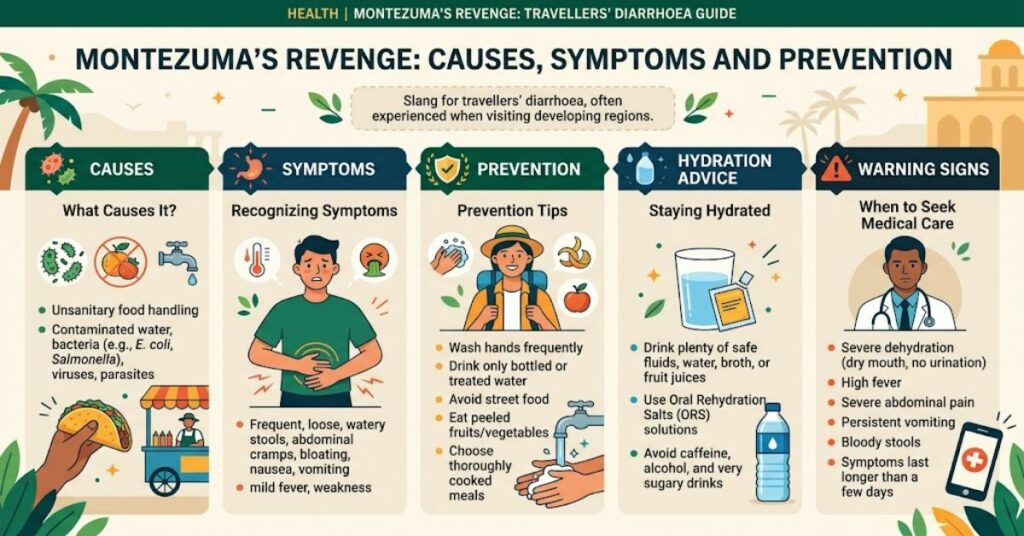
Typical symptoms include loose or watery stools, abdominal cramps, urgency, nausea and sometimes vomiting. Fever or blood in the stool can occur with more serious infections and changes how the illness should be managed.
The nickname itself is informal rather than medical. It has been used for decades as a humorous reference to the gastrointestinal problems some visitors experience while travelling in Mexico. The medical term remains travellers’ diarrhoea.
For most otherwise healthy adults, the condition is unpleasant rather than dangerous, but fluid and electrolyte loss can become important if diarrhoea is severe or accompanied by repeated vomiting.
Why Does Travellers’ Diarrhoea Happen?
Travellers can encounter microorganisms that their bodies have not previously encountered or that are more common in the destination environment. Contaminated food and water are major routes of exposure.
The CDC’s 2026 Yellow Book explains that travellers’ diarrhoea is caused by a range of intestinal pathogens. Bacterial infections are common, but viruses and parasites can also be responsible.
Food preparation and sanitation are important factors. Raw produce, undercooked meat, seafood, unpasteurised products and food that has been kept at unsafe temperatures can carry pathogens. Contaminated water can also create a risk.
| Potential exposure | Why it matters | Practical precaution |
| Untreated water | May contain infectious organisms | Use sealed, treated or boiled water |
| Ice of uncertain origin | May be made from contaminated water | Avoid unless the water source is safe |
| Raw produce | Can become contaminated during handling | Choose peelable or properly washed produce |
| Undercooked food | Pathogens may survive inadequate cooking | Choose food cooked thoroughly and served hot |
| Poor hand hygiene | Transfers organisms to food and the mouth | Wash hands before eating |
Importantly, prevention advice cannot eliminate the risk completely. The CDC notes that even travellers who follow food and water precautions can still develop diarrhoea because restaurant hygiene and local sanitation conditions are not always under the traveller’s control.
What Are the Symptoms?
Symptoms vary according to the infectious organism and the individual. Common symptoms include frequent loose stools, abdominal discomfort, cramps and an urgent need to use the toilet.
Nausea and vomiting may also occur. Some infections cause fever, while invasive infections can produce bloody diarrhoea.
A useful way to think about severity is not simply the number of bowel movements but how much the illness interferes with normal activity. The CDC classifies mild diarrhoea as tolerable and not disruptive, moderate illness as distressing or activity-limiting, and severe illness as incapacitating. Dysentery, meaning bloody diarrhoea, is considered severe.
| Severity | General effect | Typical consideration |
| Mild | Little disruption | Fluids and symptom management |
| Moderate | Interferes with activities | Medical advice may be appropriate |
| Severe | Prevents normal activities | Medical assessment and treatment may be required |
| Bloody diarrhoea | Indicates possible invasive infection | Prompt medical assessment |
How Can You Prevent Montezuma’s Revenge?
The best approach is to reduce exposure while recognising that no method is completely reliable.
Choose food that is thoroughly cooked and served hot. Be cautious with raw foods, unpasteurised products and food that has been sitting at room temperature for long periods. Fruits that can be peeled are generally easier to manage safely than raw produce that cannot be peeled.
For drinks, use factory-sealed beverages or water known to have been treated appropriately. Ice deserves the same consideration because it can introduce contaminated water into an otherwise safe drink.
Hand hygiene also matters. Soap and water are preferred, while alcohol-based hand sanitiser containing at least 60% alcohol can be useful when washing facilities are unavailable.
One practical insight is that prevention should focus on exposure control rather than fear of particular foods. No individual dish automatically causes travellers’ diarrhoea. Handling, storage, cooking, water quality and hygiene all affect risk.
What Should You Do If You Get It?
Hydration is the first priority. Diarrhoea removes water and electrolytes from the body, so replacing both is important.
For significant fluid loss, oral rehydration solution is particularly useful. These preparations contain an appropriate balance of water, salts and glucose and are widely available in pharmacies and shops in many countries.
Loperamide can reduce diarrhoea and urgency in appropriate adults, which can be useful during unavoidable travel. However, antimotility medicines should not be used as sole treatment when there is bloody diarrhoea or diarrhoea accompanied by fever.
Antibiotics are not automatically required. Current CDC guidance discourages routine antibiotic prevention for most travellers because of adverse effects and antimicrobial-resistance concerns. For severe travellers’ diarrhoea, clinicians may prescribe an appropriate antibiotic based on the circumstances.
When Should You See a Doctor?
Medical attention is important when symptoms become severe or fail to improve.
Seek professional advice for bloody diarrhoea, significant fever, persistent vomiting, signs of dehydration or diarrhoea that continues for several days. People who are older, very young, immunocompromised or living with significant chronic illness may need earlier assessment.
Persistent diarrhoea lasting more than 14 days requires a different approach because parasites and other causes become more relevant. The CDC recommends evaluation for persistent post-travel diarrhoea rather than simply continuing self-treatment.
The Future of Montezuma’s Revenge in 2027
The term itself is likely to remain part of travel vocabulary, although healthcare professionals will continue to use the clinical term travellers’ diarrhoea.
The more important change concerns how travellers manage the illness. Current travel-medicine guidance increasingly emphasises appropriate hydration, antimicrobial stewardship and destination-specific preparation rather than routine preventive antibiotics.
Mexico-specific travel guidance also continues to identify travellers’ diarrhoea as a relevant health consideration for visitors.
By 2027, the practical message is unlikely to change substantially: reduce exposure where possible, carry suitable hydration supplies and seek medical help when symptoms indicate something more serious.
Key Insights
- The nickname refers to travellers’ diarrhoea, not a Mexico-specific disease.
- Several types of pathogens can cause the condition.
- Food and water precautions reduce risk but cannot guarantee prevention.
- Hydration and electrolyte replacement are central to management.
- Loperamide may relieve symptoms in suitable cases but has important limitations.
- Routine preventive antibiotics are not recommended for most travellers.
- Persistent or severe symptoms can require diagnostic testing and targeted treatment.
Conclusion
Montezuma’s revenge is a memorable nickname for a very ordinary medical problem: travellers’ diarrhoea. Although the expression is strongly associated with Mexico, the condition occurs in many parts of the world and can be caused by a range of bacteria, viruses and parasites.
For travellers, the most useful response is practical rather than alarmist. Food and water precautions, regular handwashing and sensible choices about raw or undercooked food can reduce exposure. They cannot remove the risk entirely.
If diarrhoea does occur, maintaining hydration is the central priority. Oral rehydration solution becomes particularly valuable when fluid losses are substantial. Symptom-relieving medicines may help selected travellers, while antibiotics should be reserved for situations where medical guidance indicates that they are appropriate.
Blood in the stool, significant fever, severe dehydration, repeated vomiting or prolonged symptoms should not be dismissed as an ordinary travel inconvenience. Those signs can require professional assessment and targeted treatment.
FAQ
What is Montezuma’s revenge?
It is an informal term for travellers’ diarrhoea, especially when associated with travel to Mexico. It is not a distinct disease.
Why is it called Montezuma’s revenge?
The expression is a humorous nickname linking gastrointestinal illness with travel to Mexico. It is not a medical diagnosis and does not identify a specific pathogen.
Can you get Montezuma’s revenge in Mexico?
Yes. The CDC identifies travellers’ diarrhoea as a frequent health concern for visitors to Mexico. However, similar illnesses occur in many other destinations.
How can travellers prevent it?
Choose thoroughly cooked food, use safe drinking water, avoid uncertain ice and practise good hand hygiene. These measures lower exposure risk but cannot guarantee prevention.
Is loperamide safe for travellers’ diarrhoea?
It can provide symptomatic relief for appropriate patients, but it should not be used alone when diarrhoea is accompanied by blood or fever.
When does travellers’ diarrhoea need medical attention?
Seek medical care for bloody diarrhoea, severe symptoms, dehydration, persistent vomiting, significant fever or symptoms that continue rather than resolving normally.
Methodology
This article was researched using current travel-health guidance, with particular reliance on the CDC Yellow Book 2026 chapters covering travellers’ diarrhoea, food and water precautions, Mexico and post-travel diarrhoea. The guidance was checked for prevention, symptom severity, hydration, antimotility medicines, antibiotics and persistent illness.
The article does not present Montezuma’s revenge as a distinct disease because the term is slang for travellers’ diarrhoea. Treatment decisions can vary according to age, pregnancy, underlying illness, symptom severity, destination and suspected pathogen. This article is general information and does not replace individual medical advice.
AI Editorial Disclosure: This article was drafted with AI assistance and should be reviewed by a qualified human editor before publication. Medical claims should be checked against current clinical guidance before the article goes live.
References
Centers for Disease Control and Prevention. (2026). Travelers’ diarrhea. CDC Yellow Book: Health Information for International Travel.
Centers for Disease Control and Prevention. (2025). Food and water precautions for travelers. CDC Yellow Book: Health Information for International Travel.
Centers for Disease Control and Prevention. (2026). Mexico. CDC Yellow Book: Health Information for International Travel.
Centers for Disease Control and Prevention. (2025). Post-travel diarrhea. CDC Yellow Book: Health Information for International Travel.
Centers for Disease Control and Prevention. (2024). Preventing Shigella infection while traveling. National Center for Emerging and Zoonotic Infectious Diseases.