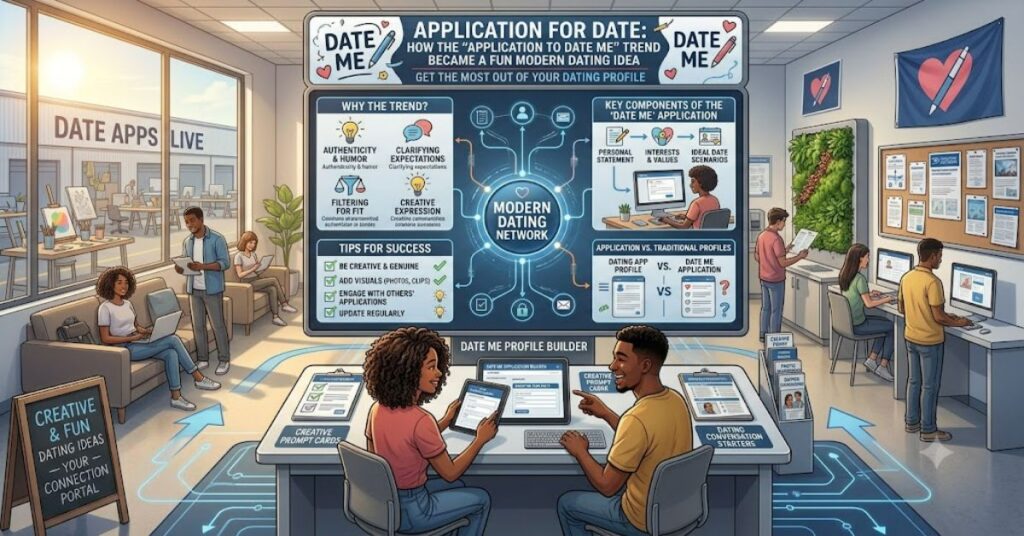
An application for date is a creative, informal form designed to present someone as a potential romantic partner. Often called an “application to date me,” this concept is usually shared online as a funny questionnaire, social media post, or personalised document that lists interests, personality traits, expectations, and relationship preferences.
Unlike traditional dating profiles, these applications are not usually intended to replace dating platforms or formal relationship introductions. Instead, they create a playful interaction by turning the idea of dating into a personalised experience.
The popularity of this format grew alongside social media culture, where people increasingly use humour, templates, and creative content to communicate identity. A person might create sections such as “qualifications,” “relationship skills,” “warning signs,” “favourite activities,” or “requirements for applicants.”
The appeal comes from its combination of entertainment and self-expression. A well-designed dating application allows someone to communicate personality in a way that feels less predictable than a standard introduction.
However, the trend also raises questions about whether turning relationships into application-style formats changes expectations around romance, compatibility, and personal presentation.
What Is an Application for Date?
The idea behind an application for date is simple: a person creates a fictional “job application” style document where they present themselves as a potential romantic partner.
The format often includes:
- Personal information
- Interests and hobbies
- Personality traits
- Relationship preferences
- Humorous questions
- Compatibility requirements
- Reasons someone should consider dating them
The purpose is usually entertainment rather than evaluation. It creates a structured way for people to share information while maintaining a playful tone.
The format became popular because it combines two familiar internet behaviours: completing forms and sharing personal content. Online audiences already engage with quizzes, personality tests, and interactive posts, making dating applications a natural extension of digital self-expression.
Why People Create Dating Applications
Modern dating increasingly involves digital communication. Dating platforms, social media profiles, and online communities have changed how people introduce themselves.
A traditional dating profile usually focuses on photos, short descriptions, and quick compatibility signals. A playful application adds another layer by allowing more storytelling.
Common Reasons People Use Them
| Purpose | How It Works |
| Entertainment | Creates humour between friends or followers |
| Self-expression | Shows personality beyond basic details |
| Conversation starter | Gives others easy topics to discuss |
| Creativity | Allows custom designs and unique formats |
| Social sharing | Works well as online content |
One important difference is emotional tone. A normal dating profile often feels like a search for matches, while an application to date me format feels more like an invitation to interact.
Application for Date vs Traditional Dating Profiles
Although both formats introduce people, they serve different purposes.
| Feature | Application for Date | Traditional Dating Profile |
| Main goal | Entertainment and connection | Finding potential matches |
| Style | Humorous and creative | Short and direct |
| Format | Questionnaire or document | Profile page |
| Audience | Friends, followers, potential partners | Dating platform users |
| Level of detail | Customised sections | Limited profile fields |
The application format gives users more freedom because there are fewer rules. Someone can design it around their personality instead of fitting into a fixed platform structure.
The Psychology Behind the Trend
The popularity of dating applications reflects several changes in communication habits.
Personal Branding Has Entered Dating Culture
People increasingly think about how they present themselves online. Social media has encouraged users to develop personal identities through photos, writing styles, interests, and humour.
A dating application becomes a small personal branding exercise. It allows someone to control the narrative around who they are.
Humour Reduces Social Pressure
Dating can involve uncertainty and anxiety. A humorous form reduces pressure because it creates a playful environment.
Instead of directly asking someone about their interests or expectations, the format provides a comfortable structure for conversation.
Digital Communities Reward Creativity
Platforms such as TikTok and Instagram have increased demand for creative personal content.
The more unique a format feels, the more likely people are to engage with it, share it, or adapt it for their own use.
Practical Elements of a Good Dating Application
A successful application for date should balance humour with genuine personality.
Useful sections may include:
| Section | Example Content |
| About Me | Personality, hobbies, interests |
| Skills | Cooking, listening, planning dates |
| Compatibility Questions | Favourite activities or values |
| Fun Requirements | Humorous expectations |
| Relationship Goals | What someone hopes to build |
The strongest versions avoid becoming a simple checklist. The purpose is not to judge someone like a job candidate but to create an enjoyable introduction.
Risks and Limitations of Dating Application Trends
While the concept is mostly harmless and playful, there are some limitations.
Relationships Are More Complex Than Forms
A document can show preferences and personality, but it cannot measure emotional connection, communication style, or long-term compatibility.
A risk is that people may over-focus on written impressions rather than real interactions.
Online Presentation May Differ From Reality
Digital content often represents a carefully selected version of someone’s personality. A creative application may highlight strengths while leaving out everyday behaviours.
This challenge exists across all forms of online dating and social media interaction.
Humour Requires Context
A joke that works among friends may not translate well with strangers. Dating applications should match the audience and relationship stage.
Cultural Impact of the Application to Date Me Trend
The trend reflects a broader movement toward informal relationship communication. Younger digital audiences often prefer experiences that feel personalised rather than traditional.
The rise of templates, online forms, and interactive content has influenced how people communicate important parts of their lives.
A dating application is essentially a social experiment: it turns romantic introduction into a creative exchange rather than a simple question-and-answer process.
The Future of Application for Date in 2027
By 2027, personalised dating formats are likely to continue evolving alongside digital communication trends. Artificial intelligence tools, design platforms, and social media templates may make it easier for people to create personalised relationship content.
However, the future of these formats will depend on maintaining authenticity. Dating technology continues moving toward greater personalisation, but genuine connection still relies on communication and shared experiences.
Potential developments may include:
- Interactive digital dating introductions
- AI-assisted personality questionnaires
- More personalised social matching formats
- Creative profile experiences beyond photos and short descriptions
The main limitation will remain the difference between digital presentation and real-world compatibility.
Key Takeaways
- Dating applications are primarily creative communication tools rather than serious selection systems.
- The trend reflects the influence of social media on modern relationship culture.
- Humour helps reduce pressure during early romantic conversations.
- Personalised formats allow people to express identity more creatively.
- Digital introductions should complement, not replace, real conversations.
- Authenticity remains the most important factor in relationship building.
Conclusion
The application for date trend represents a playful shift in how people introduce themselves and explore romantic connections. By borrowing the structure of professional applications and combining it with humour, individuals create a unique way to share personality and interests.
Although these forms are not a replacement for genuine dating experiences, they demonstrate how digital culture continues to influence relationships. Modern communication increasingly values creativity, individuality, and interaction.
The success of a dating application does not come from the format itself but from the conversation it creates. When used thoughtfully, it can become a fun way to break the ice and encourage meaningful connections.
Frequently Asked Questions
What is an application for date?
An application for date is a playful form where someone introduces themselves as a potential romantic partner using a questionnaire-style format.
Is an application to date me a real dating requirement?
Usually, no. It is mainly a humorous social trend designed for entertainment and conversation.
What should I include in a dating application?
Include personality traits, interests, hobbies, relationship preferences, and fun questions that encourage discussion.
Why are dating applications popular online?
They combine humour, creativity, and personal storytelling, making them suitable for sharing on social platforms.
Can a dating application help people find relationships?
It can start conversations, but genuine compatibility depends on real communication and shared experiences.
Methodology
This article was developed through analysis of publicly observable online communication trends, social media behaviours, and digital relationship culture. Sources were reviewed for general understanding of online dating evolution and social media interaction patterns.
The topic has limited formal academic research because the “application to date me” format is primarily a cultural trend rather than a structured dating system. Therefore, the analysis focuses on documented digital behaviour patterns rather than unsupported claims about user outcomes.
Limitations include the changing nature of social media trends and differences between online humour formats and real-world relationship behaviour.
References (APA Style)
Pew Research Center. (2023). The experiences of online dating users. Pew Research Center.
Pew Research Center. (2024). Social media use and online communication trends. Pew Research Center.
DataReportal. (2024). Digital 2024: Global overview report. DataReportal.
Editorial Note: This article was drafted with AI assistance and should be reviewed by a human editor before publication. All claims, references, and trend interpretations should be independently verified before going live.