
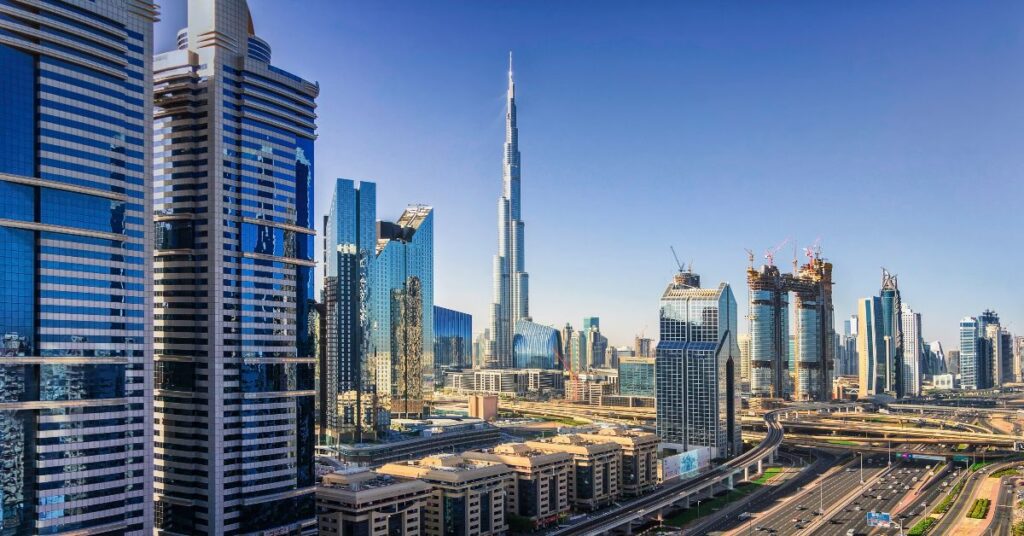
Emirates Trading Agency is a UAE-based conglomerate known for its extensive involvement in civil construction, electro-mechanical engineering, power projects, elevator engineering, facilities management, real estate, and bulk commodities trading. Founded in 1973, the organization has participated in some of the most recognizable infrastructure and development projects in the United Arab Emirates.
For business professionals, investors, contractors, and students of Middle Eastern commerce, ETA represents an important example of how diversified conglomerates helped shape the UAE’s modern economic development. The company’s portfolio extends beyond traditional construction into engineering services, property development, automotive trading, and industrial operations.
Understanding ETA provides insight into the broader story of Gulf-region industrialization, infrastructure expansion, and the evolution of family-owned business groups that transformed the UAE into a global commercial hub.
The Origins of Emirates Trading Agency
Emirates Trading Agency was established in 1973 during a period when the UAE was investing heavily in infrastructure, transportation, and urban development. According to company information, ETA became part of the Al Ghurair business ecosystem and expanded rapidly as the country’s economic ambitions grew.
The timing proved significant. The 1970s marked the beginning of large-scale modernization efforts across the Emirates, creating demand for:
- Civil construction expertise
- Mechanical and electrical engineering services
- Utility infrastructure
- Transportation networks
- Commercial and residential developments
As demand increased, ETA diversified into multiple business sectors rather than remaining solely a construction contractor.
Core Business Segments
Civil Construction
Construction remains one of ETA’s foundational activities. Through its construction divisions, the group has supported commercial, residential, transportation, and infrastructure projects throughout the region.
Key capabilities include:
- Structural engineering
- Infrastructure development
- Commercial construction
- Residential projects
- Large-scale urban developments
Electro-Mechanical Engineering
Electro-mechanical services represent a critical component of modern construction projects.
ETA Engineering has been involved in:
- Building services engineering
- Mechanical systems
- Electrical installations
- Power control systems
- Switchgear manufacturing and assembly
- EPC (Engineering, Procurement, and Construction) projects
Power Projects and Utilities
The company’s power division specializes in transmission, distribution, and utility-related infrastructure. These projects often require long development timelines, technical expertise, and strict compliance standards.
Elevator and Escalator Engineering
One of ETA’s distinctive business areas has been elevator and escalator engineering through ETA Melco. As high-rise development accelerated across the Gulf region, vertical transportation systems became a specialized and valuable segment.
Bulk Commodities Trading
Beyond engineering and construction, ETA expanded into commodity markets.
Activities have included:
- Bulk commodities trading
- Paper trading
- Oil trading
- Industrial material supply chains
Business Portfolio Overview
| Division | Primary Focus | Industry Impact |
| Construction | Infrastructure and building projects | Urban development |
| Engineering | Mechanical and electrical systems | Industrial growth |
| Power Projects | Utility infrastructure | Energy reliability |
| Elevator Engineering | Elevators and escalators | High-rise development |
| Facilities Management | Building operations and maintenance | Asset longevity |
| Real Estate | Property development | Commercial expansion |
| Commodities Trading | Industrial materials and resources | Supply chain support |
Sources: ETA company profiles and engineering presentations.
Landmark Projects Associated with ETA
ETA has publicly stated involvement in numerous notable projects across the UAE and internationally. These projects illustrate the scale at which the organization has operated.
Notable Developments
| Project | Location | Sector |
| Dubai International Airport | Dubai | Aviation Infrastructure |
| Dubai Metro | Dubai | Transportation |
| Burj Khalifa | Dubai | High-Rise Development |
| Burj Al Arab | Dubai | Hospitality |
| Emirates Towers | Dubai | Commercial Real Estate |
| Emirates Palace | Abu Dhabi | Hospitality |
| Cleveland Clinic Abu Dhabi | Abu Dhabi | Healthcare Infrastructure |
| Delhi Metro | India | Transportation |
These projects required coordination across multiple disciplines, including civil engineering, mechanical systems, electrical infrastructure, and project management.
Strategic Importance of Diversification
One of the most interesting aspects of Emirates Trading Agency is its diversified structure.
Why Diversification Matters
Many construction firms face cyclical demand. During economic slowdowns, construction activity can decline sharply.
ETA’s broader portfolio helps offset these risks through:
- Commodities revenue
- Facilities management contracts
- Property operations
- Engineering services
- Automotive activities
Original Insight #1
Diversification in Gulf conglomerates is often viewed as expansion for growth. In reality, it also functions as a risk-management strategy because infrastructure spending can fluctuate significantly with government budgets and economic cycles.
Original Insight #2
Facilities management creates recurring revenue streams that continue long after construction projects finish, improving financial stability compared with pure contracting businesses.
Original Insight #3
Elevator engineering may appear niche, but in rapidly urbanizing cities such as Dubai, vertical transportation systems became a strategic specialization due to the concentration of skyscraper developments.
Market Impact in the UAE
The rise of ETA coincided with the UAE’s transformation into a global commercial and logistics center.
The company’s activities contributed to:
- Infrastructure modernization
- Employment generation
- Industrial capability development
- Regional engineering expertise
- International project execution capacity
Large conglomerates like ETA helped establish local technical expertise that reduced dependence on foreign contractors for every major project.
Risks and Trade-Offs
Despite the advantages of diversification, conglomerate structures also face challenges.
Operational Complexity
Managing multiple business divisions requires:
- Strong governance
- Capital allocation discipline
- Regulatory compliance
- Workforce coordination
Economic Exposure
Many ETA business units remain linked to:
- Construction cycles
- Commodity prices
- Regional infrastructure spending
Competitive Pressure
The UAE construction and engineering market includes major regional and international competitors, creating ongoing pressure on margins and project acquisition.
| Advantage | Potential Challenge |
| Diverse revenue streams | Complex management structure |
| Strong project portfolio | High operational costs |
| Regional brand recognition | Intense competition |
| Engineering expertise | Economic cycle sensitivity |
Lessons Businesses Can Learn from ETA
Several strategic lessons emerge from ETA’s development.
Build Adjacent Capabilities
Rather than entering unrelated sectors immediately, ETA expanded into complementary industries such as engineering, facilities management, and power infrastructure.
Focus on Long-Term Infrastructure Trends
Many of the company’s investments aligned with decades-long urbanization and industrialization trends.
Develop Specialized Expertise
Technical specialties such as electromechanical systems and elevator engineering created differentiation in competitive markets.
The Future of Emirates Trading Agency in 2027
Looking toward 2027, the environment for engineering and infrastructure companies in the UAE continues to evolve.
Several trends are likely to influence organizations operating in ETA’s sectors:
Infrastructure Modernization
Governments across the Gulf continue investing in:
- Smart cities
- Transportation systems
- Energy infrastructure
- Sustainable buildings
Energy Transition
Power project divisions will increasingly face demand for:
- Grid modernization
- Renewable integration
- Energy-efficiency upgrades
Facilities Technology
Building management systems are becoming more data-driven through:
- Predictive maintenance
- IoT sensors
- Digital twins
- Energy analytics
Reality Check
While infrastructure spending remains strong in many Gulf markets, growth rates depend on government priorities, private-sector investment, and broader global economic conditions. Forecasts should therefore be viewed cautiously rather than as guarantees.
Key Takeaways
- Emirates Trading Agency evolved from a construction-focused company into a diversified UAE conglomerate.
- The organization has participated in several landmark infrastructure and real-estate projects.
- Electro-mechanical engineering and power projects remain central capabilities.
- Diversification helped reduce reliance on a single revenue source.
- Facilities management provides recurring business opportunities beyond construction contracts.
- Infrastructure demand and urbanization continue to support many of ETA’s core markets.
- Future growth will likely depend on technology adoption, sustainability initiatives, and regional economic conditions.
Conclusion
Emirates Trading Agency occupies an important place in the UAE’s modern business history. Since its establishment in 1973, the company has expanded from construction into engineering, power projects, facilities management, real estate, elevator systems, and commodities trading. Its involvement in major infrastructure projects reflects both the scale of the UAE’s development ambitions and the capabilities required to support them.
The company’s story also illustrates a broader business lesson: diversification can provide resilience when executed around related competencies. By combining construction expertise with engineering services, utilities, facilities management, and trading operations, ETA built a multifaceted business model capable of serving multiple sectors simultaneously.
As infrastructure modernization, smart-city development, and energy transition initiatives continue across the Gulf region, the capabilities represented by organizations like ETA remain relevant to the region’s long-term economic growth.
FAQ
What is Emirates Trading Agency?
Emirates Trading Agency (ETA) is a UAE-based conglomerate established in 1973 with operations in construction, engineering, power projects, facilities management, real estate, commodities trading, and elevator engineering.
When was ETA founded?
ETA was founded in 1973 and has grown into one of the UAE’s well-known diversified business groups.
What industries does Emirates Trading Agency operate in?
Its activities include civil construction, electro-mechanical engineering, power projects, facilities management, real estate development, elevator engineering, automotive trading, and commodities trading.
What major projects has ETA been involved with?
The company has cited participation in projects such as Dubai Metro, Dubai International Airport, Burj Khalifa, Burj Al Arab, Emirates Palace, and Delhi Metro.
Is Emirates Trading Agency part of a larger group?
Company profiles indicate that ETA has been associated with the Al Ghurair business group in the UAE.
Why is ETA known in the UAE construction sector?
ETA gained recognition through its participation in large-scale infrastructure and engineering projects that supported the UAE’s rapid development over several decades.
Methodology
This analysis was developed using publicly available company profiles, corporate presentations, industry directories, and business databases. Information regarding business divisions, founding dates, specialties, and project involvement was cross-referenced across multiple sources.
Sources used for validation:
- ETA Group company profiles
- Corporate presentations
- Industry directories
- Business intelligence databases
Limitations:
- Some company information originates from corporate descriptions and may emphasize achievements over challenges.
- Detailed financial information is not consistently available through public sources.
- Project participation may vary in scope and should be interpreted within the context provided by company materials.
Editorial balance:
This article recognizes ETA’s contributions to infrastructure development while also discussing operational complexity, competition, and market-cycle risks that affect diversified conglomerates.
References (APA Style)
ETA Group of Companies. (2025). Company profile and specialties. LinkedIn. Retrieved June 2, 2026.
Emirates Trading Agency. (2025). Company overview. LinkedIn. Retrieved June 2, 2026.
Emirates Trading Agency LLC – Power Project Division. (2025). Company profile. Oil & Gas Directory. Retrieved June 2, 2026.
ETA Engineering. (2015). Corporate Presentation. Retrieved June 2, 2026.