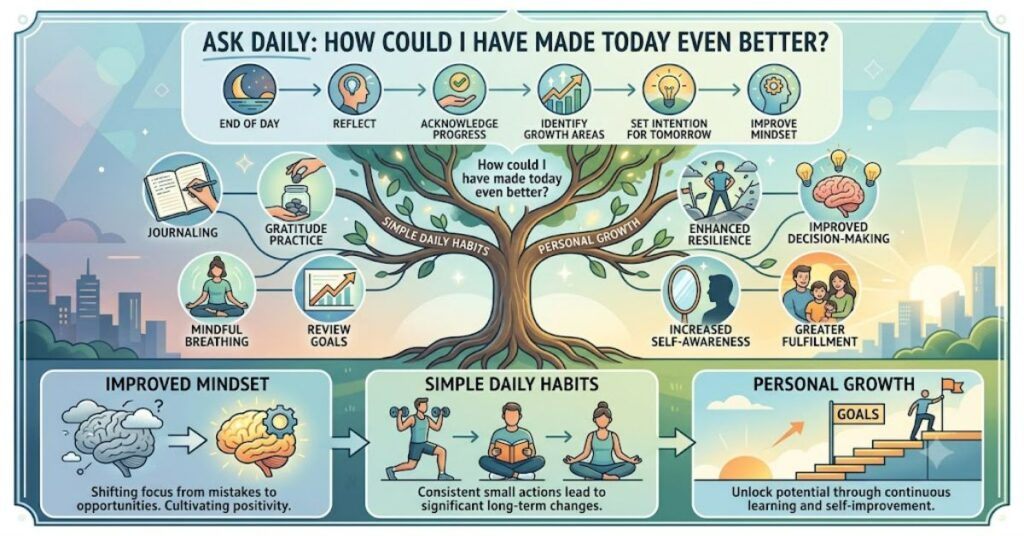
At the end of a busy day, it’s common to think about unfinished tasks or missed opportunities. Instead of focusing on regrets, asking yourself “how could I have made today even better” shifts your mindset toward learning and growth. This simple question isn’t about perfection—it’s about discovering small actions that could improve your happiness, productivity, relationships, and overall well-being.
Personal development experts often recommend spending a few minutes each evening reflecting on the day. Perhaps you could have spent fifteen minutes relaxing without looking at a screen, taken a short walk after dinner, or reached out to a friend you hadn’t spoken to in a while. These seemingly minor choices often have a greater impact than dramatic life changes.
Making each day slightly better doesn’t require expensive courses or complicated routines. It begins with awareness, honest reflection, and a willingness to improve one small habit at a time.
Why Daily Reflection Matters
Reflection gives us an opportunity to pause before rushing into tomorrow. Instead of judging ourselves harshly, we can evaluate what worked well and what could improve.
Benefits of daily reflection include:
- Better decision-making
- Reduced stress
- Increased self-awareness
- Improved emotional intelligence
- Stronger personal relationships
- Better work-life balance
Over time, this habit helps build confidence because progress becomes easier to recognize.
Questions to Ask Yourself Every Evening
Instead of simply asking how your day went, consider questions that encourage meaningful reflection.
- What made me happy today?
- What challenged me?
- Did I spend my time wisely?
- Was I kind to others?
- Did I take care of my physical and mental health?
- What is one thing I can improve tomorrow?
These questions promote learning without encouraging unnecessary self-criticism.
Small Habits That Can Improve Any Day
Many people assume personal growth requires major lifestyle changes. In reality, consistent small habits usually produce the greatest long-term results.
Take a Short Walk
Even a 15-minute walk after work can reduce stress, improve mood, and provide time to think clearly.
Reduce Screen Time
Many people spend hours looking at phones, computers, and televisions. Setting aside technology for a short period helps your mind relax.
Reach Out to Someone
Sending a quick message to a friend or family member strengthens relationships and reminds people they matter.
Practice Gratitude
Writing down three things you’re thankful for encourages a more positive outlook.
Prepare for Tomorrow
Taking ten minutes to organize your schedule can reduce stress the following morning.
Comparison of Daily Habits
| Habit | Time Required | Potential Benefit |
| Evening Walk | 15–20 minutes | Reduces stress and improves mood |
| Gratitude Journal | 5 minutes | Increases positivity |
| Screen-Free Time | 15 minutes | Better mental relaxation |
| Reading | 20 minutes | Continuous learning |
| Planning Tomorrow | 10 minutes | Greater productivity |
Small investments of time often create noticeable improvements.
Common Obstacles
Despite good intentions, many people struggle to maintain positive habits.
Common challenges include:
- Busy schedules
- Fatigue
- Lack of motivation
- Digital distractions
- Perfectionism
Recognizing these obstacles helps you prepare realistic solutions instead of giving up entirely.
Progress Is Better Than Perfection
One of the biggest mistakes in self-improvement is believing every day must be perfect.
Life includes unexpected events, stressful moments, and occasional setbacks. Rather than asking whether the day was perfect, ask whether you learned something valuable.
Improvement comes from consistency—not flawless performance.
A Simple Evening Reflection Routine
Try this five-step routine each night.
- Take three deep breaths.
- Think about one success from the day.
- Identify one thing you would improve.
- Write one goal for tomorrow.
- End with gratitude for something positive.
The entire process takes less than ten minutes but can improve your mindset significantly.
Data Insight: Daily Reflection Practices
| Reflection Activity | Typical Time | Purpose |
| Gratitude Writing | 5 minutes | Build positivity |
| Journaling | 10 minutes | Process emotions |
| Walking | 20 minutes | Reduce stress |
| Meditation | 10 minutes | Improve focus |
| Planning Tomorrow | 10 minutes | Increase productivity |
The Future of Daily Self-Reflection in 2027
As technology becomes increasingly integrated into everyday life, digital wellness tools are expected to become even more personalized. Artificial intelligence may provide customized journaling prompts, mood tracking, and productivity insights based on individual habits.
However, the core principle will remain unchanged: meaningful personal growth depends on honest self-reflection. While apps and wearable devices can provide reminders and data, they cannot replace the personal insights gained from asking thoughtful questions at the end of each day.
Key Takeaways
- Small improvements create significant long-term results.
- Reflection encourages learning instead of regret.
- Gratitude improves emotional well-being.
- Planning tomorrow reduces daily stress.
- Consistency matters more than perfection.
- Positive habits become easier through repetition.
Conclusion
Asking yourself “how could I have made today even better” is one of the simplest yet most effective ways to encourage personal growth. The question shifts your attention away from failure and toward learning. Instead of dwelling on mistakes, you begin identifying practical actions that improve tomorrow.
Whether it’s spending less time on your phone, enjoying a quiet evening walk, reconnecting with a friend, or writing down a few grateful thoughts, these small habits gradually transform your daily life. Improvement doesn’t happen overnight, but every thoughtful decision builds momentum.
The goal isn’t to create a perfect day—it is to make tomorrow just a little better than today.
Frequently Asked Questions
Why should I reflect on my day?
Daily reflection increases self-awareness, helps identify areas for improvement, and reinforces positive habits.
How long should evening reflection take?
Five to ten minutes is usually enough to review your day and prepare for tomorrow.
What if I had a bad day?
Focus on lessons rather than failures. Every difficult day provides an opportunity to learn and improve.
Is journaling necessary?
No. Some people prefer writing, while others simply think through reflection questions quietly.
Can small habits really make a difference?
Yes. Consistent small improvements often produce greater long-term results than occasional major changes.