
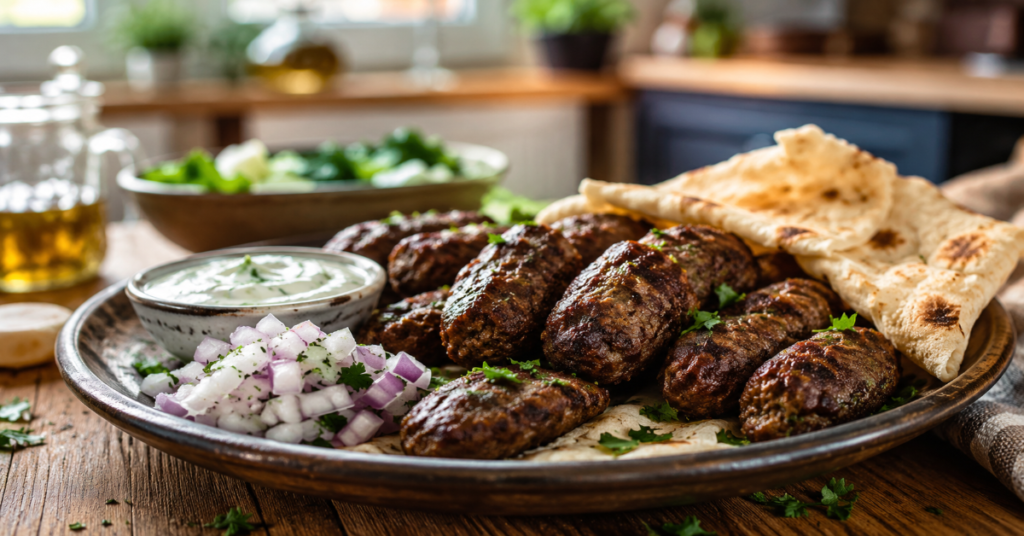
Levapioli is described as a simple meat dish made with ground meat, light spices and small shaped pieces cooked until juicy. For readers searching the term, the clearest answer is this: levapioli appears to be an emerging food name used online for a flexible, home-style meat preparation rather than a dish with a long, well-documented culinary record.
That matters because food writing should separate verified tradition from modern internet labeling. Public results for the exact word are limited and low-authority, while stronger culinary parallels exist in Southeast European ground-meat dishes such as ćevapi, which Britannica describes as small rolls of seasoned ground meat, usually grilled and served in bread.
For Postcard.fm readers who follow food terminology, cultural naming and practical kitchen usage, levapioli sits in a familiar space: simple minced meat, warm spice, easy serving options and a communal eating style. A related Postcard.fm piece on food-linked cultural terms notes that some online food words need careful framing when they lack firm documentation, which is the right editorial approach here: food-related cultural symbolism. (Postcard)
What Levapioli Actually Means
Levapioli is currently best understood as a descriptive food keyword for small ground-meat pieces seasoned lightly and cooked until tender. The supplied brief defines it as a tasty meat dish enjoyed with bread, vegetables or on its own. That gives the article a useful practical angle, but not enough evidence to claim a precise country of origin.
The closest verified comparison is ćevapi or ćevapčići. Britannica identifies ćevapčići as small rolls of seasoned ground meat, commonly beef and lamb, grilled and served in a bread pocket. (Encyclopedia Britannica) TasteAtlas also records regional versions across Bosnia and Herzegovina, including Travnik-style ćevapi made with beef, veal, lamb, salt, pepper and baking soda. (TasteAtlas)
That does not mean levapioli and ćevapi are the same dish. It means the search intent is probably similar: readers want to understand a simple ground-meat food, how it tastes, how it is served and whether it has a cultural background.
Structured Insight Table
| Element | Practical Meaning |
| Main ingredient | Ground meat, usually beef, lamb or mixed meat depending on preference |
| Shape | Small hand-formed pieces, rolls or patties |
| Flavor profile | Warm, savory, lightly spiced and not overly heavy |
| Cooking method | Grilling, pan-searing or broiling |
| Serving style | Bread, onions, vegetables, yogurt-style sauces or plain |
| Editorial caution | Treat as an emerging term unless stronger historical evidence is found |
Levapioli Compared With Similar Meat Dishes
| Dish | Region or Context | Typical Form | Key Difference |
| Levapioli | Emerging online food term | Small seasoned ground-meat pieces | Limited verified history |
| Ćevapi | Balkans, especially Bosnia and Serbia | Small grilled meat rolls | Stronger documented culinary identity |
| Köfte | Turkey, Middle East and surrounding regions | Meatballs or patties | Broader spice range and many local forms |
| Meatballs | Global home cooking | Round minced-meat portions | Often sauced, baked or simmered |
| Seekh kebab | South Asia and Central Asia | Spiced minced meat on skewers | Usually more aromatic and spice-forward |
Why the Dish Works
Levapioli works because it uses a high-reward technique: seasoned ground meat shaped into small pieces. Small portions cook quickly, brown well and remain easy to serve. They also let cooks adjust the dish without changing its basic identity.
The flavor can stay mild with salt, pepper and garlic, or move toward a stronger profile with paprika, chili, cumin or herbs. Coriander is another possible supporting flavor, and Postcard.fm’s guide to coriander’s culinary uses explains why the same plant can contribute citrusy leaf notes or warmer seed aromas depending on form. (Postcard)
The real kitchen advantage is flexibility. A cook can serve levapioli in flatbread with chopped onions, beside roasted vegetables, over rice, with salad or as a small plate for guests.
Practical Cooking Notes
The safest method is simple. Keep the meat cold until mixing. Season gently. Shape with clean hands. Cook over medium-high heat until browned outside and fully cooked inside.
Ground meat needs special care because grinding can move bacteria through the mixture. USDA guidance says ground meats should be cooked to 160°F, or 71.1°C, while ground poultry should reach 165°F. (FSIS)
For home cooks, a thermometer is better than guessing by color. Small pieces can brown quickly while the center remains undercooked, especially if the heat is too high.
Risks and Trade-Offs
The main risk is overclaiming. Levapioli has some recent online coverage, but much of it is general, thin and not enough to prove a long-established tradition. One recent blog describes levapioli as a rustic food tradition, but it does not provide the kind of sourcing needed for strong historical claims.
The second risk is food safety. Because the dish is based on ground meat, safe handling matters more than with whole cuts. Cross-contamination, warm storage and undercooking are the biggest avoidable problems.
The third trade-off is texture. Too much handling can make the meat dense. Too little salt can make it bland. Too much spice can hide the gentle, warm profile that makes the dish easy to enjoy.
Real-World Impact
Levapioli fits a wider cultural trend toward simple, flexible comfort food. It is not expensive, it does not require rare ingredients and it can be adapted across households. That gives it practical appeal for busy families, food bloggers and recipe publishers.
It also shows how food terms spread online before their histories are fully documented. That can be useful when it introduces people to new cooking ideas, but risky when articles present uncertain terms as ancient traditions.
For grill-focused readers, the cooking logic overlaps with live grilling education: direct heat, browning, portion size and heat control all matter. Postcard.fm’s guide to Weber grill demonstrations makes a similar point about learning from real heat behavior rather than product photos or theory alone. (Postcard)
The Future of Levapioli in 2027
By 2027, levapioli will likely develop in one of two ways. Either it becomes a broader recipe keyword used by food blogs, or it remains a niche search term connected to simple ground-meat cooking. The more responsible path is to define it practically while avoiding unsupported origin claims.
Food safety guidance will remain stable. Ground meat will still require careful cooking to safe internal temperatures unless official guidance changes. (FSIS)
The bigger opportunity is editorial. Publishers can win trust by explaining uncertainty clearly, comparing levapioli with verified dishes and offering useful cooking guidance instead of padding the article with invented folklore.
Takeaways
- Levapioli should be presented as a simple ground-meat dish, not as a fully verified historic cuisine.
- Its practical appeal comes from low-cost ingredients, fast cooking and flexible serving options.
- The strongest culinary comparison is ćevapi, but the two should not be treated as identical without evidence.
- Safe internal temperature matters because the dish uses ground meat.
- The best version balances browning, juiciness and light seasoning.
- Editorial honesty is part of food authority when a term has thin documentation.
Conclusion
Levapioli is useful as a modern food keyword because it points to something readers can understand quickly: seasoned ground meat shaped into small pieces and cooked until rich, warm and juicy. The dish is easy to serve, easy to adapt and realistic for everyday kitchens.
The careful editorial point is just as important. Current evidence does not support treating levapioli as a deeply documented traditional dish with a fixed origin story. A better article gives readers practical value, explains the closest verified comparisons and states the limits clearly.
That makes levapioli less of a mystery and more of a useful cooking idea. It can be mild or spicy, small or large, grilled or pan-seared. What matters most is honest sourcing, safe cooking and a final plate that feels simple, generous and satisfying.
FAQ
What is levapioli?
Levapioli is best described as a simple ground-meat dish shaped into small pieces, lightly seasoned and cooked until juicy. It appears to be an emerging online food term rather than a dish with a clearly verified historic origin.
Is levapioli the same as ćevapi?
No. The two are similar in concept because both involve small seasoned ground-meat pieces. However, ćevapi has stronger documented Balkan context, while levapioli has limited public verification.
What meat is best for levapioli?
Beef, lamb or a mixed ground-meat blend can work. The best choice depends on flavor preference, fat content and local availability. A little fat helps keep the pieces juicy.
How should levapioli be served?
Serve it with bread, onions, vegetables, salad, rice or a yogurt-style sauce. It also works as a small plate for sharing.
What temperature should levapioli reach?
Because it uses ground meat, cook it to at least 160°F, or 71°C. Use a food thermometer rather than relying only on color.
Can levapioli be spicy?
Yes. The base version is mild, but chili, paprika, cumin or black pepper can make it stronger. Add heat gradually so the meat flavor remains clear.
Methodology
This article was drafted from the uploaded Postcard.fm production brief and checked against public sources for food context, internal-link relevance and safety guidance. The exact term “levapioli” has limited high-authority documentation, so the article avoids unsupported origin claims. Verified context was drawn from Britannica on ćevapčići, USDA and FoodSafety.gov cooking-temperature guidance, TasteAtlas regional food descriptions and live Postcard.fm pages relevant to food terminology and grilling.
References
Britannica. (n.d.). Ćevapčići. Encyclopaedia Britannica. (Encyclopedia Britannica)
FoodSafety.gov. (2024). Safe minimum internal temperatures. U.S. Department of Health and Human Services. (FoodSafety.gov)
Postcard.fm. (2026). Çbiri meaning: Game, food and culture explained. (Postcard)
Postcard.fm. (2026). Koriandri: Uses, benefits and history. (Postcard)
Postcard.fm. (2026). Weber Grillvorführung: What to expect, how it works and why it matters in 2026. (Postcard)
TasteAtlas. (2026). Top Bosnian and Herzegovinian meat dishes. (TasteAtlas)
U.S. Department of Agriculture, Food Safety and Inspection Service. (n.d.). Safe minimum internal temperature chart. (FSIS)