
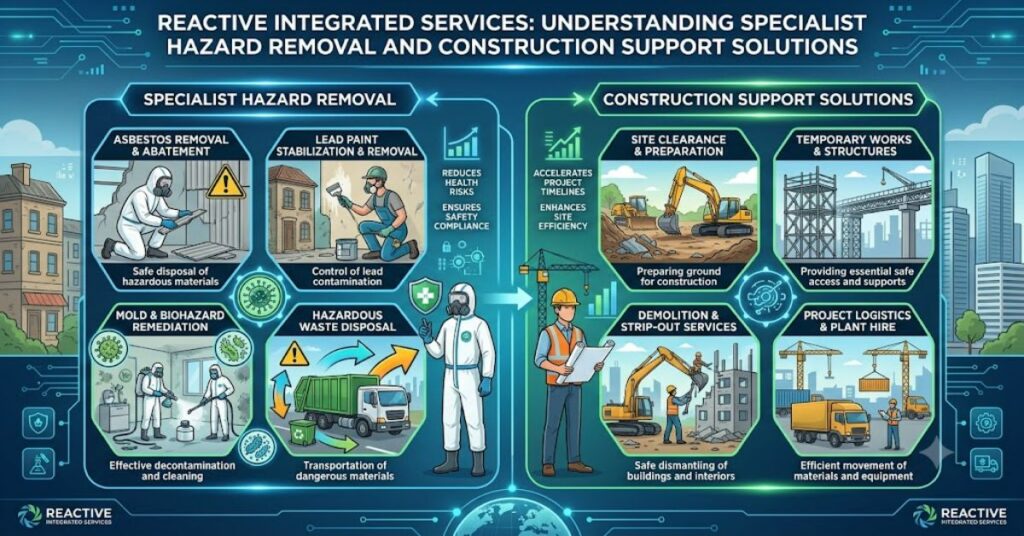
Reactive Integrated Services is a specialist contractor focused on supporting construction, refurbishment, and industrial projects through services such as asbestos removal, hazardous substances management, demolition preparation, and soft strip operations. The company operates in a sector where safety, compliance, and technical expertise are critical.
Older buildings often contain materials that require careful handling before redevelopment can begin. Asbestos, contaminated materials, and structural elements must be identified, removed, and managed according to strict procedures to protect workers, occupants, and the environment.
Modern construction projects increasingly require contractors capable of managing multiple stages of preparation rather than relying on separate suppliers for every task. This is where integrated service providers offer value. By combining specialist removal work with demolition support and site preparation, they can help improve project coordination and reduce delays.
The importance of companies such as Reactive Integrated Services reflects wider changes in the construction industry. Regulations, health and safety expectations, and sustainability goals have increased the need for professional contractors with specialist knowledge.
What Are Reactive Integrated Services?
Reactive Integrated Services is a multi-disciplinary contractor specialising in asbestos and hazardous substances removal, demolition support, and soft strip services.
These activities are essential during building renovation, redevelopment, and infrastructure projects where existing materials must be safely removed before construction work begins.
Key service areas generally include:
| Service Area | Purpose |
| Asbestos removal | Safe identification and removal of asbestos-containing materials |
| Hazardous substance management | Controlled handling of dangerous materials |
| Soft strip operations | Removal of internal fixtures before demolition or refurbishment |
| Demolition support | Preparing sites for structural changes |
| Site clearance | Creating safer working environments |
The advantage of an integrated contractor is that project managers can coordinate multiple specialist activities through a single service provider.
Why Specialist Hazard Removal Matters
Buildings constructed before modern safety standards may contain hazardous materials. Asbestos was widely used in construction because of its resistance to heat and fire, but its health risks became well documented over time.
The removal process requires careful planning, specialist equipment, and trained personnel. Incorrect handling can create serious risks, including airborne contamination and regulatory penalties.
Professional contractors follow controlled procedures involving:
- Site assessment
- Risk evaluation
- Containment planning
- Safe removal methods
- Waste management procedures
A key industry challenge is that hazardous materials are not always visible. A building may appear suitable for renovation while containing hidden risks within walls, ceilings, insulation, or older building systems.
The Role of Soft Strip and Demolition Preparation
Soft strip work involves removing non-structural elements from a building before major construction or demolition begins.
This may include:
- Internal walls
- Flooring materials
- Fixtures
- Electrical components
- Mechanical systems
Soft strip operations help create safer and more efficient construction environments. They also support recycling efforts by allowing materials to be separated before demolition.
| Approach | Advantages | Challenges |
| Multiple specialist contractors | Access to specific expertise | More coordination required |
| Integrated contractor | Simplified project management | Requires broad technical capability |
| General contractor only | Easier procurement | May lack specialist hazardous material expertise |
For complex projects, an integrated model can reduce communication problems between different teams.
Strategic Benefits for Construction Projects
Using a specialist contractor provides several practical advantages.
Improved Project Coordination
Managing hazardous materials, demolition preparation, and site clearance through connected services can reduce scheduling conflicts.
Better Safety Management
Experienced contractors understand compliance requirements and safety procedures, helping reduce workplace risks.
Greater Cost Control
Although specialist services require investment, early identification and proper management of risks can prevent expensive delays later.
Risks and Considerations
Despite the benefits, businesses should carefully evaluate contractors before appointment.
Regulatory Compliance
Hazardous material work requires strict adherence to safety regulations. Companies must verify contractor qualifications, procedures, and documentation.
Project Planning Challenges
Unexpected discoveries, such as hidden asbestos-containing materials, can affect timelines and budgets.
Quality Differences
Not all contractors provide the same level of expertise. Businesses should assess experience, equipment standards, training processes, and previous project performance.
Market Impact and Industry Trends
The demand for specialist contractors is connected to several construction trends.
Building Renovation Growth
Many older commercial and residential buildings require upgrades rather than complete replacement. This increases demand for safe removal and refurbishment services.
Stronger Safety Expectations
Health and safety regulations continue to influence how construction projects are planned and delivered.
Sustainability Focus
Controlled demolition and material recovery support more sustainable construction practices by allowing materials to be reused or recycled.
One important industry insight is that specialist contractors increasingly contribute to project efficiency before construction begins. Early involvement can help identify risks before they become expensive problems.
The Future of Reactive Integrated Services in 2027
By 2027, specialist contractors are expected to play a larger role in construction planning as renovation projects increase and safety standards continue developing.
Future priorities may include:
- Digital site assessment tools
- Improved hazardous material tracking
- More sustainable waste management
- Greater use of data-driven project planning
Technology may also improve documentation processes, allowing contractors and project managers to monitor safety records, compliance information, and material movement more efficiently.
However, the industry will continue facing challenges related to skilled labour availability, regulatory changes, and rising operational costs. Companies that combine technical expertise with strong safety systems will be better positioned to meet future demand.
Key Takeaways
- Reactive Integrated Services operates in a specialist construction support sector.
- Hazardous material removal requires technical expertise and strict safety procedures.
- Integrated contracting models can improve project coordination.
- Soft strip operations support safer and more efficient redevelopment.
- Future demand will be influenced by renovation, compliance, and sustainability trends.
- Contractor selection remains essential for successful project outcomes.
Conclusion
Reactive Integrated Services represents the type of specialist contractor required for modern construction and refurbishment projects. Services involving asbestos removal, hazardous substance management, demolition support, and soft strip operations require detailed planning and professional execution.
As buildings become older and redevelopment activity increases, the need for safe and reliable site preparation will continue. Integrated contractors can provide valuable support by combining technical knowledge with coordinated project delivery.
However, successful outcomes depend on compliance, experience, safety standards, and effective communication. Organisations planning complex construction work must carefully evaluate specialist partners to ensure risks are managed from the earliest stages.
Frequently Asked Questions
What services does Reactive Integrated Services provide?
Reactive Integrated Services specialises in asbestos removal, hazardous substance management, demolition support, and soft strip operations for construction and refurbishment projects.
Why is asbestos removal important?
Asbestos removal is necessary because damaged or disturbed asbestos-containing materials can create serious health risks if fibres become airborne.
What is soft strip demolition?
Soft strip demolition involves removing internal building components such as fixtures, fittings, and non-structural elements before redevelopment.
Why use an integrated contractor?
An integrated contractor can simplify project management by combining multiple specialist services through one coordinated team.
What industries need hazardous material removal services?
Construction, property development, industrial facilities, commercial buildings, and refurbishment projects often require specialist removal services.
How will construction safety services change by 2027?
Construction safety services are expected to adopt more digital monitoring, improved documentation systems, and sustainable waste management practices.
Methodology
This article was prepared using publicly available information about specialist construction contractors, hazardous material management practices, and industry trends.
The analysis focuses on the role of integrated contracting services rather than providing an independent performance review of any specific company. Company-specific details, certifications, and project history should be verified through official sources before publication.
This article was drafted with AI assistance and should be reviewed by human editors to confirm technical details, regulatory information, and organisational claims before publishing.