An unsettled feeling is a lingering sense of discomfort, anxiety, or emotional unease that can appear without an obvious reason. It may feel like something is wrong even when life seems normal on the surface. While everyone experiences this sensation occasionally, it often signals underlying stress, uncertainty, unresolved emotions, or an unmet need to pause and check in with yourself. Instead of dismissing the feeling, understanding its possible causes can help you respond in a healthier way.
Many people describe this experience as restlessness, nervousness, or a sense that they cannot fully relax. It may come before an important life event, during periods of change, or after prolonged stress. Although occasional uneasiness is a normal part of life, persistent emotional discomfort deserves attention. By recognizing the signs and learning effective coping strategies, you can reduce anxiety and regain a sense of calm.
What Causes an Unsettled Feeling?
There isn’t a single explanation. Emotional unease often develops because several factors occur at the same time.
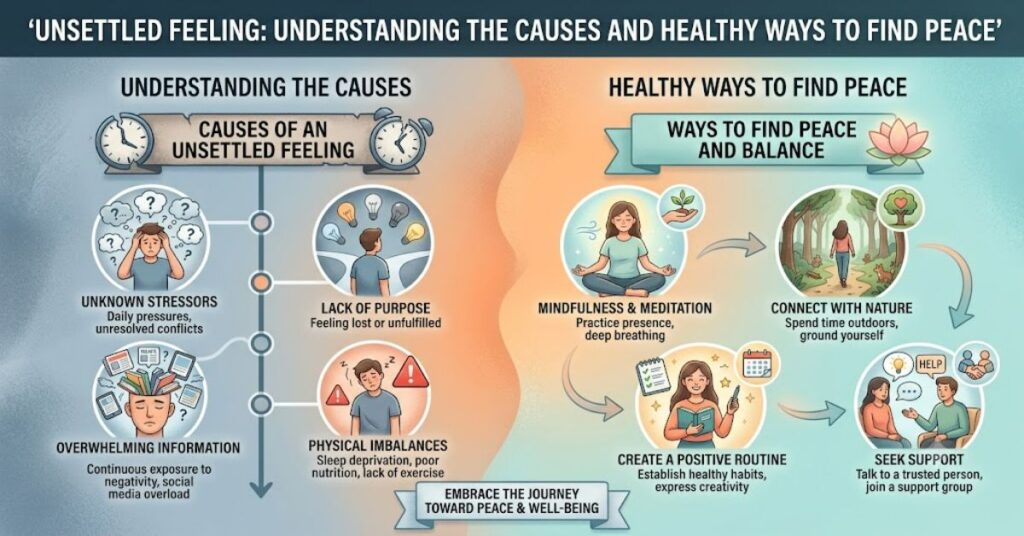
Common causes include:
- Ongoing stress at work or school
- Financial uncertainty
- Relationship difficulties
- Poor sleep quality
- Major life changes
- Health concerns
- Excessive social media or news consumption
- Unresolved emotional trauma
Sometimes the cause is obvious, while at other times the feeling develops gradually without immediate awareness.
Physical and Emotional Symptoms
An unsettled feeling affects both the mind and body.
Common emotional symptoms include:
- Anxiety
- Irritability
- Difficulty concentrating
- Restlessness
- Feeling overwhelmed
Physical symptoms may include:
- Muscle tension
- Rapid heartbeat
- Fatigue
- Trouble sleeping
- Digestive discomfort
Because stress affects the nervous system, emotional and physical symptoms often occur together.
Temporary Unease vs. Chronic Anxiety
| Temporary Unease | Chronic Anxiety |
| Triggered by a specific event | May occur without a clear trigger |
| Usually improves with time | Persists for weeks or months |
| Mild impact on daily life | Can interfere with work and relationships |
| Responds to self-care | May require professional treatment |
Understanding this difference helps determine when self-care is enough and when additional support may be beneficial.
Healthy Ways to Manage an Unsettled Feeling
Small daily habits often make a significant difference.
Consider these strategies:
- Practice deep breathing exercises.
- Take regular walks outdoors.
- Maintain a consistent sleep schedule.
- Reduce caffeine if it increases anxiety.
- Write your thoughts in a journal.
- Speak with trusted friends or family.
- Limit constant exposure to stressful news.
These habits won’t eliminate every challenge, but they improve emotional resilience over time.
The Importance of Self-Reflection
Rather than asking, “How do I stop feeling this way?” try asking, “What is this feeling trying to tell me?”
An unsettled feeling can sometimes point toward:
- Burnout
- Unhealthy relationships
- Unrealistic expectations
- Lack of rest
- Fear of uncertainty
Identifying the source makes it easier to choose an appropriate solution instead of treating only the symptoms.
Lifestyle Factors That Influence Emotional Well-Being
| Lifestyle Habit | Effect on Mood |
| Regular exercise | Reduces stress hormones |
| Quality sleep | Improves emotional regulation |
| Balanced nutrition | Supports brain health |
| Mindfulness practice | Increases emotional awareness |
| Social connection | Reduces feelings of isolation |
Even small improvements in these areas can positively influence emotional health.
When Should You Seek Professional Help?
While occasional emotional discomfort is normal, professional support may be helpful if an unsettled feeling:
- Lasts for several weeks.
- Interferes with work or relationships.
- Causes frequent panic attacks.
- Leads to persistent sleep problems.
- Makes daily responsibilities difficult.
- Is accompanied by hopelessness or severe distress.
Mental health professionals can help identify underlying causes and recommend evidence-based treatments tailored to individual needs.
The Future of Emotional Well-Being in 2027
Growing awareness of mental health is changing how people approach emotional wellness. By 2027, digital mental health tools, wearable health technology, and virtual therapy services are expected to become even more accessible. These innovations may help individuals monitor stress levels earlier and encourage healthier coping habits before emotional discomfort becomes overwhelming.
However, technology should complement—not replace—professional care and meaningful human relationships. Personal connection, healthy routines, and evidence-based treatment will continue to play the most important roles in long-term emotional well-being.
Key Takeaways
- An unsettled feeling is often a signal rather than a problem itself.
- Stress, uncertainty, and poor lifestyle habits commonly contribute.
- Self-awareness helps uncover the underlying cause.
- Healthy routines support emotional resilience.
- Persistent symptoms deserve professional evaluation.
- Early intervention often prevents emotional difficulties from worsening.
Conclusion
An unsettled feeling is something almost everyone experiences at different stages of life. While it can be uncomfortable, it often serves as an important reminder to pause, evaluate your emotional well-being, and identify areas of stress or imbalance. Ignoring these signals may allow anxiety to grow, whereas responding with healthy coping strategies can restore a sense of control and peace.
The most effective approach combines self-care, emotional awareness, supportive relationships, and professional guidance when needed. Rather than viewing emotional unease as a weakness, consider it valuable information about your current mental and emotional state. With patience, healthy habits, and the right support, most people can better understand their emotions and build lasting resilience.
FAQ
What is an unsettled feeling?
An unsettled feeling is a sense of emotional discomfort, worry, or unease that may arise from stress, uncertainty, or unresolved emotions.
Can stress cause an unsettled feeling?
Yes. Chronic stress is one of the most common reasons people experience ongoing emotional unease.
Is an unsettled feeling the same as anxiety?
Not always. Anxiety is one possible cause, but an unsettled feeling may also result from fatigue, burnout, grief, or significant life changes.
How can I calm an unsettled feeling quickly?
Deep breathing, mindfulness, physical activity, journaling, and talking with someone you trust can help reduce emotional tension.
When should I talk to a mental health professional?
Seek professional support if your symptoms persist, worsen, or interfere with your daily life, work, relationships, or sleep.
Methodology
This article is based on established mental health guidance regarding stress, emotional well-being, and anxiety management. It combines general psychological principles with practical self-care recommendations while recognizing that persistent emotional distress should be assessed by a qualified healthcare professional.
References
- American Psychological Association. Stress Effects on the Body.
- National Institute of Mental Health. Anxiety Disorders.
- Mayo Clinic. Stress Symptoms: Effects on Your Body and Behavior.
- World Health Organization. Mental Health Overview.