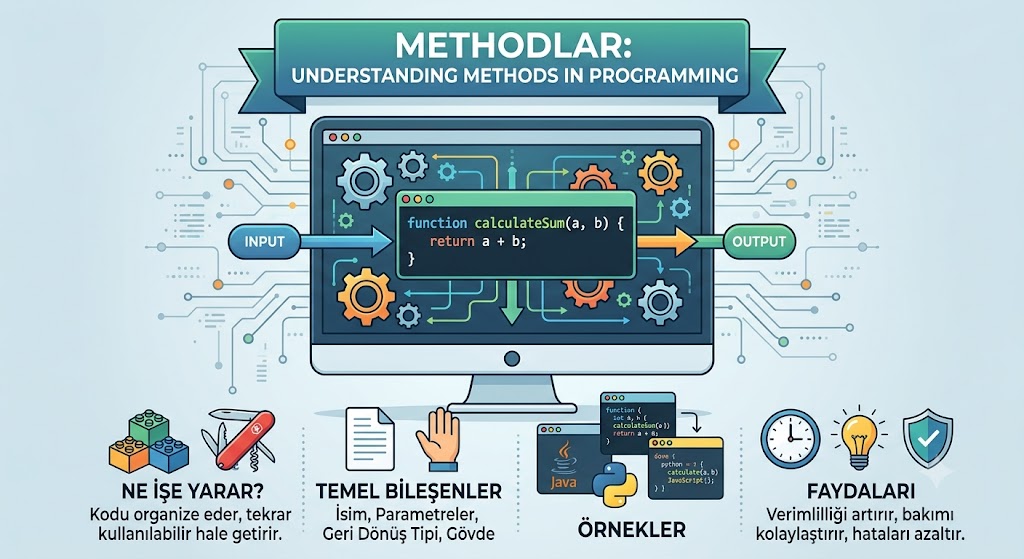
If you’ve recently started learning programming, you’ve probably come across the term methodlar. The word “methodlar” simply refers to methods, which are reusable blocks of code designed to perform a particular task. In many programming languages, methods are also called functions or procedures, although there are slight differences depending on the language.
Instead of writing the same code multiple times, developers create methods that can be called whenever needed. This approach makes programs cleaner, shorter, and easier to update. Whether you’re building a website, developing a mobile application, or writing automation scripts, methods play a central role in software development.
Understanding methods is one of the first major steps toward becoming a better programmer because nearly every application relies on them to organize logic efficiently.
What Are Methods?
A method is a named block of code that performs a specific operation. Once defined, it can be called multiple times throughout a program.
For example, imagine a calculator application. Instead of rewriting addition logic every time two numbers need to be added, you create a single method named AddNumbers(). Whenever addition is required, the program simply calls that method.
This saves time and prevents duplicate code.
Why Methods Are Important
Methods provide several advantages that improve software quality.
Reduce Code Duplication
Without methods, programmers often repeat the same lines of code throughout an application. Repetition makes programs larger and harder to maintain.
Methods eliminate unnecessary duplication by allowing developers to write code once and reuse it many times.
Improve Readability
Large programs become easier to understand when divided into smaller methods. Instead of reading hundreds of lines together, developers can focus on one task at a time.
Simplify Maintenance
If a change is needed, developers update the method only once rather than editing multiple sections of identical code.
Encourage Teamwork
In professional software development, multiple developers work on the same project. Methods allow teams to divide work efficiently because each method performs a specific responsibility.
How Methods Work
Every method generally follows the same process:
| Step | Description |
| Method Declaration | Defines the method’s name and purpose. |
| Parameters | Accepts input values if needed. |
| Processing | Executes the required instructions. |
| Return Value | Sends a result back to the caller if necessary. |
| Method Call | Executes the method whenever required. |
This simple workflow makes programming more modular and organized.
Types of Methods
Different programming languages support various kinds of methods.
Methods Without Parameters
These methods perform a task without receiving any input.
Example:
- Display today’s date
- Print a welcome message
Methods With Parameters
These accept information from the user or another part of the program.
Example:
CalculateArea(length, width)
Methods That Return Values
Some methods calculate something and return the result.
Examples include:
- Calculate tax
- Find the maximum number
- Convert temperature
Void Methods
Void methods perform actions without returning any value.
Examples include:
- Save a file
- Send an email
- Print a report
Methods vs Functions
Although many people use the terms interchangeably, there is a small difference.
| Methods | Functions |
| Belong to an object or class | Can exist independently |
| Common in object-oriented programming | Used in both procedural and functional programming |
| Access object data directly | Usually work with passed arguments |
| Often operate on object properties | Perform standalone tasks |
Many programming languages blur this distinction, so beginners can safely think of methods and functions as similar concepts.
Real-World Examples
Methods are everywhere in software development.
Banking Applications
A banking app may include methods like:
- CheckBalance()
- TransferMoney()
- CalculateInterest()
Each method performs one specific task.
Online Shopping
E-commerce websites use methods to:
- Add products to cart
- Calculate shipping
- Apply discount coupons
- Process payments
Social Media Platforms
Platforms such as messaging apps rely on methods to:
- Send messages
- Upload photos
- Create notifications
- Update profiles
Without methods, these applications would be extremely difficult to manage.
Best Practices for Writing Methods
Professional developers follow several guidelines.
Keep Methods Small
Each method should perform one clear responsibility.
Use Meaningful Names
Names like CalculateSalary() or GenerateInvoice() immediately explain their purpose.
Avoid Repetition
If identical code appears multiple times, move it into a reusable method.
Add Comments When Needed
Simple comments help explain complex logic without overwhelming the code.
Test Methods Individually
Small methods are easier to debug and verify.
Common Mistakes Beginners Make
Learning methods takes practice. Some common mistakes include:
- Creating methods that are too large
- Giving methods confusing names
- Repeating code unnecessarily
- Ignoring return values
- Passing incorrect parameters
Recognizing these mistakes early helps improve programming skills.
The Future of Methods in 2027
Programming continues to evolve, but methods remain a core building block of software development. As artificial intelligence, cloud computing, and automation tools become more advanced, developers will continue to rely on well-designed methods to build scalable and maintainable applications.
Modern programming frameworks increasingly encourage modular code, reusable components, and clean architecture. Methods support all of these goals by making software easier to test, update, and extend. While AI-assisted coding tools may automate parts of software development, understanding how methods work will remain an essential skill for programmers.
Key Takeaways
- Methods are reusable blocks of code.
- They reduce repetition and improve efficiency.
- Good methods perform one specific task.
- Reusable code makes maintenance easier.
- Modern programming depends heavily on methods.
- Clear method names improve readability.
- Every programmer should master methods early.
Conclusion
Methods are among the most fundamental concepts in programming. They allow developers to organize code into manageable, reusable pieces that perform specific tasks. By reducing duplication, improving readability, and simplifying maintenance, methods make software development more efficient and less error-prone.
Whether you are writing simple scripts or building enterprise-level applications, understanding how methods work will significantly improve your coding skills. As programming languages continue to evolve, the principles behind methods remain the same: write reusable, organized, and maintainable code. Mastering this concept provides a strong foundation for learning advanced programming topics and developing high-quality software.
Frequently Asked Questions
What are methodlar in programming?
Methodlar are reusable blocks of code that perform specific tasks. They help organize programs and reduce repeated code.
Are methods and functions the same?
They are similar. A method usually belongs to an object or class, while a function may exist independently.
Why are methods important?
Methods improve code organization, readability, maintenance, and software scalability.
Can a method return a value?
Yes. Many methods return calculated results, while others simply perform actions without returning anything.
Which programming languages use methods?
Languages such as Java, Python, C#, C++, JavaScript, Swift, and Kotlin all use methods or similar reusable code structures.
Methodology
This article Methodlar is based on the supplied brief, which defines methodlar as reusable blocks of code that perform specific actions, helping organize code, eliminate repetition, and execute only when called. The structure and emphasis follow the uploaded Postcard.fm article-writing guidelines.