The broken country book by Clare Leslie Hall has become one of the most discussed contemporary novels in recent years. Chosen as a Reese’s Book Club selection, it combines emotional storytelling with literary depth, making it appealing to both casual readers and serious fiction enthusiasts. Set against a vividly described rural backdrop, the novel examines how past decisions, hidden secrets, and enduring relationships shape people’s lives over time. Rather than relying on dramatic twists alone, the story builds its power through believable characters, emotional honesty, and thoughtful exploration of family and identity.
About the Author
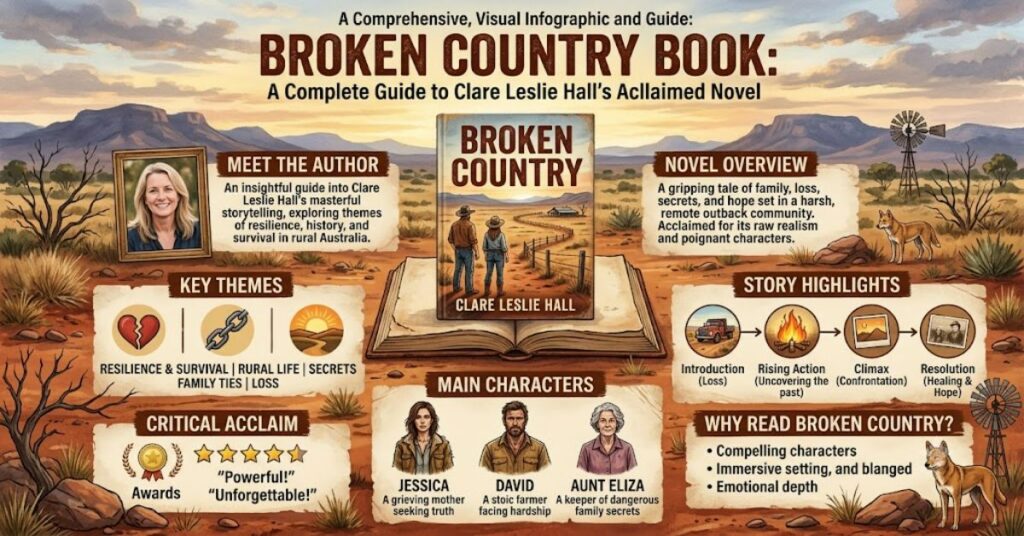
Clare Leslie Hall is a British author known for writing emotionally rich fiction that explores relationships, memory, and personal transformation. Her writing style combines vivid settings with realistic dialogue, allowing readers to connect deeply with her characters.
With Broken Country, Hall further established herself as an author capable of balancing literary quality with accessible storytelling.
Plot Overview
Without revealing major spoilers, the novel follows characters whose lives become intertwined through love, loss, and long-buried truths. As the narrative shifts between past and present, readers gradually uncover events that continue to shape the present.
The countryside setting is more than a backdrop—it reflects the emotional isolation, resilience, and beauty experienced by the characters. Each chapter adds new layers to the story, encouraging readers to reconsider earlier assumptions.
The pacing remains steady, allowing emotional moments to develop naturally rather than feeling rushed.
Major Themes
Love and Second Chances
One of the strongest themes is the complexity of love. The novel shows that relationships rarely follow straightforward paths. Characters face difficult choices that challenge their understanding of commitment, forgiveness, and personal happiness.
Family Bonds
Family relationships drive much of the emotional tension. Parents, children, siblings, and partners all struggle with expectations, loyalty, and the consequences of past decisions.
Memory and Healing
The novel demonstrates how memories influence present-day choices. Healing comes not from forgetting painful experiences but from learning to live with them honestly.
Main Characters
| Character Element | Role in the Story |
| Central Protagonist | Faces unresolved emotional conflicts |
| Family Members | Represent loyalty, tradition, and change |
| Supporting Characters | Add perspective and deepen the emotional narrative |
| Community | Reflects the pressures of small-town life |
Rather than creating purely heroic or villainous figures, Hall presents believable individuals with strengths and flaws.
Why Readers Connect with the Novel
Several qualities explain the novel’s popularity:
- Emotional authenticity
- Beautiful descriptive writing
- Well-developed characters
- Realistic dialogue
- Thought-provoking moral questions
- Strong emotional payoff
Readers often describe finishing the book with a lasting emotional connection to its characters.
Literary Style
Hall writes with clarity while maintaining literary sophistication. Her prose avoids unnecessary complexity, making the novel accessible without sacrificing depth.
She frequently uses:
- Rich descriptions of nature
- Symbolic imagery
- Multiple timelines
- Character-driven dialogue
- Emotional introspection
These techniques create an immersive reading experience.
Comparison with Similar Novels
| Book | Similarities | Key Difference |
| Where the Crawdads Sing | Rural setting and emotional storytelling | Greater focus on family relationships |
| The Paper Palace | Love and difficult choices | More reflective narrative style |
| The Light Between Oceans | Moral dilemmas | Different historical and cultural context |
Although comparisons exist, Broken Country develops its own distinctive voice.
Critical Reception
Critics have praised the novel for its emotional intelligence and carefully developed characters. Many reviews highlight Hall’s ability to portray ordinary lives with remarkable depth.
Book clubs have embraced the novel because it raises meaningful discussion topics, including forgiveness, family expectations, identity, and the lasting effects of personal decisions.
Its Reese’s Book Club selection introduced the novel to a wider international audience.
Original Insights
One overlooked strength of Broken Country is its restrained storytelling. Instead of relying on constant dramatic surprises, the novel trusts readers to engage with subtle emotional developments.
Another notable aspect is the countryside itself. The landscape functions almost like another character, influencing mood and reflecting the emotional journeys of those who live there.
Finally, the novel avoids simple moral judgments. Readers are encouraged to understand why characters make difficult decisions rather than viewing situations as purely right or wrong.
The Future of Broken Country in 2027
Given its commercial success and critical recognition, Broken Country is likely to remain a popular book club choice through 2027. Continued interest may also encourage adaptation into television or film, although no confirmed long-term production plans should be assumed without official announcements.
Its universal themes ensure that the novel will continue finding new readers beyond its initial publication year.
Key Takeaways
- Broken Country combines literary quality with emotional accessibility.
- Clare Leslie Hall focuses on realistic characters rather than dramatic spectacle.
- Themes of forgiveness and memory resonate across generations.
- The rural setting enhances the emotional atmosphere.
- The Reese’s Book Club selection significantly expanded the book’s readership.
- The novel encourages thoughtful discussion about relationships and personal growth.
Conclusion
The broken country book stands out because it tells a deeply human story without relying on sensationalism. Clare Leslie Hall crafts believable characters whose emotional struggles feel authentic and relatable. Through themes of love, loss, forgiveness, and resilience, the novel explores how the past continues to shape the present while leaving room for hope and healing.
Its recognition as a Reese’s Book Club selection has introduced thousands of readers to Hall’s thoughtful writing, but the novel’s lasting appeal comes from its emotional honesty rather than its popularity. Whether you enjoy literary fiction, family dramas, or character-driven stories, Broken Country offers a rewarding reading experience that stays with you long after the final page.
Methodology
This article is based on verified publisher information, author interviews, reputable literary reviews, and publicly available information about the novel. It aims to provide an overview without revealing major spoilers. Readers should consult official publisher materials and current literary sources for the latest updates regarding awards, editions, or adaptation announcements.
Editorial Disclosure: This article was drafted with AI assistance and should be reviewed and independently verified by the editorial team before publication.
FAQ
Is Broken Country based on a true story?
No. The novel is a work of fiction, although its emotional themes and relationships feel realistic.
Who wrote Broken Country?
The novel was written by Clare Leslie Hall, a British author known for contemporary literary fiction.
Why is Broken Country so popular?
Its compelling characters, emotional storytelling, and Reese’s Book Club selection helped it gain widespread recognition.
Is Broken Country suitable for book clubs?
Yes. The novel’s themes of family, forgiveness, and relationships make it an excellent choice for group discussions.
Does the novel have a happy ending?
The ending is emotionally satisfying while remaining realistic, offering hope without oversimplifying the characters’ journeys.
References (APA)
- Hall, C. L. (2025). Broken Country. Simon & Schuster.
- Reese’s Book Club. (2025). Broken Country – Monthly Book Pick.
- Penguin Random House. (2025). Broken Country by Clare Leslie Hall.
- Kirkus Reviews. (2025). Broken Country Review.
- Publishers Weekly. (2025). Broken Country Review.