
Bull trout are one of North America’s most fascinating freshwater fish. Although many people mistake them for ordinary trout, they actually belong to the char family, making them close relatives of Arctic char and lake trout. Native to the cold rivers, streams, and lakes of northwestern North America, bull trou’t have become an important indicator of healthy aquatic ecosystems.
Historically, this species was often confused with the Dolly Varden because of their similar appearance. Scientists eventually recognized important genetic and physical differences, leading to the bull trou’t being classified as its own species in 1980. Today, anglers, conservationists, and researchers alike recognize the importance of protecting this remarkable fish.
Whether you are interested in fishing, wildlife conservation, or freshwater ecology, understanding bull trou’t helps explain why clean, cold water is essential for many aquatic species.
What Is a Bull Trout?
Bull trout (Salvelinus confluentus) is a freshwater fish belonging to the Salmonidae family. Unlike rainbow trou’t or brown trout, bull trou’t are members of the char group, which generally thrive in colder water temperatures.
They are native to western Canada and the northwestern United States, including watersheds in British Columbia, Alberta, Montana, Idaho, Oregon, Washington, and parts of Nevada.
Bull trout require exceptionally cold, clean, and connected waterways to survive. Because of these demanding habitat requirements, their populations often reflect the overall health of river ecosystems.
Physical Characteristics
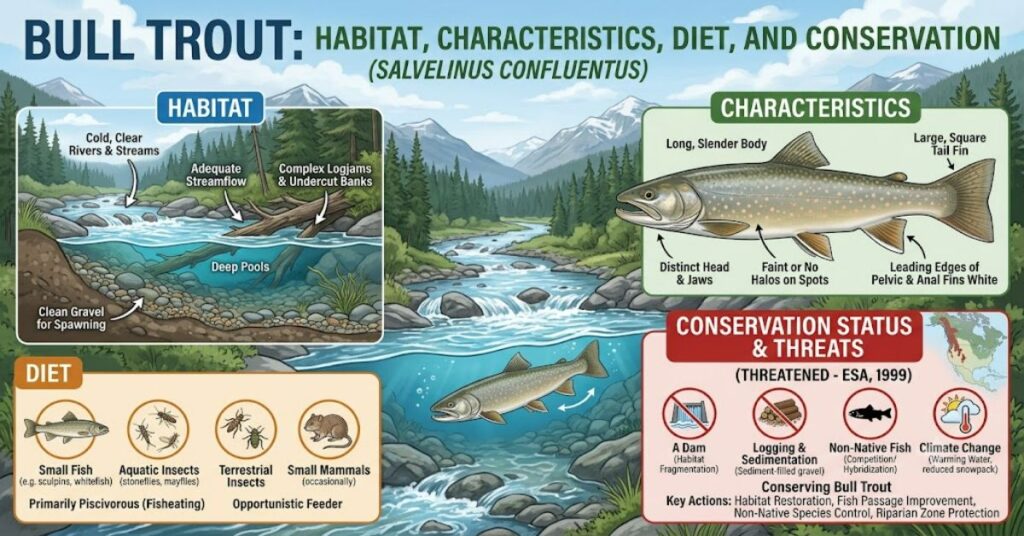
Bull trou’t have several distinctive features that help distinguish them from other trout species.
Some of their identifying characteristics include:
- Olive-green to dark brown body
- Pale yellow or cream-colored spots
- Light-colored spots without black markings
- Large head with a broad mouth
- White leading edges on the lower fins
- Streamlined body built for strong currents
Adult fish typically measure between 16 and 24 inches, although exceptional individuals may exceed 30 inches and weigh over 20 pounds.
Habitat and Distribution
Bull trout prefer cold mountain waters with temperatures generally below 15°C (59°F). They inhabit rivers, streams, lakes, and reservoirs throughout northwestern North America.
Common habitats include:
- Mountain streams
- Alpine lakes
- Glacier-fed rivers
- Deep freshwater lakes
- Connected river systems
Unlike many freshwater fish, bull trou’t often migrate long distances between feeding and spawning habitats. Maintaining these migration routes is essential for healthy populations.
Life Cycle
Bull trou’t have a relatively slow life cycle compared to many freshwater fish.
Young fish spend several years growing in streams before moving into larger rivers or lakes where food is more abundant.
When mature, adults return to clean gravel-bottom streams to spawn during late summer or early autumn. Females create nests called redds, where they deposit thousands of eggs.
The eggs remain protected beneath gravel throughout winter before hatching in early spring.
Diet
Bull trou’t are opportunistic predators whose diet changes as they grow.
Young bull trout primarily feed on:
- Aquatic insects
- Small crustaceans
- Fish eggs
- Larvae
Adult bull trou’t consume larger prey, including:
- Smaller fish
- Whitefish
- Salmon fry
- Minnows
- Aquatic amphibians
Their position near the top of the food chain helps maintain ecological balance in freshwater ecosystems.
Bull Trout vs. Dolly Varden
| Feature | Bull Trout | Dolly Varden |
| Scientific Name | Salvelinus confluentus | Salvelinus malma |
| Habitat | Inland rivers and lakes | Coastal streams and rivers |
| Distribution | Northwestern North America | Pacific coastal regions |
| Classification | Separate species since 1980 | Distinct char species |
| Appearance | Larger head and broader body | More slender body |
Although these fish share many similarities, modern scientific research clearly distinguishes them as separate species.
Ecological Importance
Bull trout serve as indicators of healthy freshwater environments.
Because they require exceptionally clean, cold water with minimal pollution, their presence usually reflects strong ecosystem health.
Healthy bull trou’t populations benefit ecosystems by:
- Maintaining balanced fish populations
- Supporting biodiversity
- Indicating high water quality
- Connecting aquatic food webs
When bull trou’t disappear from a watershed, it often signals broader environmental problems.
Conservation Challenges
Bull trout populations have declined in many parts of their native range.
Several threats contribute to these declines:
Habitat Loss
Road construction, logging, mining, and urban development can alter river systems and reduce spawning habitat.
Rising Water Temperatures
Climate change is warming many mountain streams beyond temperatures suitable for bull trout.
Barriers to Migration
Dams and improperly designed culverts prevent fish from reaching spawning grounds.
Competition from Non-Native Fish
Introduced species such as brook trout may compete with or hybridize with bull trout, reducing native populations.
Conservation Efforts
Government agencies, Indigenous communities, researchers, and conservation organizations are working together to protect bull trout.
Current conservation strategies include:
- Restoring river habitats
- Removing migration barriers
- Monitoring fish populations
- Improving water quality
- Preventing habitat fragmentation
- Managing invasive fish species
These efforts have helped stabilize some local populations, although long-term conservation remains an ongoing challenge.
Fishing Regulations
Bull trout are highly valued by anglers, but strict regulations exist across much of their range.
Many jurisdictions require catch-and-release fishing, while others completely prohibit harvesting due to conservation concerns.
Anglers should always review local fishing regulations before targeting bull trout to ensure compliance with regional laws.
Interesting Facts
| Fact | Details |
| Family | Salmonidae |
| Genus | Salvelinus |
| Preferred Water | Cold, clear freshwater |
| Maximum Length | Over 30 inches |
| Lifespan | Up to 12 years or more |
| Conservation Role | Indicator of ecosystem health |
Why Bull Trout Matter
Bull trout represent far more than a recreational fishing species. Their survival depends on healthy watersheds, making them valuable indicators for conservation scientists.
Protecting bull trout also benefits numerous other aquatic species that rely on the same clean, cold-water habitats. Investments in river restoration often improve conditions for salmon, amphibians, aquatic insects, and countless other forms of wildlife.
As climate change and human development continue to reshape freshwater ecosystems, protecting connected river systems will become increasingly important.
Conclusion
Bull trout remain one of North America’s most remarkable native freshwater fish. Their dependence on cold, pristine rivers highlights the importance of protecting healthy aquatic ecosystems. While they face ongoing threats from habitat degradation, warming waters, and invasive species, conservation efforts have shown that populations can recover when suitable habitat is restored.
Whether admired by anglers, biologists, or nature enthusiasts, bull trout symbolize the health of mountain watersheds. Continued research, responsible fisheries management, and habitat conservation will help ensure future generations can appreciate this unique member of the char family.