As more publications move to subscription-based business models, readers often encounter paywalls that restrict access to premium content. One tool that has gained attention in online communities is Freedium. Rather than focusing on complicated browser extensions or software installations, Freedium presents itself as a lightweight, community-developed web utility designed to provide a cleaner reading experience for Medium articles.
Its popularity has sparked discussion among developers, readers, and publishers alike. Some people view it as a convenient reading tool, while others raise concerns about its impact on writers who rely on subscription revenue. Understanding both perspectives is important before deciding whether to use any third-party reading utility.
This guide explores Freedium objectively, examining its features, benefits, limitations, and the broader issues surrounding digital publishing.
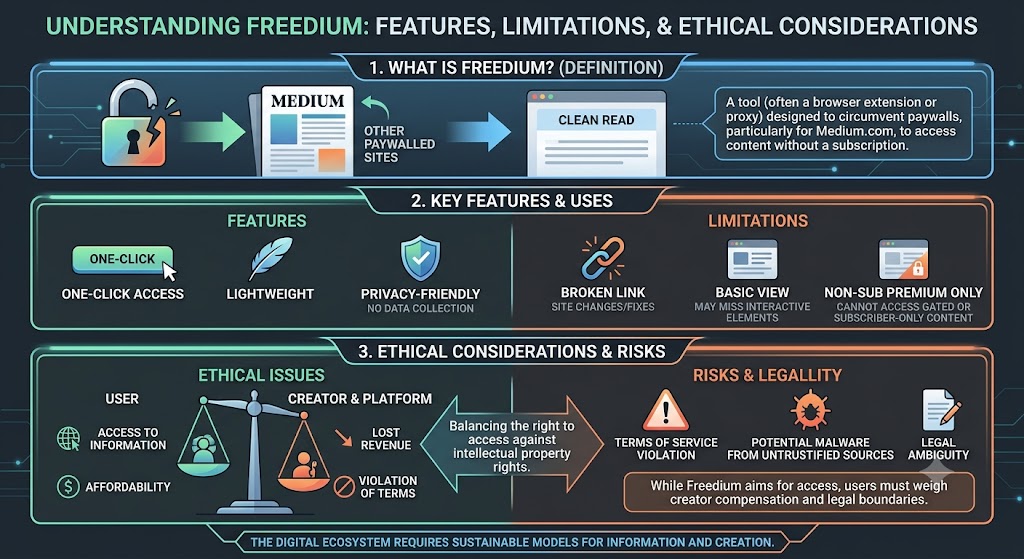
What Is Freedium?
Freedium is an open-source web project that has been shared within developer communities as a utility for accessing simplified versions of Medium articles. The project emphasizes minimal design, quick loading times, and an uncluttered reading interface.
Unlike a traditional reading application, it is browser-based and does not require software installation. Users simply visit the website and interact with supported article links through its interface.
Because the project is open source, its code can be reviewed, modified, and improved by contributors from the community.
Why Has Freedium Become Popular?
Several factors have contributed to its growing visibility.
Simple Interface
The website is designed with minimal distractions, allowing readers to focus on text rather than advertisements or interface elements.
No Installation
Everything works inside a web browser, eliminating the need for extensions or desktop applications.
Open-Source Development
Developers appreciate projects that are transparent and community-driven. Open-source software allows anyone to inspect the code, report issues, or contribute improvements.
Fast Performance
The lightweight interface generally loads quickly because it avoids unnecessary design elements.
Key Features
| Feature | Description |
| Browser-based | No installation required |
| Open Source | Community-reviewed code |
| Minimal Interface | Clean reading layout |
| Lightweight | Fast loading experience |
| Easy Access | Simple web-based workflow |
Benefits for Readers
Freedium appeals to users who value simplicity when reading online articles.
Some potential advantages include:
- Clean page layouts
- Minimal visual distractions
- Lightweight performance
- Easy accessibility from different devices
- Community-supported development
These characteristics make it attractive to readers who prefer straightforward web experiences over feature-heavy applications.
Limitations
Despite its popularity, Freedium also has important limitations.
Content Availability
Not every article may be accessible through third-party tools, and availability can change over time.
Reliability
Community-maintained projects may experience downtime or changes depending on volunteer contributors.
Lack of Official Support
Freedium is not an official Medium product. Users cannot expect customer support or guaranteed compatibility.
Feature Differences
Official Medium members receive additional benefits such as unlimited reading, bookmarking, highlighting, offline reading, and direct support for writers.
Freedium vs. Medium Membership
| Feature | Freedium | Medium Membership |
| Official Platform | No | Yes |
| Supports Writers Financially | No | Yes |
| Unlimited Reading | Membership provides official access | Yes |
| Member Features | Limited | Full access |
| Customer Support | Community-based | Official support |
Privacy and Security Considerations
Whenever using third-party web services, privacy should be part of the decision-making process.
Readers should consider:
- Whether the website explains its privacy practices.
- How long browsing information is retained.
- Whether secure HTTPS connections are used.
- If personal accounts are required.
Reviewing a service’s documentation and source code, when available, can provide additional transparency.
Legal and Ethical Considerations
Subscription platforms such as Medium compensate writers through memberships and partner programs. Those payments help fund original journalism, technical tutorials, opinion pieces, and long-form analysis.
Using official access methods supports authors directly and contributes to the sustainability of online publishing. Readers who regularly enjoy a publication’s work may wish to consider subscribing or using officially provided free access options, such as author-shared friend links or newsletters.
Understanding these considerations helps readers make informed choices while respecting the efforts of content creators.
Alternatives
Readers looking for high-quality articles have several legitimate alternatives:
| Alternative | Best For |
| Medium Membership | Frequent readers |
| Friend Links | Free articles shared by authors |
| Author Newsletters | Direct updates |
| Personal Blogs | Independent content |
| Open-access Publications | Free educational material |
These options provide reliable ways to discover quality writing while supporting creators whenever possible.
The Future of Digital Publishing in 2027
Digital publishing continues to evolve rapidly. More publishers are experimenting with flexible subscription models, bundled memberships, and reader-supported journalism. At the same time, improvements in recommendation systems and personalized reading experiences are making it easier for users to discover relevant content.
Open-source projects will likely continue to influence how online content is presented and consumed. However, sustainable publishing models will remain essential for ensuring that writers, researchers, and journalists are fairly compensated for their work. The balance between accessibility and creator support is expected to remain a central discussion in the years ahead.
Key Takeaways
- Freedium is an open-source web utility known for its minimalist reading interface.
- Its community-driven nature contributes to transparency and ongoing development.
- Users should consider privacy, reliability, and ethical implications before relying on third-party services.
- Official Medium memberships provide additional features and directly support writers.
- Legitimate alternatives such as friend links, newsletters, and open-access publications offer valuable reading options.
Conclusion
Freedium has become a well-known name among readers seeking a simpler web experience. Its lightweight design and open-source philosophy have attracted attention, particularly within developer communities that value transparency and minimalism.
At the same time, the broader conversation extends beyond technology. Subscription platforms exist to fund quality writing, and many authors depend on those programs as part of their income. Understanding both the technical aspects of tools like Freedium and the importance of supporting content creators allows readers to make informed decisions.
Whether you choose official subscriptions, author-provided free access, or open-access publications, selecting trustworthy and ethical sources helps promote a healthy digital publishing ecosystem.
Frequently Asked Questions
What is Freedium?
Freedium is an open-source web utility known for providing a simplified reading interface for Medium articles.
Is Freedium an official Medium product?
No. It is an independent, community-developed project and is not affiliated with Medium.
Is Freedium open source?
Yes. The project is community-driven, allowing developers to inspect and contribute to its codebase.
Should I use official Medium access?
If you regularly read Medium content, an official membership is the most reliable way to access articles while supporting writers.
Are there alternatives to Freedium?
Yes. Alternatives include Medium Membership, author friend links, newsletters, personal blogs, and other open-access publications.
Methodology
This article was prepared using publicly available information about Freedium, open-source software principles, and digital publishing practices. The content aims to provide a balanced overview without encouraging or explaining methods of bypassing paid access to online services.