
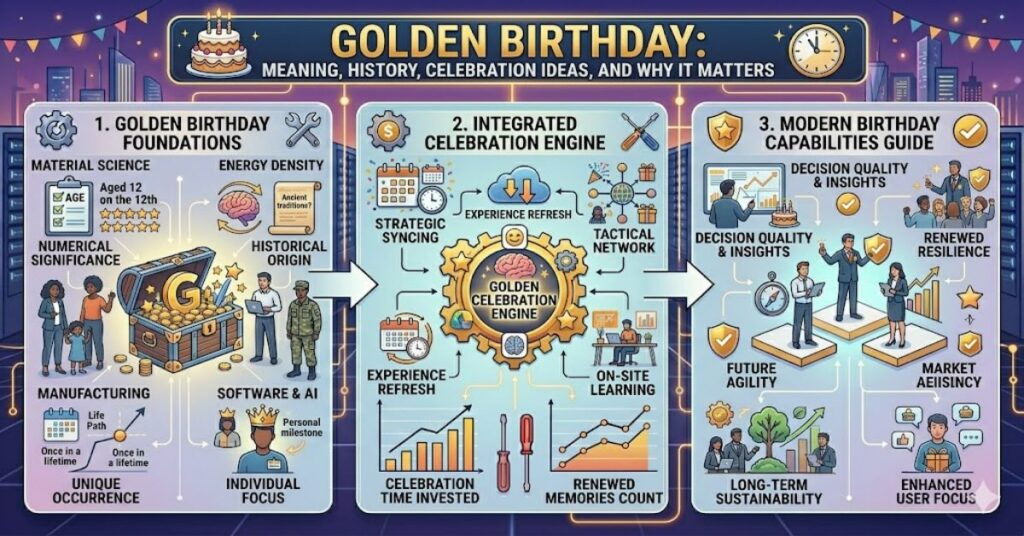
A golden birthday occurs when you turn the same age as the calendar day of the month on which you were born. For example, if you were born on June 25, your golden birthday happens when you turn 25. Because this milestone occurs only once in a lifetime, many people choose to celebrate it with gold-themed decorations, special experiences, and personalized traditions.
Unlike milestone birthdays such as turning 18, 21, 30, or 50, a golden birthday is entirely unique to the individual. Two people born in the same year may experience their golden birthdays decades apart simply because they were born on different days of the month.
The appeal of the tradition lies in its rarity. Every person gets exactly one chance to celebrate it. For those born on the first few days of a month, the milestone occurs during early childhood. For others born later in the month, the occasion arrives during adulthood when they can fully appreciate its significance.
Over the past decade, social media platforms have helped transform the golden birthday from a relatively obscure family tradition into a widely recognized celebration. Gold balloons, metallic decorations, customized gifts, and destination experiences have become common ways to mark the occasion.
Yet beneath the party planning is a deeper appeal. The golden birthday combines symbolism, personal identity, and the simple joy of celebrating a date that belongs entirely to one person.
What Is a Golden Birthday?
The concept is remarkably simple.
Your golden birthday occurs when:
Your age = the day of the month you were born.
Examples
| Birth Date | Golden Birthday Age |
| 1st | 1 year old |
| 7th | 7 years old |
| 15th | 15 years old |
| 21st | 21 years old |
| 30th | 30 years old |
| 31st | 31 years old |
Because dates only run from 1 to 31, every golden birthday occurs before age 32.
This creates an interesting reality: some people may not even remember their golden birthday because it occurred during infancy or early childhood.
The Origins of the Tradition
Unlike many birthday customs that trace their roots to ancient cultures, the golden birthday is relatively modern.
The idea is commonly linked to Joan Bramsch, an American educator who reportedly introduced the concept while teaching children in the mid-20th century. According to popular accounts, she encouraged students to celebrate the age that matched their birth date.
Although documentation remains limited, the tradition spread through families, schools, and community celebrations before eventually gaining traction online.
Unlike religious holidays or national observances, the golden birthday developed organically through personal storytelling and family customs.
Why People Love Golden Birthdays
A Rare Personal Milestone
Many celebrations are shared by millions of people.
A golden birthday belongs exclusively to one individual.
That uniqueness creates emotional significance that many people find appealing.
Symbolism of Gold
Across cultures, gold is often associated with:
- Achievement
- Success
- Prosperity
- Value
- Celebration
These associations naturally enhance the appeal of the tradition.
The Psychology of Scarcity
Events that occur only once tend to feel more meaningful.
A golden birthday cannot be recreated or repeated, which increases its perceived importance.
Comparison Table: Golden Birthday vs Other Birthday Milestones
| Birthday Type | Definition | Primary Meaning |
| Golden Birthday | Age matches birth date | Personal milestone |
| Sweet 16 | Turning 16 | Social transition |
| 18th Birthday | Legal adulthood in many countries | Independence |
| 21st Birthday | Adult privileges in some regions | Responsibility |
| 30th Birthday | New decade | Life reflection |
| 50th Birthday | Half-century milestone | Major achievement |
The golden birthday stands apart because it is based entirely on an individual’s birth date rather than a universal age marker.
Popular Ways to Celebrate
Gold-Themed Parties
The most common celebration includes:
- Gold balloons
- Metallic decorations
- Gold-accented cakes
- Coordinated outfits
- Gold table settings
Experience-Based Celebrations
Many adults prefer experiences over traditional parties.
Popular choices include:
- Weekend travel
- Fine dining experiences
- Concerts
- Adventure activities
- Bucket-list experiences
Family Gatherings
Families often use the occasion as an opportunity to create lasting memories.
Examples include:
- Memory books
- Family photo sessions
- Video messages
- Multi-generational celebrations
Giving Back
Some individuals celebrate by making charitable donations or volunteering.
This approach reflects a growing trend toward meaningful rather than purely material celebrations.
Structured Insight Table: What Makes a Golden Birthday Special?
| Element | Why It Matters |
| Rarity | Happens only once |
| Personalization | Unique to each individual |
| Symbolism | Gold represents value and success |
| Timing | Creates anticipation |
| Storytelling | Builds memorable experiences |
Real-World Impact and Cultural Growth
Social media has played a major role in popularizing golden birthdays.
Platforms such as Instagram, Pinterest, and TikTok have introduced the concept to audiences worldwide.
Party planners, event decorators, and custom gift businesses have increasingly incorporated golden birthday packages into their offerings.
This demonstrates how personal traditions can evolve into larger cultural trends.
The rise of personalized celebrations reflects broader consumer preferences toward experiences and identity-based milestones.
Risks and Trade-Offs
Social Media Pressure
Highly curated celebrations can create unrealistic expectations.
A meaningful golden birthday does not require expensive decorations or luxury travel.
Timing Limitations
Individuals born early in the month experience their milestone during childhood.
They may not fully appreciate the significance until much later.
Commercialization
As the concept grows in popularity, some celebrations become heavily focused on spending rather than meaning.
The value of the occasion comes from its uniqueness, not its price tag.
Three Insights Often Missing From Online Coverage
1. Timing Shapes the Experience
Someone born on the 28th may celebrate their golden birthday as an adult, while someone born on the 3rd experiences it as a toddler.
This dramatically affects how the milestone is remembered.
2. Meaning Outlasts Decorations
The most memorable celebrations often involve personal stories, family traditions, or shared experiences rather than expensive purchases.
3. Golden Birthdays Reflect Modern Identity Culture
The popularity of personalized milestones mirrors broader trends toward individual storytelling and customized experiences.
The Future of Golden Birthdays in 2027
Looking toward 2027, several trends suggest the tradition will continue to grow.
Experience-Based Celebrations
Consumers increasingly prioritize experiences over physical gifts.
Digital Memory Preservation
Photo books, digital archives, and video storytelling are becoming central to milestone celebrations.
Personalized Event Planning
Event professionals continue expanding services tailored to unique personal milestones.
Social Sharing
Social media remains a powerful driver of awareness and participation in niche traditions.
While the golden birthday is unlikely to become a formal cultural institution, its alignment with personalization trends suggests ongoing relevance.
Key Takeaways
- A golden birthday occurs when age matches birth date.
- Every person experiences this milestone only once.
- Gold symbolism contributes to its popularity.
- Meaningful experiences often create stronger memories than expensive parties.
- Social media has significantly increased awareness of the tradition.
- Timing influences how memorable the occasion becomes.
- Personalized celebrations are likely to remain popular through 2027 and beyond.
Conclusion
A golden birthday transforms a simple numerical coincidence into a meaningful life event. By linking age directly to the day of birth, it creates a milestone that is both personal and memorable.
Its appeal comes from rarity, symbolism, and individuality. Unlike traditional milestone birthdays that apply broadly across populations, a golden birthday belongs exclusively to one person. That uniqueness allows families and individuals to shape the celebration according to their own values, interests, and traditions.
Whether marked by an intimate family gathering, a gold-themed party, a charitable act, or a memorable travel experience, the occasion offers an opportunity to celebrate identity and reflect on personal growth.
The tradition may be modern, but its enduring popularity suggests that people continue to seek meaningful ways to mark important moments in their lives.
FAQ
What is a golden birthday?
A golden birthday occurs when your age matches the numerical day of the month on which you were born.
Why is it called a golden birthday?
The term reflects the uniqueness and perceived value of the milestone, with gold traditionally symbolizing achievement and prosperity.
Can you have more than one golden birthday?
No. The milestone occurs only once because your age can match your birth date only one time.
What if I was born on the 31st?
Your golden birthday occurs when you turn 31.
Is a golden birthday the same as a champagne birthday?
Some people use the terms interchangeably, though definitions may vary by family or region.
How should adults celebrate their golden birthday?
Popular options include travel, special experiences, family gatherings, milestone dinners, and personalized celebrations.
Methodology
This article was prepared using publicly available information regarding birthday traditions, cultural celebration trends, and event-planning practices. Historical claims regarding the origin of the golden birthda’y should be independently verified against primary sources before publication.
Limitations include the absence of universally accepted historical documentation regarding the tradition’s exact origin and variations in how families interpret the milestone.
Editorial Disclosure: This article was drafted with AI assistance and should undergo independent editorial review. All facts, references, and claims should be verified before publication.
References
Hallmark. (2024). Birthday traditions and celebration trends.
National Retail Federation. (2024). Consumer spending and celebration trends.
Pew Research Center. (2024). Social media and personal milestone sharing.
Smith, J. (2023). Personal celebrations and modern identity culture. Journal of Consumer Culture.