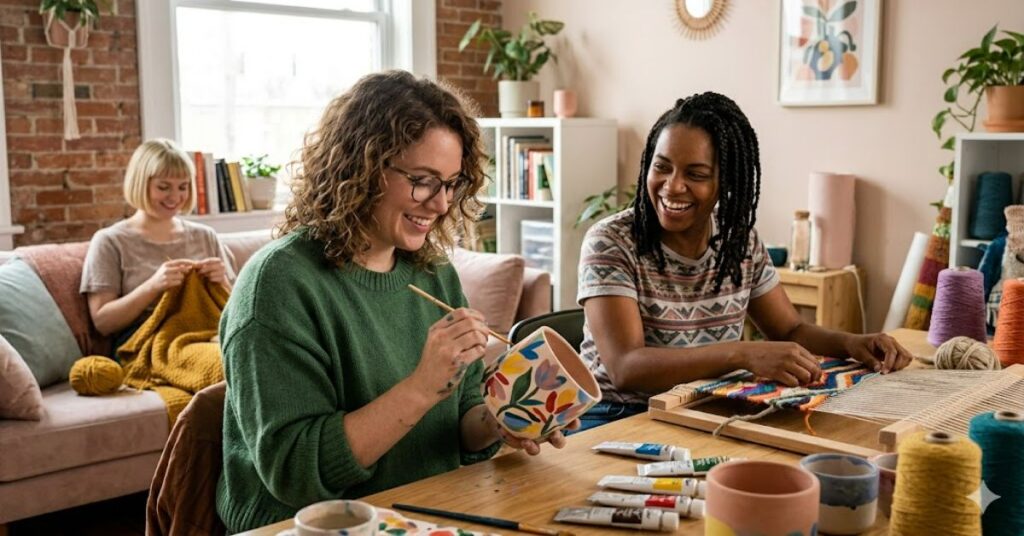
Finding meaningful hobbies for women is less about following trends and more about discovering activities that restore energy, encourage creativity, and provide a sense of accomplishment. Whether that means attending a Pilates class, learning crochet, baking on weekends, or keeping a personal journal, the ideal hobby is one that leaves you feeling refreshed rather than drained.
Modern life often creates a cycle of responsibilities. Careers, family commitments, education, and social obligations can consume most available time. As a result, many women reach a point where they realize they spend very little time doing something purely for enjoyment.
A well-chosen hobby serves a practical purpose beyond entertainment. Research consistently links leisure activities with improved mental health, reduced stress, stronger social connections, and increased life satisfaction. Hobbies create opportunities for learning and self-expression while providing a healthy break from daily routines.
The challenge is not finding options. The challenge is choosing the right one.
Some women thrive in active environments such as dance studios or hiking groups. Others prefer quiet creative pursuits like painting, jewelry making, or baking. There is no universal answer because hobbies serve different emotional and psychological needs.
This guide explores a wide range of possibilities, helping you identify activities that align with your interests, schedule, personality, and lifestyle goals.
Why Hobbies Matter More Than Ever
Leisure activities have evolved from simple pastimes into important tools for maintaining well-being.
Many women spend large portions of their day switching between professional responsibilities and personal obligations. Without dedicated recreation, stress accumulation becomes common.
Benefits of maintaining a hobby include:
- Improved emotional resilience
- Better stress management
- Increased creativity
- Expanded social networks
- Stronger self-confidence
- Enhanced cognitive function
A hobby creates protected time dedicated entirely to personal fulfillment.
Understanding What Recharges You
Before selecting a new activity, consider what genuinely restores your energy.
Different hobbies meet different needs.
If You Need More Physical Energy
Consider:
- Pilates
- Dance classes
- Yoga
- Swimming
- Hiking
- Cycling
These activities improve cardiovascular health while reducing stress.
If You Need Creative Expression
Explore:
- Painting
- Photography
- Jewelry making
- Crochet
- Knitting
- Creative writing
Creative hobbies offer a sense of accomplishment through tangible outcomes.
If You Need Mental Relaxation
Try:
- Journaling
- Reading
- Baking
- Gardening
- Puzzles
- Meditation
These activities encourage mindfulness and mental recovery.
Comparison Table: Popular Hobby Categories
| Category | Examples | Time Commitment | Primary Benefit |
| Physical | Pilates, dance, hiking | Medium | Fitness and energy |
| Creative | Crochet, painting, jewelry making | Medium | Self-expression |
| Social | Book clubs, volunteering | Medium | Community connection |
| Intellectual | Language learning, chess | High | Cognitive growth |
| Relaxation | Journaling, gardening | Low to Medium | Stress reduction |
Creative Hobbies That Build Skills
Creative hobbies remain among the most rewarding options because they combine enjoyment with visible progress.
Jewelry Making
Jewelry making allows personalization and craftsmanship.
Many beginners start with inexpensive kits before progressing to advanced techniques involving metalwork and gemstone settings.
Benefits include:
- Fine motor skill development
- Creative expression
- Potential side-income opportunities
Crochet and Knitting
Crochet continues to experience renewed popularity due to online tutorials and community groups.
Many practitioners report that repetitive stitching promotes relaxation similar to mindfulness exercises.
Painting and Illustration
Artistic hobbies encourage experimentation without pressure.
Beginners can start with watercolor sets, sketchbooks, or digital drawing applications.
Physical Hobbies for Health and Confidence
Physical activities provide benefits beyond exercise.
They often improve mood, confidence, and social interaction.
Pilates
Pilates emphasizes:
- Core strength
- Flexibility
- Posture improvement
- Controlled movement
Many women appreciate its adaptability across fitness levels.
Dance Classes
Dance combines fitness with creativity.
Popular options include:
- Salsa
- Ballroom
- Hip-hop
- Contemporary
- Zumba
Beyond physical benefits, dance classes often create strong social connections.
Hiking
Hiking offers a unique combination of movement and nature exposure.
Research has linked outdoor recreation with improved mood and reduced stress levels.
Relaxing Indoor Activities Worth Exploring
Not every hobby requires significant physical effort or financial investment.
Some of the most satisfying activities happen at home.
Baking
Baking combines creativity, technical skill, and sensory enjoyment.
Many hobby bakers find the process itself calming, regardless of the final result.
Journaling
Journaling remains one of the most accessible hobbies available.
Benefits may include:
- Emotional processing
- Goal tracking
- Stress management
- Self-reflection
A notebook and a few minutes per day are often enough to begin.
Reading
Reading offers intellectual stimulation while encouraging relaxation.
Genres can range from fiction and biographies to history and personal development.
Structured Insight Table: Choosing the Right Hobby
| Personality Type | Recommended Hobby | Primary Reward |
| Social | Dance classes | Community |
| Creative | Jewelry making | Expression |
| Analytical | Language learning | Mental challenge |
| Introverted | Journaling | Reflection |
| Adventurous | Hiking | Exploration |
| Wellness-Focused | Pilates | Physical health |
Hidden Challenges When Starting a New Hobby
Many guides focus only on benefits.
However, there are practical challenges worth acknowledging.
Perfectionism
Beginners often expect rapid improvement.
Most hobbies require consistent practice before visible progress occurs.
Overinvestment
Some individuals purchase expensive equipment before confirming genuine interest.
Starting small reduces financial risk.
Turning Every Hobby Into Work
One overlooked issue is the pressure to monetize hobbies.
While side income can be beneficial, transforming every leisure activity into a business may reduce enjoyment.
The most sustainable hobbies often remain separate from professional obligations.
Real-World Examples
Community recreation programs across cities consistently report strong participation in fitness, crafting, and social learning activities.
Book clubs continue attracting members because they combine intellectual stimulation with conversation and accountability.
Similarly, local pottery studios frequently maintain waiting lists despite economic fluctuations. This suggests that many people increasingly value experiences and skill development over passive entertainment.
These examples highlight a broader trend: hobbies are becoming an important part of personal well-being rather than simply a way to pass time.
Cultural and Social Impact
The growing popularity of wellness culture has influenced hobby choices significantly.
Women increasingly seek activities that provide:
- Stress relief
- Community
- Personal growth
- Mindfulness
- Creativity
Social media has also changed discovery patterns. Platforms such as Pinterest, YouTube, and Instagram expose users to new hobbies that may not have been easily accessible previously.
However, there is a trade-off.
Online platforms sometimes create unrealistic expectations regarding skill progression. Genuine learning remains a gradual process.
The Future of Hobbies for Women in 2027
Several trends are likely to shape recreational activities by 2027.
Hybrid Learning Communities
Online instruction combined with in-person meetups will continue expanding.
Growth of Wellness-Oriented Activities
Activities focused on mental health and stress reduction are expected to remain popular.
Technology-Assisted Creativity
Artificial intelligence tools may help beginners explore writing, art, music, and design projects more easily.
Increased Demand for Community
As remote work becomes more common, hobbies that foster real-world social interaction may gain additional appeal.
Not every trend will persist. However, the desire for meaningful, restorative activities appears likely to remain strong.
Key Takeaways
- The best hobbies support long-term enjoyment rather than short-term trends.
- Physical activities improve both fitness and emotional well-being.
- Creative pursuits provide visible progress and self-expression.
- Relaxing hobbies can reduce stress without requiring significant investment.
- Starting small increases the likelihood of long-term commitment.
- Community-oriented hobbies often improve consistency and motivation.
- Personal fulfillment should remain the primary goal.
Conclusion
Choosing among the many available hobbies for women is ultimately a personal decision shaped by interests, lifestyle, and emotional needs. The most rewarding hobbies are not necessarily the most productive, profitable, or fashionable. They are the activities that leave you feeling energized, fulfilled, and eager to return.
Whether that means attending a weekly Pilates session, learning crochet techniques, experimenting with new baking recipes, or spending quiet evenings journaling, the value lies in creating space for yourself. Hobbies provide opportunities to learn, connect, relax, and grow beyond the demands of daily life.
The process may involve experimentation. Some activities will resonate immediately, while others may not. That exploration is part of the experience.
A meaningful hobby is less about mastering a skill and more about creating a sustainable source of enjoyment that enhances overall quality of life.
FAQ
What are the most popular hobbies for women today?
Popular choices include Pilates, yoga, dance classes, journaling, crochet, baking, photography, gardening, and book clubs.
Which hobbies for women help reduce stress the most?
Journaling, gardening, reading, meditation, crochet, and yoga are frequently associated with relaxation and stress management.
Are creative hobbies good for mental health?
Many people find creative activities beneficial because they encourage focus, self-expression, and a sense of achievement.
What hobbies can I start at home?
Baking, journaling, reading, painting, crochet, knitting, and language learning are excellent home-based options.
What hobbies help women make new friends?
Dance classes, volunteer work, book clubs, hiking groups, and community workshops are strong social opportunities.
How do I know which hobby is right for me?
Consider whether you need physical activity, creativity, relaxation, intellectual stimulation, or social interaction. The best choice often aligns with your current needs.
Methodology
This article was developed using established research on leisure activities, well-being, recreation, and lifestyle behavior. The analysis focuses on practical applications and commonly observed benefits associated with hobby participation.
No proprietary testing was conducted for this article. Recommendations are based on documented leisure practices, community participation trends, and wellness research. Individual experiences may vary depending on personal preferences, schedule, and health considerations.
Editorial Disclosure: This article was drafted with AI assistance and should be reviewed, fact-checked, and approved by a human editor before publication.
References
American Psychological Association. (2023). Stress management and healthy lifestyle practices.
Harvard Health Publishing. (2024). The mental and physical benefits of regular exercise and recreation.
Mayo Clinic. (2024). Stress relief through hobbies, exercise, and relaxation activities.
World Health Organization. (2023). Mental health and well-being resources.
National Institutes of Health. (2023). Leisure activities and psychological well-being.