
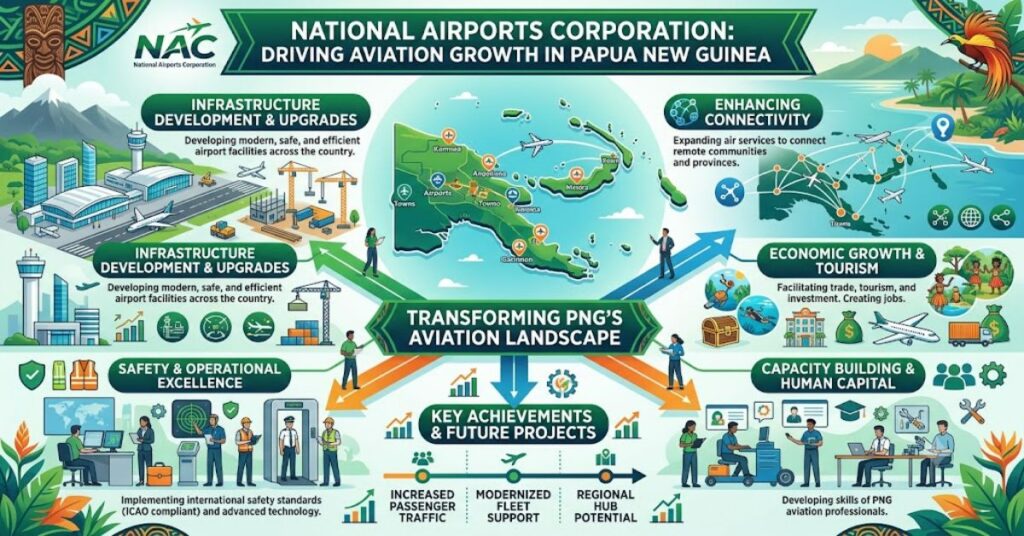
Air transport is essential in Papua New Guinea, where mountainous terrain and remote communities make road travel difficult in many regions. The National Airports Corporation serves as the country’s primary airport operator, ensuring that aviation infrastructure remains safe, reliable, and accessible. Established under the Civil Aviation Act, the corporation separates airport management from aviation regulation, allowing it to focus on operating, maintaining, and developing airport facilities. It manages 22 major national airports that connect businesses, tourists, government agencies, and local communities throughout the country.
Beyond operating airports, the corporation contributes to national economic growth by supporting tourism, trade, emergency services, and regional connectivity. As passenger numbers and cargo demand continue to evolve, the National Airports Corporation remains central to Papua New Guinea’s transportation infrastructure.
What Is the National Airports Corporation?
The National Airports Corporation (NAC) is a state-owned enterprise responsible for operating, maintaining, and developing Papua New Guinea’s national airport network. Its responsibilities focus on commercial airport management while aviation safety regulation is handled separately by the country’s regulatory authorities.
The corporation oversees airport infrastructure, passenger facilities, airfield maintenance, terminal operations, and capital improvement projects designed to improve aviation services.
Core Responsibilities
The corporation performs several important functions.
- Operating national airports
- Maintaining runways and terminals
- Managing airport infrastructure
- Supporting airline operations
- Enhancing passenger safety and security
- Planning airport expansion projects
- Promoting sustainable aviation development
These responsibilities help maintain reliable air connectivity across the country.
Airport Network
| Area | Role |
| National airports | Passenger and cargo transportation |
| Regional connectivity | Links remote communities |
| Tourism gateways | Supports international and domestic visitors |
| Economic infrastructure | Facilitates business and trade |
| Emergency access | Enables medical and disaster response flights |
The extensive airport network is particularly valuable because many communities depend on air travel throughout the year.
Economic Importance
Aviation contributes significantly to Papua New Guinea’s economy.
Reliable airport infrastructure supports:
- Tourism growth
- Business investment
- International trade
- Agricultural exports
- Government services
- Healthcare logistics
Well-maintained airports reduce travel barriers while improving access to markets and essential public services.
Infrastructure Development
Modern airports require continuous investment.
The National Airports Corporation focuses on improving:
- Passenger terminals
- Airfield lighting
- Navigation infrastructure
- Security systems
- Fire and rescue services
- Runway rehabilitation
- Environmental sustainability
Infrastructure upgrades improve operational efficiency while supporting future passenger growth.
Challenges Facing Airport Management
Managing airports across Papua New Guinea presents unique operational challenges.
These include:
| Challenge | Impact |
| Remote geography | Higher maintenance costs |
| Weather conditions | Operational disruptions |
| Infrastructure funding | Capital investment requirements |
| Passenger growth | Increased capacity demand |
| Technology upgrades | Ongoing modernization needs |
Addressing these issues requires long-term planning and collaboration between government agencies and industry stakeholders.
Why Airport Management Matters
Effective airport management extends beyond maintaining buildings and runways.
Strong airport operations improve:
- Passenger experience
- Airline reliability
- Cargo efficiency
- Tourism competitiveness
- National connectivity
- Emergency response capabilities
Safe and efficient airports strengthen confidence among airlines, investors, and travelers alike.
The Future of National Airports Corporation in 2027
By 2027, airport modernization is expected to remain a strategic priority across Papua New Guinea. Investments in digital airport systems, improved passenger processing, enhanced security technologies, and sustainable infrastructure are likely to shape future development.
As tourism and regional trade continue to expand, the National Airports Corporation will play an increasingly important role in maintaining reliable transportation links while balancing operational efficiency with environmental responsibility.
Key Takeaways
- The National Airports Corporation manages 22 major airports across Papua New Guinea.
- Airport infrastructure supports national economic development.
- Aviation is essential for connecting remote communities.
- Infrastructure modernization improves passenger safety and operational efficiency.
- Continued investment strengthens tourism and trade opportunities.
- Sustainable airport management will remain a long-term priority.
Conclusion
The National Airports Corporation plays a fundamental role in Papua New Guinea’s transportation network by managing airports that connect communities, businesses, and international visitors. Its responsibilities extend beyond airport operations to supporting economic development, regional accessibility, and public services throughout the country.
As aviation continues to evolve, investments in infrastructure, technology, and sustainability will help ensure airports remain safe, efficient, and capable of meeting future demand. By maintaining critical transportation gateways, the corporation contributes directly to national development and improved connectivity across Papua New Guinea.
Frequently Asked Questions
What is the National Airports Corporation?
The National Airports Corporation is the state-owned enterprise responsible for operating and managing 22 major national airports across Papua New Guinea.
How many airports does the corporation manage?
It manages 22 major national airports throughout Papua New Guinea.
What are the corporation’s primary responsibilities?
Its responsibilities include airport operations, infrastructure maintenance, terminal management, and airport development projects.
Why is the National Airports Corporation important?
It supports transportation, tourism, trade, emergency services, and regional connectivity across Papua New Guinea.
What challenges does the corporation face?
Key challenges include maintaining remote airport infrastructure, funding modernization projects, managing weather-related disruptions, and meeting future passenger demand.
Methodology
This article is based on the information provided in the Postcard.fm article prompt regarding the National Airports Corporation’s role, mandate, and responsibilities. It also reflects the prompt’s editorial structure and topic framing.