
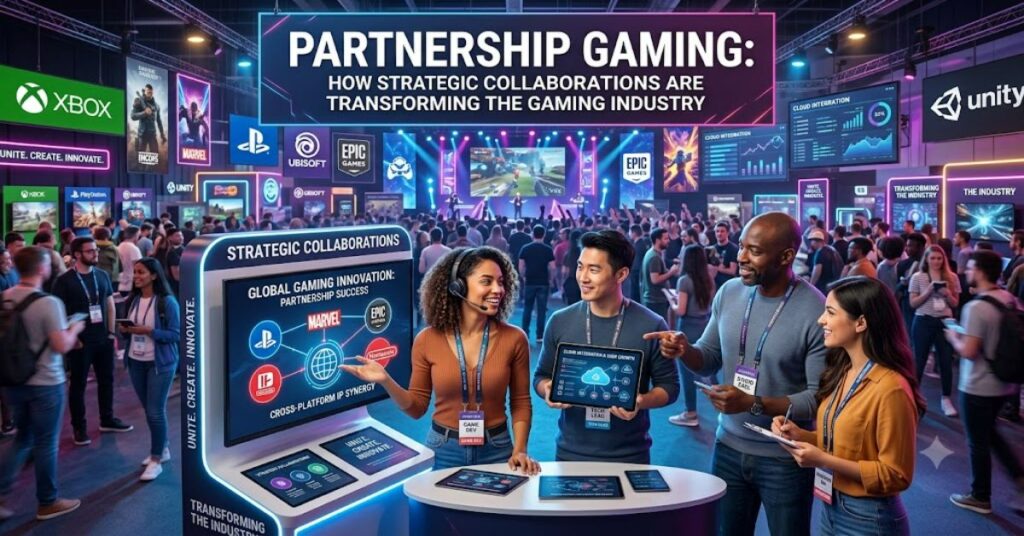
The gaming industry has evolved beyond simply creating and selling video games. Today, partnership gaming has become one of the industry’s most important growth strategies, connecting developers, publishers, brands, streaming platforms, and content creators in ways that benefit everyone involved. Whether it’s a popular Twitch streamer promoting a new release, a fashion brand launching virtual items inside a game, or two studios working together on a major title, partnerships now influence how games are marketed, monetised, and experienced.
Players increasingly expect interactive experiences that extend beyond gameplay. Limited-time events, influencer campaigns, esports sponsorships, and cross-brand collaborations create excitement while helping companies reach broader audiences. These partnerships also enable smaller developers to gain visibility that would otherwise require large marketing budgets.
Understanding partnership gaming is valuable for developers, creators, businesses, and players alike because these collaborations continue to shape the direction of the modern gaming market.
What Is Partnership Gaming?
Partnership gaming refers to strategic collaborations between organisations or individuals operating within the gaming ecosystem.
Common partnership models include:
- Game developer and publisher collaborations
- Creator sponsorships on Twitch and YouTube
- Brand collaborations through in-game events
- Esports sponsorship agreements
- Platform partnership programmes
- Revenue-sharing creator initiatives
Each model serves different objectives, but all aim to increase audience engagement while creating commercial value.
Major Types of Gaming Partnerships
Creator Partnerships
Influencers have become one of gaming’s strongest marketing channels.
Developers frequently collaborate with:
- Twitch streamers
- YouTube creators
- TikTok gaming influencers
- Facebook Gaming creators
These creators introduce new games to highly engaged audiences through gameplay, reviews, and live broadcasts.
Brand-to-Game Collaborations
Many global brands now appear directly inside video games.
Examples include:
- Fashion collections in online games
- Movie-themed limited-time events
- Sports partnerships
- Music concerts hosted inside virtual worlds
These campaigns attract both gamers and mainstream audiences.
Developer and Publisher Alliances
Studios often partner with publishers or other development teams to combine expertise.
Such collaborations may involve:
- Shared technology
- Co-development
- Distribution support
- Marketing campaigns
- Global publishing rights
These partnerships reduce development risks while expanding international reach.
Platform Partnership Programs
Platforms such as Facebook Gaming, YouTube Gaming, and Twitch provide partnership programmes that reward creators through advertising, subscriptions, and exclusive features.
These programmes encourage long-term content creation while strengthening platform loyalty.
Comparison of Partnership Models
| Partnership Type | Primary Goal | Main Benefit |
| Creator sponsorship | Marketing | Audience reach |
| Brand collaboration | Promotion | Brand awareness |
| Developer partnership | Production | Shared expertise |
| Publisher agreement | Distribution | Global expansion |
| Platform partnership | Monetisation | Creator revenue |
Why Partnership Gaming Is Growing
Several trends explain the rapid growth of strategic collaborations.
Expanding Gaming Audience
Gaming now reaches hundreds of millions of players across consoles, PCs, and mobile devices, making it an attractive market for brands.
Rise of Content Creators
Streaming platforms have transformed gamers into influential media personalities with highly engaged communities.
Digital Marketing Evolution
Traditional advertising is becoming less effective among younger audiences, while creator partnerships often deliver stronger engagement and authenticity.
Business Benefits of Partnership Gaming
Strategic collaborations create value for multiple stakeholders.
For Developers
- Larger audiences
- Faster game awareness
- Reduced marketing costs
- Improved launch visibility
For Creators
- Sponsorship income
- Exclusive content opportunities
- Audience growth
- Long-term commercial relationships
For Brands
- Access to younger demographics
- Increased digital engagement
- Creative marketing opportunities
- Improved customer loyalty
Structured Insight Table
| Stakeholder | Primary Benefit |
| Game developers | Higher visibility |
| Publishers | Wider distribution |
| Content creators | Revenue opportunities |
| Brands | Customer engagement |
| Players | Exclusive experiences |
| Streaming platforms | Increased user activity |
Challenges and Risks
Although partnership gaming offers significant opportunities, it also presents several challenges.
- Choosing unsuitable creators can damage brand reputation.
- Sponsored content must remain transparent to maintain audience trust.
- Intellectual property rights require careful management.
- Cross-company projects may experience delays due to differing priorities.
- Measuring return on investment can be difficult without clear performance metrics.
Successful collaborations require clear contracts, shared objectives, and regular communication.
Real-World Industry Examples
Many well-known gaming partnerships demonstrate the effectiveness of strategic collaboration.
Epic Games has partnered with entertainment brands to introduce themed in-game events that attract millions of players. Riot Games regularly collaborates with esports organisations and sponsors to expand competitive gaming audiences. Similarly, streaming creators frequently receive early access to new titles, helping developers generate excitement before launch.
These examples show that partnership gaming extends far beyond advertising—it has become part of product development, community building, and long-term business strategy.
The Future of Partnership Gaming in 2027
By 2027, partnership gaming is expected to become even more sophisticated. Artificial intelligence will likely help brands identify suitable creators based on audience behaviour and engagement metrics. Cross-platform events involving games, films, music, and virtual reality experiences are expected to become increasingly common.
Esports sponsorships will continue expanding as competitive gaming attracts larger audiences and greater commercial investment. Developers are also likely to build partnership opportunities directly into game ecosystems, allowing brands and creators to collaborate more efficiently while preserving player experience.
Key Takeaways
- Partnership gaming includes creators, developers, publishers, and commercial brands.
- Creator marketing has become one of gaming’s most effective promotional channels.
- Brand collaborations increase player engagement through exclusive experiences.
- Strategic alliances reduce development and marketing risks.
- Transparency and clear objectives are essential for successful partnerships.
- Future collaborations will rely more heavily on data, AI, and cross-platform experiences.
Conclusion
Partnership gaming has transformed from a marketing tactic into a fundamental business strategy across the gaming industry. Collaborations between developers, publishers, content creators, streaming platforms, and global brands now influence how games are developed, promoted, and monetised. These partnerships provide commercial benefits while also creating richer experiences for players through exclusive content, community events, and innovative campaigns.
Although strategic partnerships require careful planning, transparent agreements, and measurable objectives, their long-term value continues to grow as gaming reaches wider audiences worldwide. As technology evolves and digital entertainment becomes increasingly interconnected, partnership gaming will remain one of the industry’s most influential drivers of innovation and sustainable growth.
Frequently Asked Questions
What is partnership gaming?
Partnership gaming refers to strategic collaborations involving game developers, publishers, brands, streaming platforms, and content creators to achieve marketing, development, or monetisation goals.
Why are creator partnerships important?
Content creators help developers reach engaged audiences through gameplay videos, live streams, reviews, and sponsored campaigns, often generating stronger engagement than traditional advertising.
What are examples of partnership gaming?
Examples include Twitch sponsorships, YouTube creator collaborations, branded in-game events, esports sponsorships, and joint ventures between developers and publishers.
Do gaming partnerships benefit players?
Yes. Players often receive exclusive events, themed content, rewards, improved community engagement, and more diverse gaming experiences through successful partnerships.
How is partnership gaming expected to evolve?
Future partnerships are expected to use AI-driven creator selection, expanded cross-platform collaborations, virtual events, and deeper integration between games, entertainment, and digital commerce.
Methodology
This article is based on publicly available information from the gaming industry, creator economy research, esports developments, and platform partnership programmes. Industry reports, company announcements, and digital marketing trends were reviewed to explain how strategic collaborations operate while avoiding unsupported claims or speculative conclusions.
References
- Newzoo. (2024). Global Games Market Report.
- Entertainment Software Association. (2024). Essential Facts About the Video Game Industry.
- Twitch. (2024). Creator and Partner Resources.
- YouTube Creators. (2024). Gaming Creator Resources.
- Meta. (2024). Facebook Gaming Creator Programs.