
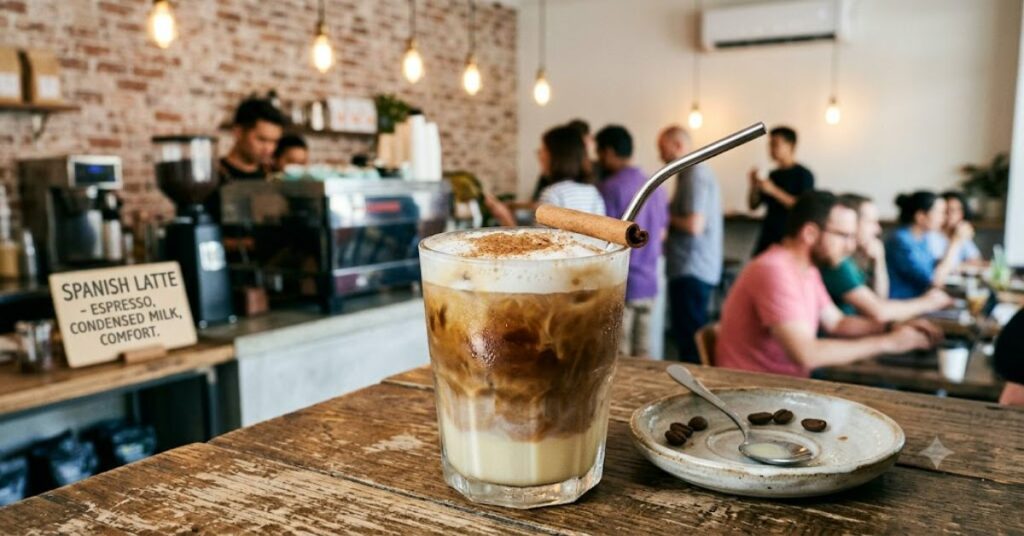
A Spanish Latte is a creamy, sweet espresso drink made with a double shot of espresso, sweetened condensed milk, and steamed or cold milk. Unlike a traditional latte, which relies mainly on espresso and regular milk, this variation delivers a richer texture and deeper caramel-like sweetness.
Although its name suggests a direct connection with Spain, the modern café version of the drink became especially popular across Middle Eastern and Asian coffee markets, where cafés adapted espresso beverages to suit local preferences for sweeter and more indulgent flavours.
The appeal of this coffee style comes from its simplicity. It uses familiar ingredients but creates a completely different drinking experience. The combination of concentrated espresso and condensed milk creates a balance between bitterness, sweetness, and creaminess.
As specialty coffee culture continues expanding, the Spanish Latte has become an example of how cafés reinterpret classic drinks for new audiences. It represents a shift from coffee being purely functional toward becoming an experience built around flavour, presentation, and personal preference.
What Makes a Spanish Latte Different?
The foundation of this drink is the relationship between espresso intensity and milk sweetness. A standard latte highlights the natural flavour of espresso softened by steamed milk. The Spanish version adds sweetened condensed milk, introducing additional sugar and a thicker mouthfeel.
| Drink Type | Main Ingredients | Flavour Profile |
| Traditional Latte | Espresso + steamed milk | Mild, creamy, coffee-forward |
| Spanish Latte | Espresso + condensed milk + milk | Sweet, rich, caramel-like |
| Cappuccino | Espresso + milk foam | Stronger coffee taste with airy texture |
| Iced Coffee | Coffee + chilled ingredients | Refreshing and lighter |
The condensed milk is the defining element. It creates a dessert-like quality without requiring additional syrups or flavour additives.
The Ingredients Behind the Popular Coffee Style
A balanced version usually contains three core components:
Espresso:
A double shot provides the strong coffee foundation. The intensity helps prevent the sweetness from becoming overwhelming.
Sweetened Condensed Milk:
This ingredient adds sugar, creaminess, and a caramel-like flavour. It also changes the drink’s texture by increasing viscosity.
Steamed or Cold Milk:
Milk adjusts the strength and creates the smooth finish associated with café-style drinks.
| Ingredient | Purpose | Impact on Taste |
| Espresso | Provides caffeine and coffee flavour | Adds bitterness and depth |
| Condensed milk | Adds sweetness and body | Creates caramel notes |
| Regular milk | Balances intensity | Produces smooth texture |
Why the Spanish Latte Became a Café Trend
The rise of this drink connects with changing consumer behaviour in the coffee industry. Many customers now look for beverages that combine familiarity with novelty.
Coffee shops have increasingly developed signature drinks that are visually appealing and easy to personalise. Iced versions, alternative milk options, and customised sweetness levels have helped expand the audience beyond traditional coffee drinkers.
The popularity of the drink in countries such as the Philippines, United Arab Emirates, Saudi Arabia, and other markets demonstrates how café cultures adapt international concepts to regional tastes.
One important insight is that the success of this beverage is not only about flavour. It reflects a larger movement toward “experience-based consumption,” where customers choose drinks based on identity, lifestyle, and social sharing.
Hot vs Iced Spanish Latte: Which Version Works Best?
Both versions use the same basic ingredients but create different experiences.
| Version | Characteristics | Best For |
| Hot version | Warm, smooth, richer texture | Cooler weather and slow coffee moments |
| Iced version | Refreshing, sweeter perception | Warm climates and casual café visits |
The iced format has become particularly popular because it suits modern café habits. Cold coffee drinks are often associated with convenience, portability, and social media-friendly presentation.
Nutritional Considerations and Coffee Balance
While enjoyable, the sweetness level is higher than many traditional coffee drinks because condensed milk contains added sugar.
Consumers looking for a lighter option can adjust:
- Amount of condensed milk
- Type of milk used
- Espresso intensity
- Ice-to-coffee ratio
The trade-off is simple: reducing sweetness may improve nutritional balance but changes the signature flavour that defines the drink.
The Cultural Impact of Modern Coffee Adaptations
Coffee has always evolved through cultural exchange. Drinks such as espresso, cappuccino, and cold brew each represent different periods of coffee history.
The Spanish Latte demonstrates how global coffee culture is no longer dominated by one tradition. Instead, cafés combine techniques and ingredients from different regions to create new experiences.
This trend benefits independent cafés because unique drinks help businesses differentiate themselves in competitive markets. A recognisable signature beverage can become part of a brand’s identity.
The Future of Spanish Latte in 2027
By 2027, coffee trends are expected to continue moving toward personalisation, sustainability, and premium experiences.
The Spanish Latte is likely to evolve through:
- Alternative milk options such as oat and almond varieties
- Reduced-sugar recipes
- Specialty coffee beans with unique flavour profiles
- More environmentally conscious sourcing practices
However, the drink’s future growth will depend on maintaining its core identity. If cafés modify it too heavily, customers may lose the flavour balance that made it popular.
The strongest versions will likely combine traditional espresso craftsmanship with modern consumer expectations.
Key Insights
- The Spanish Latte succeeds because it combines familiar coffee elements with a distinctive sweetness.
- Condensed milk is the ingredient that separates it from traditional latte recipes.
- Regional café cultures have played a major role in its international popularity.
- The drink reflects the growing demand for personalised beverage experiences.
- Future versions will likely focus on healthier ingredients and sustainable coffee practices.
Conclusion
The Spanish Latte represents how coffee culture continues to change through creativity and adaptation. By combining espresso, condensed milk, and regular milk, the drink creates a flavour profile that is both familiar and distinctive.
Its popularity shows that modern consumers are not only seeking caffeine but also memorable experiences. The balance between bitterness, sweetness, and texture has allowed this beverage to move beyond a simple café trend.
As coffee businesses continue experimenting with ingredients and preparation methods, the Spanish Latte is likely to remain a strong example of how traditional coffee concepts can be transformed for new audiences.
Frequently Asked Questions
What is a Spanish Latte made of?
A Spanish Latte is typically made with espresso, sweetened condensed milk, and steamed or cold milk. The combination creates a creamy and sweet coffee drink.
Is a Spanish Latte from Spain?
Despite its name, the modern café version is not strongly connected to traditional Spanish coffee culture. It became popular internationally through cafés adapting coffee styles for local preferences.
Is Spanish Latte sweeter than regular latte?
Yes. The addition of sweetened condensed milk makes it noticeably sweeter and richer than a traditional latte.
Can a Spanish Latte be made iced?
Yes. The iced version is widely popular and uses the same ingredients poured over ice for a refreshing alternative.
Can you make a Spanish Latte without condensed milk?
You can create similar drinks using milk and sweeteners, but condensed milk provides the distinctive creamy texture and caramel-like flavour.
Methodology
This article was developed using established coffee industry information, culinary references, and documented beverage trends. The analysis focuses on the ingredients, preparation methods, cultural adoption, and consumer appeal of the drink.
Limitations include variations in recipes between cafés and regions. There is no single official recipe, meaning preparation styles may differ while maintaining the same core concept.
References
International Coffee Organization. (2023). Coffee development report and global coffee trends. International Coffee Organization.
Specialty Coffee Association. (2024). Coffee preparation and specialty beverage insights. Specialty Coffee Association.
National Coffee Association. (2024). Coffee trends and consumer behaviour report. National Coffee Association.