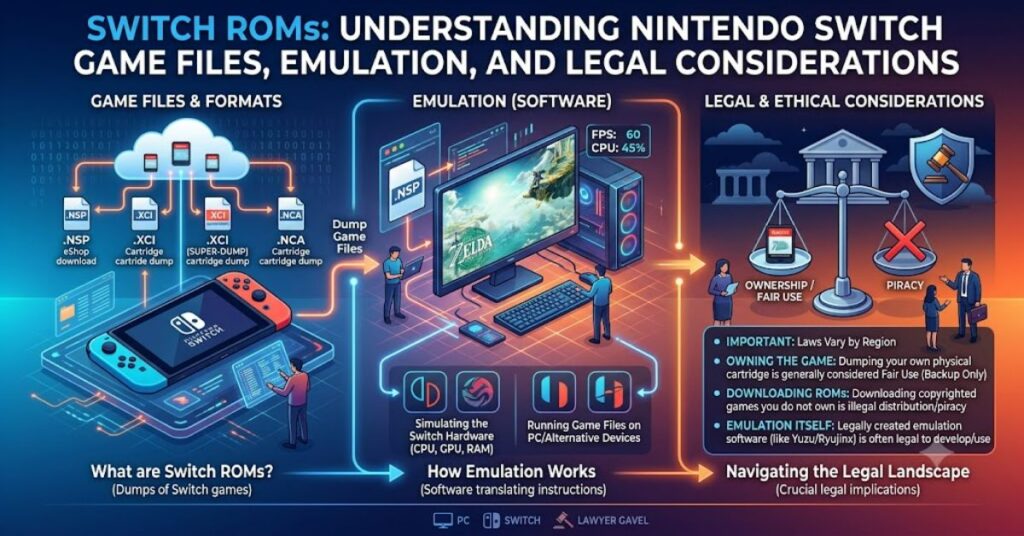
Switch ROMs refer to digital copies of Nintendo Switch games, commonly appearing in formats such as .NSP and .XCI. These files are often associated with emulation, digital preservation, and custom software environments. The legal and technical context surrounding them is complex because the same file format can be used for legitimate personal backups or for unauthorised distribution of copyrighted games.
Nintendo Switch launched globally on 3 March 2017 and quickly became one of Nintendo’s most successful gaming platforms. As the console matured, interest grew around preserving games, studying hardware behaviour, and running software through emulation environments.
Understanding these files requires separating the technology from the legal issues. A ROM itself is simply a digital representation of game data. The important question is how that data was obtained and how it is used.
This article examines the technical structure of Switch game files, legitimate preservation practices, security concerns, and the wider impact of emulation on gaming culture.
How Nintendo Switch Game Files Work
Nintendo Switch games are distributed through physical cartridges and digital downloads. Unlike older cartridge systems, modern consoles use encrypted storage systems designed to prevent unauthorised copying and modification.
Common Switch game file formats include:
| File Format | Common Use | Technical Description |
| XCI | Cartridge image representation | Digital representation of physical game cartridge data |
| NSP | Digital package format | Package format associated with downloadable Switch software |
| NCA | Content archive | Nintendo content container used internally |
| NRO | Homebrew application format | Executable format used by custom applications |
These formats contain multiple components, including game assets, metadata, and executable code. Modern console security systems use encryption and authentication measures to prevent unauthorised access.
For researchers and preservation communities, these formats provide insight into how modern games are structured. For copyright holders, however, uncontrolled distribution creates concerns about piracy and lost revenue.
The Difference Between Game Preservation and Piracy
One of the most misunderstood areas surrounding Switch ROMs is the difference between creating a personal backup and obtaining files from unofficial sources.
A person who owns a physical game cartridge may explore methods of preserving their own software collection. This is often discussed within gaming preservation communities because older hardware eventually becomes difficult to maintain.
However, downloading copyrighted game files from third-party websites without ownership permission is generally considered copyright infringement in many jurisdictions.
| Activity | Legal Risk | Reason |
| Backing up personally owned games | Depends on jurisdiction | Personal copying laws vary |
| Downloading copyrighted games from unofficial sites | High | Distribution rights belong to copyright owners |
| Using homebrew applications | Depends on software and purpose | Some uses are permitted while others violate terms |
| Sharing game files online | High | Involves unauthorised distribution |
The distinction is important because emulation technology itself is not automatically illegal. The legal concerns usually focus on copyrighted software distribution.
Why Players Explore Switch Emulation
Nintendo Switch emulation has attracted interest for several reasons.
Game Preservation
Video game preservation organisations argue that older software can disappear when hardware fails or digital storefronts close. Emulation can provide researchers with tools for studying historical software.
Performance Improvements
Some players explore emulation because computers can sometimes offer:
- Higher resolution output
- Improved frame consistency
- Custom graphical enhancements
However, performance depends on hardware capability, emulator compatibility, and the complexity of the game.
Research and Development
Developers and researchers use emulation environments to understand software behaviour, security models, and hardware architecture.
Risks Associated With Unofficial ROM Sources
A major issue surrounding Switch ROM downloads is cybersecurity.
Unofficial websites frequently advertise large game libraries, but these sources may contain risks including:
- Malware-infected files
- Fake download buttons
- Browser-based scams
- Modified software packages
A downloaded file may appear to be a game but could contain unwanted programs designed to compromise user systems.
Another overlooked risk is file integrity. Even when a file runs successfully, modified versions may include altered code, incomplete data, or unknown changes.
Practical Insights From the Switch ROM Debate
Several broader lessons emerge from analysing the ecosystem.
| Insight | Explanation | Impact |
| Ownership does not always mean access | Consumers may own games but lack easy preservation tools | Creates tension between users and publishers |
| Digital distribution creates preservation challenges | Online stores and services can disappear | Historical access becomes harder |
| Security restrictions shape user behaviour | Strong protection can encourage unofficial workarounds | Creates ongoing industry debates |
One important issue is that digital-only ownership changes how people think about collecting games. Physical cartridges can often remain usable decades later, while digital access depends on company infrastructure.
Another challenge is that preservation requires technical knowledge. File formats, encryption, and hardware requirements create barriers for ordinary players.
The Cultural Impact of Emulation and Preservation
Gaming communities have long debated the role of emulation. Supporters argue that preserving software history is essential, especially when games become unavailable.
Critics highlight that unauthorised copies can reduce sales and affect developers, publishers, and creators.
The debate reflects a wider cultural shift. Games are increasingly viewed not only as entertainment products but also as historical works that represent technological and artistic milestones.
Major preservation efforts by organisations such as the Video Game History Foundation demonstrate growing interest in maintaining access to gaming history.
The Future of Switch ROMs in 2027
By 2027, discussions around Switch ROMs will likely continue as gaming platforms become increasingly digital.
Several trends may influence the future:
- More cloud-based gaming services
- Greater focus on digital ownership rights
- Improved preservation technology
- Stronger anti-piracy systems
Regulatory discussions around copyright, digital ownership, and archival access will remain important. Organisations involved in intellectual property protection and digital preservation will continue balancing creator rights with historical access.
The future is unlikely to be defined by one solution. Instead, it will involve ongoing negotiation between technology companies, players, researchers, and legal authorities.
Key Takeaways
- Switch ROMs represent digital versions of Nintendo Switch software files.
- File formats such as NSP and XCI have legitimate technical uses but can also be involved in copyright violations.
- Personal preservation and unauthorised downloading are legally different activities.
- Security risks make unofficial ROM websites a serious concern.
- Emulation contributes to discussions about ownership, preservation, and gaming history.
Conclusion
Switch ROMs sit at the intersection of technology, gaming culture, copyright law, and digital preservation. The files themselves are simply containers for software data, but their use determines the legal and ethical implications.
As games become increasingly digital, questions about ownership and long-term access will become more important. Players want reliable ways to preserve their collections, while developers and publishers need protection for creative work.
A balanced approach requires recognising both sides of the debate. Preservation has genuine cultural value, but protecting intellectual property remains essential for sustaining the gaming industry.
Frequently Asked Questions
What are Switch ROMs?
Switch ROMs are digital copies of Nintendo Switch game data, commonly stored in formats such as NSP or XCI.
Are Switch ROMs legal?
The legality depends on how the files are obtained and used. Creating personal backups may be treated differently from downloading copyrighted games from unauthorised sources.
What is the difference between NSP and XCI files?
NSP files are commonly associated with digital software packages, while XCI files represent cartridge-based game images.
Can emulators run Nintendo Switch games?
Some emulators are designed to run Switch software, but compatibility depends on the emulator, hardware, and game requirements.
Why do people preserve Switch games?
Preservation helps maintain access to gaming history, especially when hardware or digital services become unavailable.
Methodology
This article was prepared using publicly available information about Nintendo Switch hardware, digital game preservation, copyright principles, and emulation technology. Sources were selected from recognised industry organisations and legal resources.
The analysis does not evaluate or recommend unauthorised downloading practices. Limitations include differences between copyright laws across countries and the changing nature of digital preservation policies.
This article was drafted with AI assistance and requires editorial verification of all legal references, technical claims, and citations before publication.
References
Nintendo. (2023). Nintendo Switch system and software information. Nintendo Co., Ltd.
Video Game History Foundation. (2023). Video game preservation and access research. Video Game History Foundation.
United States Copyright Office. (2021). Copyright and the music marketplace: Digital rights and preservation considerations. U.S. Government Publishing Office.
Entertainment Software Association. (2024). Video game industry and intellectual property protection overview. ESA.