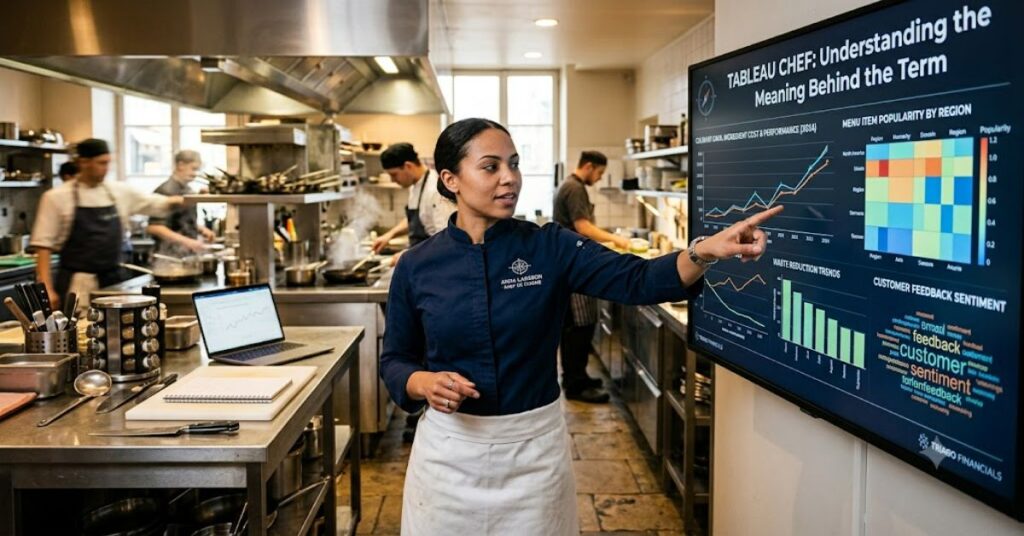
The phrase tableau chef can be confusing because it has multiple interpretations depending on the context. Some people are searching for the head chef at a restaurant named Tableau, while others are looking for information about using Tableau, the popular data visualization platform, to manage restaurant operations and consumer insights. Both interpretations are valid, making the keyword an interesting blend of culinary leadership and business analytics.
Restaurants today depend on more than exceptional food. They also rely on technology to understand customer preferences, monitor inventory, evaluate menu performance, and improve profitability. Data visualization tools such as Tableau help transform complex restaurant data into easy-to-read dashboards, allowing chefs and managers to make informed decisions.
This guide explores both meanings of tableau chef, explains how analytics supports modern restaurants, and highlights why combining culinary expertise with data-driven decision-making has become increasingly important.
What Does Tableau Chef Mean?
The phrase generally falls into two categories.
- Restaurant Leadership: It may refer to the executive or head chef working at a restaurant called Tableau or a similarly named venue.
- Restaurant Analytics: It can also describe chefs and restaurant managers using Tableau software to visualize operational data and improve business performance.
Because search engines recognize both meanings, users often encounter results covering restaurants, chefs, and business intelligence platforms.
Tableau in Restaurant Analytics
Tableau is widely used across many industries to convert raw data into interactive dashboards. Within restaurants, these dashboards can track:
- Daily sales
- Best-selling menu items
- Customer demographics
- Inventory levels
- Employee productivity
- Seasonal demand
- Food costs
Instead of reviewing spreadsheets manually, restaurant managers can identify trends at a glance and respond more quickly to changing customer behavior.
How Data Helps Restaurant Chefs
Today’s executive chefs balance creativity with operational efficiency. Access to reliable analytics allows them to make informed decisions without compromising culinary quality.
Some practical uses include:
- Identifying the most profitable dishes.
- Monitoring ingredient waste.
- Forecasting busy service periods.
- Adjusting menus for seasonal demand.
- Evaluating customer feedback.
These insights help restaurants improve both guest satisfaction and financial performance.
Comparison Table
| Traditional Kitchen Management | Data-Driven Restaurant Management |
| Manual sales reports | Interactive dashboards |
| Limited trend analysis | Real-time performance monitoring |
| Reactive menu changes | Data-informed menu optimization |
| Spreadsheet reporting | Visual business intelligence |
| Historical reviews | Live operational insights |
Restaurants adopting analytics often make faster decisions because key performance indicators are available in one centralized dashboard.
Restaurant Analytics Insights
| Metric | Business Value |
| Average order value | Revenue optimization |
| Food cost percentage | Better cost control |
| Customer return rate | Loyalty measurement |
| Inventory turnover | Reduced waste |
| Peak dining hours | Staff scheduling improvements |
One useful observation is that many restaurants discover underperforming menu items only after visualizing sales data. Dashboards make these trends easier to identify than traditional reports.
Another insight is that combining customer reviews with sales figures often reveals why certain dishes perform well despite higher preparation costs.
Finally, visual analytics can improve communication between chefs, managers, and owners by presenting complex operational information in a simple format.
Benefits of Combining Culinary Skills with Analytics
Successful restaurants increasingly blend creativity with measurable performance.
Advantages include:
- Smarter menu engineering.
- Better inventory planning.
- Improved staffing decisions.
- Faster operational reporting.
- Enhanced customer experiences.
- Increased profitability.
Analytics does not replace culinary expertise; instead, it supports better business decisions.
Challenges and Limitations
Despite its advantages, restaurant analytics also has limitations.
Potential challenges include:
- Data quality issues.
- Staff training requirements.
- Integration with existing systems.
- Upfront software implementation costs.
- Dependence on accurate reporting.
Restaurants should balance data-driven recommendations with the experience and judgment of professional chefs.
The Future of Tableau Chef in 2027
By 2027, restaurant technology is expected to become even more intelligent.
Future developments may include:
- AI-powered demand forecasting.
- Automated inventory recommendations.
- Predictive staffing models.
- Personalized menu suggestions.
- Real-time operational dashboards across multiple locations.
While technology will continue evolving, successful restaurants will still rely on experienced chefs to translate insights into memorable dining experiences.
Key Takeaways
- “Tableau chef” has multiple meanings depending on search intent.
- Restaurant analytics is becoming a standard business practice.
- Data visualization improves operational decision-making.
- Executive chefs benefit from actionable business insights.
- Technology complements rather than replaces culinary expertise.
- Customer behavior analysis helps optimize menus and profitability.
Conclusion
The term tableau chef reflects two closely connected worlds: culinary leadership and restaurant analytics. Whether referring to the executive chef of a restaurant named Tableau or to the use of Tableau dashboards in hospitality management, both interpretations highlight the growing importance of informed decision-making.
Modern chefs are expected to oversee far more than food preparation. They help manage costs, monitor customer satisfaction, optimize menus, and support overall business performance. Business intelligence tools provide valuable insights that make these responsibilities more manageable while allowing chefs to focus on delivering exceptional dining experiences.
As restaurants continue embracing digital transformation, analytics platforms will become an even more important part of successful kitchen and restaurant management.
Frequently Asked Questions
What does tableau chef mean?
The phrase may refer to the head chef at a restaurant named Tableau or to chefs using Tableau software for restaurant analytics.
Is Tableau software used in restaurants?
Yes. Many restaurants use Tableau dashboards to analyze sales, customer behavior, inventory, and operational performance.
Can Tableau improve menu planning?
Yes. Analytics helps identify profitable menu items, customer preferences, and seasonal trends that support menu optimization.
Is restaurant analytics replacing chef experience?
No. Analytics provides decision support, while culinary expertise remains essential for recipe development, food quality, and kitchen leadership.
Why are restaurants investing in business intelligence?
Business intelligence improves operational efficiency, reduces costs, enhances customer satisfaction, and supports long-term profitability.
Methodology
This article was prepared using publicly available information on restaurant management, business intelligence practices, and the use of data visualization in hospitality. It is intended for educational purposes and does not evaluate any individual restaurant or chef.
References
- Salesforce. (2024). Tableau for Hospitality and Consumer Analytics.
- National Restaurant Association. (2024). State of the Restaurant Industry Report.
- Tableau. (2023). Understanding Consumer Behaviors with Tableau.