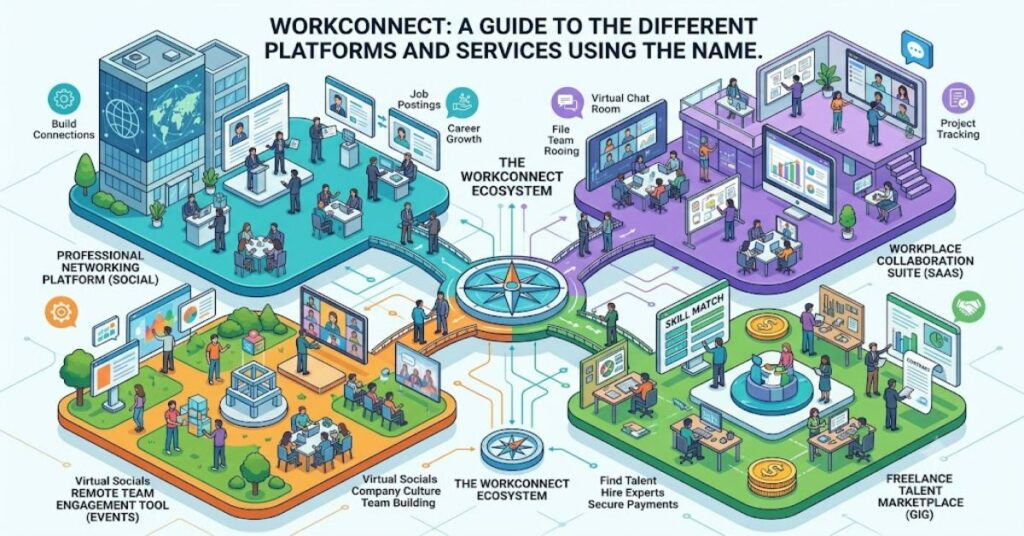
If you’ve searched for WorkConnect, you’ve likely discovered that the name applies to several software applications, employment programs, and corporate workforce services around the world. Some platforms help employers recruit talent, while others focus on employee engagement, workforce scheduling, onboarding, or career development. Because multiple organizations use the same name, identifying the correct WorkConnect depends entirely on the context in which you encountered it.
The growing demand for digital workplace solutions has led many companies to adopt cloud-based platforms that simplify hiring, communication, training, and workforce management. Whether you’re a job seeker looking for employment opportunities or an organization seeking HR technology, understanding the different types of WorkConnect services can save time and reduce confusion.
This guide explains the most common uses of the WorkConnect name, compares workforce management solutions, and highlights how digital employment platforms continue to reshape modern workplaces.
What Is WorkConnect?
WorkConnect generally refers to digital platforms designed to improve employment and workforce operations. Depending on the provider, these solutions may offer:
- Recruitment management
- Employee onboarding
- Workforce scheduling
- HR administration
- Career development
- Internal communication
- Training management
Since there is no single global WorkConnect platform, users should verify the company or organization associated with the service they intend to access.
Common Uses of WorkConnect
Although features vary, most WorkConnect solutions fall into one of the following categories.
Employment Platforms
Some versions help job seekers search vacancies, submit applications, and communicate with recruiters.
HR Management Systems
Businesses may use WorkConnect software to manage employee records, payroll integration, leave requests, and onboarding.
Workforce Scheduling
Organizations with shift-based employees often use workforce management tools to assign schedules, monitor attendance, and improve staffing efficiency.
Employee Engagement
Certain platforms focus on internal communication, training resources, surveys, and performance management to strengthen workplace collaboration.
Benefits for Employers and Employees
Modern workforce platforms offer advantages for both organizations and staff members.
| Feature | Primary Benefit |
| Online recruitment | Faster hiring process |
| Employee self-service | Reduced HR workload |
| Workforce scheduling | Improved staffing efficiency |
| Digital onboarding | Better new employee experience |
| Performance tracking | Stronger workforce development |
These capabilities reduce manual administrative tasks while improving communication across organizations.
Comparing Traditional HR Processes and Digital Workforce Platforms
| Traditional HR Management | Digital Workforce Platform |
| Paper-based records | Cloud-based employee data |
| Manual recruitment | Online applicant management |
| Email scheduling | Automated workforce planning |
| Separate HR tools | Centralized platform |
| Limited reporting | Real-time analytics |
Digital workforce solutions enable organizations to make faster decisions while improving operational efficiency.
Industry Insights
| Workforce Trend | Business Impact |
| Remote work adoption | Increased cloud collaboration |
| Digital recruitment | Faster hiring cycles |
| Employee self-service | Reduced administrative costs |
| HR automation | Better productivity |
| Workforce analytics | Data-driven decision making |
One important trend is the growing expectation that employees should be able to manage leave requests, benefits, and personal information through self-service portals.
Another observation is that organizations increasingly integrate workforce platforms with payroll, learning management systems, and communication tools to create a unified employee experience.
Finally, businesses are placing greater emphasis on workforce analytics, allowing managers to monitor staffing levels, productivity, and employee engagement using real-time dashboards.
Challenges and Considerations
Although workforce platforms offer many advantages, organizations should also consider several challenges.
Potential limitations include:
- Software implementation costs.
- Employee training requirements.
- Data privacy and security concerns.
- Integration with existing business systems.
- Vendor-specific feature differences.
Selecting the right solution requires evaluating organizational size, business goals, and long-term scalability.
The Future of WorkConnect in 2027
Digital workplace technology is expected to continue evolving through 2027.
Future workforce platforms may include:
- AI-assisted recruitment recommendations.
- Predictive workforce planning.
- Automated employee onboarding.
- Personalized learning and career development.
- Enhanced cybersecurity protections.
- Greater integration between HR, payroll, and collaboration systems.
Organizations that invest in flexible workforce technologies are likely to improve operational efficiency while supporting changing employee expectations.
Key Takeaways
- WorkConnect describes multiple workforce and employment solutions.
- Different platforms serve different industries and business needs.
- Digital HR systems simplify recruitment and workforce management.
- Automation improves operational efficiency.
- Workforce analytics support better decision-making.
- Choosing the correct platform depends on your specific requirements.
Conclusion
WorkConnect is best understood as a shared name used by several employment, HR, and workforce management platforms rather than a single universal product. Whether the goal is recruiting new employees, improving HR administration, managing workforce schedules, or supporting employee engagement, these platforms aim to simplify workplace operations through digital technology.
Before registering or logging into any WorkConnect service, users should verify which organization operates the platform to ensure they are accessing the correct system. As businesses continue embracing cloud technology and workforce automation, solutions carrying the WorkConnect name are likely to remain valuable tools for organizations seeking greater efficiency, improved communication, and better employee experiences.
Frequently Asked Questions
What is WorkConnect?
WorkConnect is a name used by multiple workforce management platforms, employment services, and HR software solutions rather than one single application.
Is WorkConnect a job search platform?
Some WorkConnect platforms help job seekers find employment, while others are designed for employers and HR departments.
Can businesses use WorkConnect for employee management?
Yes. Certain WorkConnect solutions provide employee records, onboarding, scheduling, and workforce management features.
Why are there multiple WorkConnect platforms?
Different organizations have adopted the WorkConnect name for separate products and services, making it important to identify the correct provider.
How do I know which WorkConnect I need?
Check the organization, employer, or website associated with the service to confirm you are using the correct WorkConnect platform.
Methodology
This article was prepared using publicly available information about workforce management systems, HR technology, and digital employment platforms. Because multiple organizations use the WorkConnect name, readers should verify the specific provider associated with their platform before registering or sharing personal information.
References
- Society for Human Resource Management. (2024). Workplace Technology Trends.
- Gartner. (2024). HR Technology Market Guide.
- Deloitte. (2024). Global Human Capital Trends Report.