
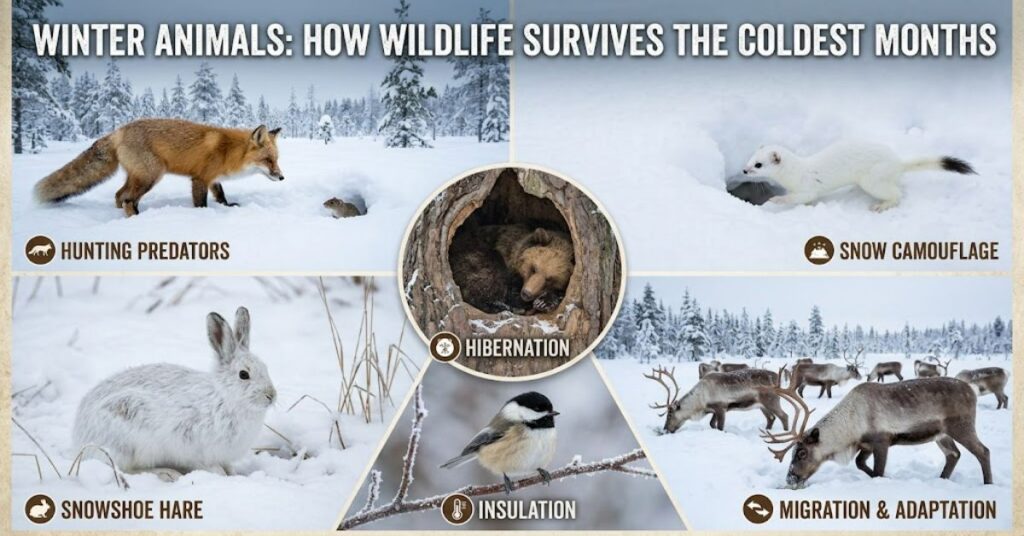
Winter animals are specially adapted to survive some of the harshest conditions on Earth. Snow, freezing temperatures, and limited food supplies create significant challenges, yet countless species have evolved remarkable ways to thrive during winter. Their survival depends on three main strategies: migrating to warmer regions, hibernating to conserve energy, or developing physical adaptations such as thicker fur, insulating fat layers, and seasonal camouflage.
These survival techniques have evolved over thousands of years, allowing animals to cope with seasonal changes while minimizing energy use. Some species travel thousands of miles to escape winter, while others remain active by changing their diets, hunting methods, or daily behaviors.
Studying winter wildlife provides valuable insight into biodiversity, adaptation, and ecosystem health. It also helps scientists understand how environmental changes, including climate change, are influencing animal populations around the world.
What Are Winter Animals?
Winter animals are species that have adapted to live through cold seasons and freezing environments. They inhabit Arctic regions, temperate forests, alpine mountains, and other areas where winter conditions can become severe.
Unlike humans, who rely on clothing and heated shelters, animals depend on biological and behavioral adaptations that help them maintain body heat, conserve energy, and locate food.
The three primary survival strategies are:
- Migration
- Hibernation
- Physical and behavioral adaptations
Each strategy enables animals to overcome the challenges of winter in different ways.
Three Main Winter Survival Strategies
| Strategy | Description | Examples |
| Migration | Traveling to warmer regions where food is more abundant | Canada geese, monarch butterflies |
| Hibernation | Entering a prolonged low-energy state to conserve energy | Ground squirrels, bats, hedgehogs |
| Physical Adaptations | Developing features that improve cold-weather survival | Arctic foxes, polar bears, snowshoe hares |
No single strategy is superior. Each has evolved to match a species’ habitat, diet, and biological needs.
Physical Adaptations That Help Animals Survive
Many animals stay active throughout winter because of remarkable physical adaptations.
Thick Fur and Feathers
Animals such as Arctic foxes grow dense winter coats that trap warm air close to the body. Birds fluff their feathers to create insulating air pockets that reduce heat loss.
Fat Storage
Species like seals and polar bears build thick layers of fat before winter arrives. This fat serves as insulation and provides stored energy when food becomes scarce.
Seasonal Camouflage
Several animals change color during winter to blend into snowy surroundings.
Examples include:
- Arctic fox
- Snowshoe hare
- Arctic hare
- Ptarmigan
This camouflage helps predators hunt more effectively while allowing prey species to remain hidden.
Hibernation: Conserving Energy
Hibernation allows certain mammals to survive long periods when food is unavailable.
During hibernation:
- Heart rate slows significantly.
- Breathing becomes much slower.
- Body temperature decreases.
- Metabolism drops to conserve energy.
Common hibernating animals include bats, dormice, ground squirrels, and hedgehogs.
Although bears are commonly described as hibernating, many wildlife biologists classify their winter state as torpor, which allows them to wake more easily than true hibernators.
Migration: Escaping Winter
Rather than enduring freezing conditions, many animals migrate to warmer locations.
Birds are among the best-known migrants. Species such as Canada geese and Arctic terns travel thousands of kilometers each year between breeding and wintering grounds.
Migration requires substantial energy, but it offers major advantages:
- More reliable food sources
- Milder temperatures
- Improved breeding success
- Lower risk of starvation
Some insects, including monarch butterflies, also undertake extraordinary seasonal migrations.
Winter Wildlife at a Glance
| Animal | Primary Survival Strategy | Typical Habitat |
| Polar Bear | Fat storage and hunting | Arctic sea ice |
| Arctic Fox | Thick fur and camouflage | Arctic tundra |
| Moose | Thick coat and reduced activity | Northern forests |
| Snowshoe Hare | Seasonal camouflage | Boreal forests |
| Gray Wolf | Cooperative hunting | Forests and tundra |
| Emperor Penguin | Social huddling | Antarctic coastline |
Why Winter Adaptations Matter
Winter survival strategies are essential for maintaining balanced ecosystems.
Predators help regulate prey populations, herbivores influence vegetation growth, and migrating birds transport nutrients and seeds between ecosystems. These ecological roles support biodiversity and contribute to healthy natural environments.
Scientists also study winter adaptations to better understand evolution, species resilience, and environmental change.
Insight: Animals rarely rely on a single survival strategy. Many combine physical adaptations with behavioral changes, such as reducing activity levels while continuing to forage when conditions allow.
Challenges Facing Winter Animals
Modern environmental changes are creating new challenges for winter wildlife.
Major threats include:
- Shorter snow seasons
- Rising average temperatures
- Shrinking Arctic sea ice
- Altered migration schedules
- Reduced food availability
For example, polar bears increasingly struggle to hunt seals because sea ice forms later and melts earlier than in previous decades.
Another emerging concern is that camouflage timing may no longer match snowfall patterns. Animals that turn white before snow arrives become more visible to predators.
The Future of Winter Animals in 2027
By 2027, conservation scientists are expected to expand the use of GPS tracking, satellite monitoring, and remote camera systems to better understand how winter wildlife responds to changing climates.
Researchers will continue studying migration routes, hibernation cycles, and habitat shifts to improve conservation planning. While many species show remarkable adaptability, those with specialized Arctic habitats may face increasing pressure if warming trends continue.
Future conservation efforts will likely focus on protecting migration corridors, restoring habitats, and reducing human impacts on fragile winter ecosystems.
Key Takeaways
- Winter animals survive using migration, hibernation, or physical adaptations.
- Thick fur, fat reserves, and camouflage improve survival in freezing conditions.
- Migration helps animals avoid food shortages during winter.
- Hibernation conserves energy when resources become scarce.
- Climate change is altering habitats and seasonal behavior.
- Conservation efforts play a vital role in protecting winter wildlife.
Conclusion
Winter animals demonstrate some of nature’s most remarkable adaptations. Whether migrating across continents, entering hibernation, or growing specialized winter coats, each species has evolved strategies that improve its chances of surviving harsh seasonal conditions.
These adaptations benefit not only individual animals but also the ecosystems they inhabit. By understanding how wildlife responds to winter, scientists gain valuable knowledge about biodiversity, evolution, and environmental resilience.
As climates continue to change, protecting habitats and supporting conservation initiatives will become increasingly important. Appreciating the survival strategies of winter animals reminds us of nature’s extraordinary ability to adapt while highlighting the need to preserve these ecosystems for future generations.
Frequently Asked Questions
What are winter animals?
Winter animals are species that have adapted to survive freezing temperatures through migration, hibernation, or specialized physical traits.
Which animals hibernate during winter?
Ground squirrels, bats, hedgehogs, and dormice are true hibernators, while bears experience a lighter state known as torpor.
Why do birds migrate instead of hibernating?
Birds migrate because flying to warmer regions allows them to access food and suitable breeding habitats throughout the year.
How do Arctic animals stay warm?
They use thick fur, dense feathers, body fat, and behaviors such as huddling or reducing activity to minimize heat loss.
How is climate change affecting winter animals?
Warmer winters, reduced snow cover, and shrinking sea ice are changing migration patterns, food availability, and habitat conditions for many species.
Methodology
This article was prepared by reviewing established information from wildlife biology, conservation organizations, and educational resources covering migration, hibernation, and animal adaptations. It summarizes widely accepted scientific concepts and does not include original field observations. Because wildlife behavior varies by species and region, readers should consider local ecological differences when interpreting examples.
References
National Geographic Society. (2023). Animal adaptations. https://education.nationalgeographic.org/
International Union for Conservation of Nature. (2024). The IUCN Red List of Threatened Species. https://www.iucnredlist.org/
World Wildlife Fund. (2024). Arctic wildlife. https://www.worldwildlife.org/
Encyclopaedia Britannica. (2024). Hibernation. https://www.britannica.com/science/hibernation