Deciding what to wear to an interview is no longer as simple as buying a dark suit and hoping for the best. Workplace dress standards have changed dramatically over the last decade. Tech companies now conduct interviews in offices where employees wear hoodies and sneakers. Law firms and investment banks still expect traditional tailoring. Creative agencies often reward personality and presentation balance rather than rigid corporate formality.
That shift has created confusion for job seekers. Candidates frequently overdress for startup interviews, underdress for corporate roles, or misunderstand the difference between “business casual” and “professional.” In practice, interview attire is less about fashion trends and more about judgment. Hiring managers want evidence that a candidate understands workplace expectations, client-facing professionalism, and social context.
The most reliable approach is straightforward: dress one level more formal than the organization’s everyday dress code. A tailored suit, matched separates, pressed shirt or blouse, and clean dress shoes remain safe choices across most industries. At the same time, modern interview expectations allow more flexibility than many outdated career guides suggest.
For candidates entering competitive job markets in 2026, presentation still matters. Research from the Society for Human Resource Management (SHRM) and LinkedIn hiring surveys continues to show that first impressions influence perceived professionalism, confidence, and organizational fit. Clothing alone will not secure a job offer, but poor presentation can quietly weaken an otherwise qualified application.
For readers exploring broader professional presentation advice, Postcard.fm’s guide to workplace communication styles offers useful context on professional perception and workplace etiquette.
Why Interview Clothing Still Matters
Interview attire operates as nonverbal communication. Before discussing qualifications, recruiters evaluate punctuality, preparation, and professionalism through appearance cues.
This does not mean employers expect luxury clothing or expensive designer brands. In most hiring situations, fit, cleanliness, and appropriateness matter more than cost.
Two recurring hiring patterns appear across industries:
- Candidates who appear careless with presentation are often assumed to be careless in work habits.
- Candidates who overdress slightly are usually viewed more positively than candidates who appear too casual.
A 2024 LinkedIn workforce perception survey found that recruiters continued to associate polished appearance with preparedness and communication skills, particularly in client-facing roles.
The Psychology Behind First Impressions
Research in organizational psychology consistently shows that hiring managers form preliminary judgments within minutes of meeting a candidate. These early impressions may later be revised, but they still influence interview tone and perceived credibility.
That creates a practical reality for job seekers:
- Wrinkled clothing suggests poor preparation.
- Ill-fitting clothing creates distraction.
- Overly trendy outfits can shift attention away from qualifications.
- Excessive perfume or cologne may create discomfort during close conversation.
The goal is not to stand out dramatically. The goal is to appear reliable, organized, and appropriate for the workplace.
Understanding the Three Main Interview Dress Codes
The biggest mistake candidates make when deciding what to wear to an interview is assuming all industries follow the same rules. They do not.
Business Formal
Business formal remains standard in industries where client trust, regulatory compliance, and institutional reputation matter heavily.
Common sectors include:
- Finance
- Corporate law
- Consulting
- Government leadership roles
- Executive management
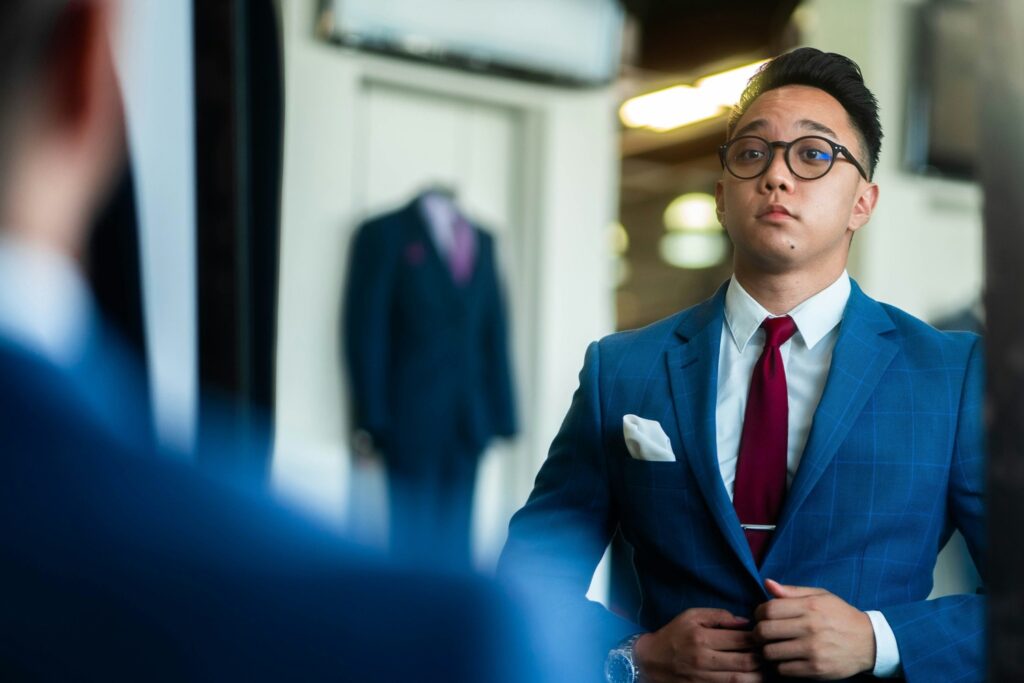
Men
- Dark navy, charcoal, or black suit
- Pressed button-down shirt
- Conservative tie
- Polished leather dress shoes
- Minimal accessories
Women
- Tailored pantsuit or skirt suit
- Structured dress with matching blazer
- Closed-toed pumps or professional flats
- Neutral or understated accessories
Business formal clothing should prioritize structure and restraint. Loud patterns, flashy jewelry, or fashion-forward experimentation usually work against candidates in these industries.
Business Casual
Business casual has become the dominant interview standard across modern office environments.
Industries commonly using this dress code include:
- Marketing
- Education
- Mid-sized technology firms
- Human resources
- Administrative roles
Men
- Chinos or tailored trousers
- Collared button-down shirt or polo
- Optional blazer
- Leather loafers or minimalist dress shoes
Women
- Dress pants or tailored skirt
- Professional blouse
- Cardigan or blazer
- Knee-length dresses or smart loafers
Business casual still requires polish. Denim, athletic wear, and heavily branded clothing remain risky choices unless the company culture clearly supports them.
Smart or Creative Casual
Creative industries often encourage more individual style, but candidates still misunderstand the limits.
This category appears most often in:
- Design agencies
- Media companies
- Startups
- Gaming studios
- Entertainment production
A creative workplace may accept:
- Dark clean jeans
- Tailored trousers
- Crisp sweaters
- Casual blazers
- Stylish boots or loafers
However, “creative” does not mean careless. Ripped denim, graphic T-shirts, worn sneakers, or distracting fashion choices can still undermine professionalism.
Interview Dress Code Comparison Table
| Dress Code | Typical Industries | Recommended Clothing | Risk Level if Underdressed |
| Business Formal | Law, finance, consulting | Dark suit, tie, structured blazer | Very high |
| Business Casual | Education, marketing, HR | Dress pants, collared shirt, blazer | Moderate |
| Smart Creative Casual | Media, startups, design | Tailored separates, polished casual wear | Moderate to low |
How Company Culture Changes the Rules
The strongest candidates research company culture before selecting interview clothing.
This can be done through:
- LinkedIn employee photos
- Company social media
- Recruitment videos
- Glassdoor interview reviews
- Corporate websites
For example, a cybersecurity startup in 2026 may operate with extremely relaxed daily clothing expectations. Still, arriving in gym clothes for an interview would likely be interpreted as poor judgment.
Similarly, arriving at a major corporate law firm without a suit may suggest the candidate does not understand professional expectations.
Remote Interviews Require Different Planning
Virtual interviews changed interview presentation standards permanently after 2020.
Candidates sometimes assume only the visible upper half matters. Recruiters increasingly report the opposite. Full preparation still affects confidence and posture.
For video interviews:
- Wear solid colors instead of complex patterns.
- Avoid bright white clothing that overexposes on camera.
- Test lighting beforehand.
- Position the camera at eye level.
- Choose a clean, neutral background.
A blazer or structured top often appears sharper on webcam than softer fabrics.
The Most Common Interview Clothing Mistakes
Candidates researching what to wear to an interview often focus entirely on clothing category while ignoring details that hiring managers notice immediately.
Poor Fit
Even expensive clothing looks unprofessional when it fits poorly.
Common problems include:
- Oversized jackets
- Pants dragging below the heel
- Shirts pulling at buttons
- Wrinkled sleeves
- Shoes with visible wear damage
Tailoring matters more than brand names.
Overusing Fragrance
Strong perfume or cologne remains one of the most common interview complaints among recruiters.
Many workplaces now maintain fragrance-sensitive environments because of allergies and shared office space concerns.
A minimal approach is safest.
Ignoring Grooming
Professional presentation includes grooming standards:
- Clean nails
- Neat hair
- Pressed clothing
- Polished shoes
- Subtle makeup if worn
These details influence overall perception more than candidates often realize.
Wearing Uncomfortable Clothing
Candidates sometimes prioritize appearance over comfort.
That decision can backfire during long interviews. Tight jackets, stiff shoes, or restrictive clothing increase visible discomfort and distract from communication.
The best interview clothing allows confident movement and natural posture.
Practical Interview Outfit Examples
Structured Outfit Reference Table
| Interview Type | Men | Women | Safest Color Palette |
| Corporate Finance | Navy suit, white shirt, dark tie | Navy suit or dress with blazer | Navy, charcoal, black |
| Marketing Agency | Chinos, blazer, loafers | Dress pants, blouse, flats | Navy, beige, gray |
| Tech Startup | Tailored trousers, knit sweater | Smart casual dress with blazer | Earth tones, navy |
| Education | Dress pants, collared shirt | Cardigan with structured dress | Neutral colors |
| Media or Design | Dark jeans with blazer | Creative separates, smart boots | Dark neutrals |
Real-World Hiring Observations
Career coaches and recruiters consistently report that most interview clothing mistakes happen at the extremes.
Candidates rarely fail interviews because their blazer shade was slightly off. Problems usually appear when candidates:
- Dress significantly below workplace expectations
- Wear visibly wrinkled clothing
- Ignore grooming basics
- Attempt overly trendy outfits
- Misread company culture entirely
Recruiters interviewed by Indeed in 2025 noted that “professional but slightly conservative” remains safer than aggressively fashionable styling.
One recurring observation from hiring managers in technology recruiting is especially important: even relaxed workplaces expect candidates to demonstrate situational awareness during interviews. Employees may wear hoodies daily after being hired, but interview settings still carry different expectations.
That distinction explains why “dress one level above the office standard” remains reliable advice.
Strategic Implications of Interview Presentation
Interview clothing affects more than appearance. It shapes interview dynamics.
Candidates who feel appropriately dressed often display:
- Stronger posture
- Better eye contact
- Higher confidence
- Reduced anxiety
- More professional communication
There is also a signaling component.
Professional attire suggests:
- Respect for the opportunity
- Understanding of workplace norms
- Attention to detail
- Client-facing readiness
For customer-facing industries especially, employers frequently evaluate whether a candidate could represent the company publicly.
Risks and Trade-Offs
There is no universally perfect interview outfit.
Every decision involves trade-offs:
| Choice | Advantage | Potential Risk |
| Traditional suit | Safe and professional | May appear overly formal at startups |
| Smart casual attire | Matches modern workplaces | Risk of appearing underdressed |
| Fashion-forward styling | Shows personality | May distract from qualifications |
| Minimal styling | Keeps focus on experience | May appear overly generic |
The safest strategy remains moderation.
Candidates should avoid treating interviews as fashion showcases. The goal is credibility, not memorability.
The Future of Interview Attire in 2027
Workplace dress codes are continuing to evolve, but professional presentation is unlikely to disappear.
Three trends are shaping interview attire expectations heading into 2027.
Hybrid Work Will Continue Reducing Formality
Many organizations now operate hybrid schedules where employees divide time between remote and in-office work. This trend has already relaxed daily workplace dress standards across industries.
However, interview settings still function as symbolic professional moments. Companies continue using interviews to evaluate judgment and communication.
AI Hiring Systems May Increase Visual Bias Awareness
As AI-assisted hiring tools become more common, organizations face growing scrutiny over appearance-related bias.
Several governments and regulatory bodies, including the European Union through the EU AI Act, are increasing oversight around automated hiring systems.
That may reduce some appearance-driven evaluation over time, though human interviews will still rely heavily on first impressions.
Industry Differences Will Become More Extreme
Corporate sectors such as finance and law are unlikely to abandon formal interview expectations entirely.
Meanwhile, startups and creative industries may continue normalizing polished casual attire.
The result will likely be a wider gap between industries rather than a universal dress standard.
Key Takeaways
- Dressing one level above the company’s daily dress code remains the safest interview strategy.
- Business formal attire still dominates finance, law, and executive corporate hiring.
- Business casual has become standard across many office environments.
- Smart creative casual allows personality but still requires polish and structure.
- Grooming, tailoring, and clothing condition matter as much as outfit category.
- Remote interviews require specific adjustments for lighting, camera framing, and color selection.
- Interview clothing should support confidence rather than create discomfort or distraction.
Conclusion
Understanding what to wear to an interview ultimately comes down to judgment rather than rigid fashion rules. Employers are rarely searching for perfect style. They are evaluating professionalism, awareness, and preparedness.
The safest interview wardrobe choices remain consistent across industries: clean tailoring, neutral colors, polished shoes, and restrained presentation. At the same time, modern hiring environments allow more flexibility than traditional career advice once suggested. A startup interview in 2026 does not carry the same expectations as a corporate legal office.
Candidates who research company culture, prioritize fit and grooming, and avoid extreme fashion choices usually position themselves well. The most effective interview attire communicates competence quietly. It supports the conversation instead of competing with it.
Clothing alone will never replace preparation, technical skill, or communication ability. But in competitive hiring markets, presentation still shapes first impressions — and first impressions continue to influence opportunity.
For related workplace preparation strategies, readers may also find Postcard.fm’s article on professional networking etiquette useful when preparing for interviews and career transitions.
FAQ
What is the best color to wear to an interview?
Navy, charcoal, black, and gray remain the safest interview colors because they appear professional without becoming distracting. Neutral colors also photograph better during remote interviews and pair easily with professional shoes and accessories.
Can you wear jeans to a job interview?
Dark, clean jeans may be acceptable in startups, media companies, or creative industries. However, tailored trousers are usually safer unless the company culture clearly supports casual attire.
What should women wear to an interview in 2026?
Women interviewing in professional environments should consider tailored pants, structured dresses, blazers, professional blouses, and closed-toed shoes. Neutral colors and polished presentation remain safest across industries.
What should men wear to an interview in 2026?
Men should generally choose a tailored suit or business casual combination depending on the industry. A collared shirt, polished shoes, and well-fitted trousers remain reliable choices.
Is business casual appropriate for interviews?
Business casual is appropriate for many industries including marketing, education, technology, and administrative roles. The clothing should still appear polished and professional.
What should you avoid wearing to an interview?
Avoid wrinkled clothing, athletic wear, graphic T-shirts, ripped denim, sneakers, overpowering fragrance, and clothing that appears overly revealing or distracting.
Methodology
This article was developed using hiring guidance from SHRM, LinkedIn workforce research, Indeed career resources, and recruiter observations published between 2023 and 2026. The analysis also incorporates practical interview preparation standards commonly used by corporate recruiters, career coaches, and HR professionals.
The article intentionally distinguishes between business formal, business casual, and creative workplace expectations because dress standards vary substantially by industry. Recommendations were compared against current hiring trends in finance, technology, education, marketing, and media sectors.
Known limitations: interview dress expectations remain culturally and regionally dependent. Workplace norms can vary significantly between countries, industries, and company sizes. Candidates should always research specific employer culture before selecting interview attire.
References
Indeed Editorial Team. (2025). Interview attire guidelines for professional workplaces. Indeed Career Guide.
LinkedIn Talent Solutions. (2024). Hiring perception and first-impression trends report.
Society for Human Resource Management. (2024). Workplace professionalism and candidate presentation research.
Coursera Career Development Team. (2025). Business casual and professional interview clothing expectations.
European Union. (2024). EU Artificial Intelligence Act and hiring system oversight documentation.
Glassdoor Economic Research. (2025). Hiring trends and workplace culture analysis.