
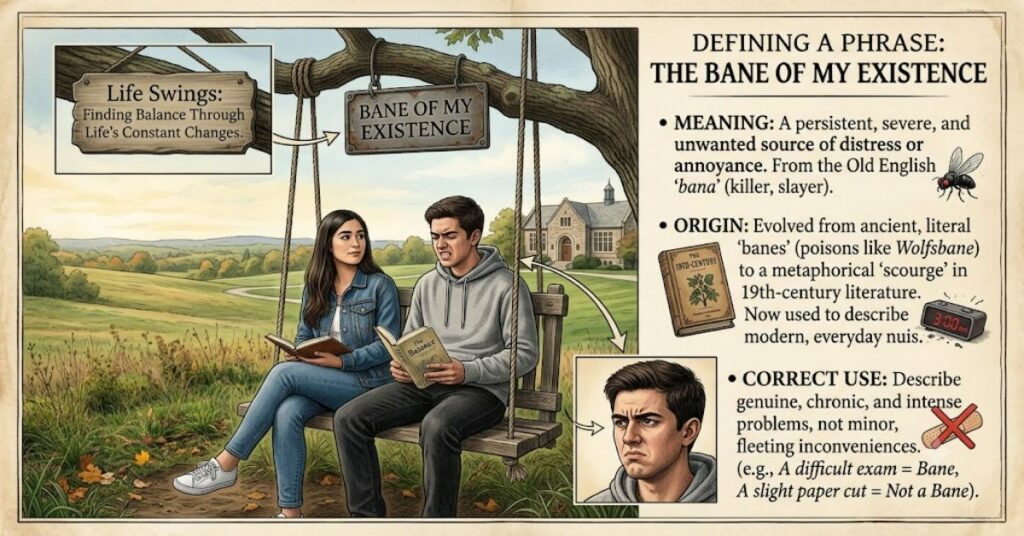
The phrase bane of my existence is one of those expressions that sounds incredibly dramatic yet is commonly used to describe relatively minor annoyances. Someone might call traffic the bane of their existence, complain that paperwork is their greatest enemy, or jokingly describe a mischievous sibling the same way. While the phrase now carries a humorous tone in many situations, it once had a much darker meaning.
Historically, the word bane referred to poison, destruction, or something capable of causing death. Over centuries, its meaning shifted from literal danger to figurative frustration. Today, the expression survives because it communicates emotion more vividly than simply calling something “annoying.”
Whether you’re curious about its origin, wondering how to use it correctly, or trying to understand why it appears so often in books, movies, and social media, this guide explains everything you need to know.
What Does “Bane of My Existence” Mean?
Today, bane of my existence refers to a person, thing, habit, or situation that consistently causes irritation, inconvenience, or frustration.
The key characteristic is persistence. It usually describes something that repeatedly creates problems rather than a one-time inconvenience.
Examples include:
- “Morning traffic is the bane of my existence.”
- “Spam emails are the bane of my existence.”
- “Group projects were the bane of my existence in college.”
In most situations, the phrase is intentionally exaggerated to make a complaint sound more entertaining.
The Origin of the Expression
The word bane comes from Old English bana, meaning “killer,” “destroyer,” or “cause of death.” Early English literature often used the term to describe poison or anything that brought ruin.
Over time, English speakers began applying the word figuratively. Instead of describing literal destruction, bane came to represent anything that consistently interfered with happiness, comfort, or success.
This semantic shift is common in language. Many dramatic words gradually become softer through repeated everyday use.
Today, few people associate the phrase with its original meaning. Instead, it has become a familiar idiom expressing ongoing annoyance.
Historical Meaning vs. Modern Usage
| Historical Meaning | Modern Meaning |
| Poison or deadly force | Persistent annoyance |
| Source of destruction | Recurring frustration |
| Cause of ruin | Everyday inconvenience |
| Serious danger | Often humorous exaggeration |
The comparison highlights how the phrase has retained its intensity while changing its practical meaning.
Why the Phrase Remains Popular
It Expresses Strong Emotion
Saying something is the “bane of my existence” immediately sounds more expressive than simply calling it frustrating.
For example:
- “Emails are annoying.”
- “Emails are the bane of my existence.”
The second version paints a stronger emotional picture without requiring additional explanation.
It Adds Humor
Hyperbole is a common feature of modern communication. People exaggerate to entertain, and this phrase fits perfectly into that style.
On social media, users frequently describe slow Wi-Fi, Monday mornings, or software updates as the bane of their existence. Most readers immediately recognize the playful exaggeration.
It Is Memorable
The expression has survived for centuries because it is concise, dramatic, and easy to understand, making it useful in both speech and writing.
Common Situations Where People Use It
The phrase appears in many aspects of daily life.
Everyday Frustrations
- Heavy traffic
- Household chores
- Slow internet
- Long customer service calls
- Endless notifications
Work and Education
Employees may jokingly refer to spreadsheets, overflowing inboxes, or repetitive meetings as the bane of their existence. Students often use the phrase for difficult assignments or exams.
Relationships
The expression can also be affectionate.
Someone might jokingly say:
“My little brother is the bane of my existence.”
Rather than expressing hatred, the speaker usually means the sibling is constantly mischievous or irritating.
Comparison Table: Where the Phrase Fits Best
| Situation | Appropriate? | Typical Tone |
| Casual conversation | ✔ | Humorous |
| Social media | ✔ | Playful |
| Fiction writing | ✔ | Dramatic |
| Business email | ⚠ | Depends on audience |
| Academic research | ✖ | Too informal |
Risks and Trade-Offs
Although the expression is versatile, context matters.
Using it too frequently can reduce its impact and make genuine concerns sound exaggerated.
In professional settings, overly dramatic language may appear unprofessional or emotional when clear, objective wording would be more appropriate.
For international audiences, some readers may initially interpret the phrase literally because they are unfamiliar with English idioms. Writers should consider their audience before using highly figurative language.
Cultural and Linguistic Impact
The phrase remains relevant because it reflects a universal experience: recurring frustration.
It appears regularly in:
- Television dialogue
- Romantic comedies
- Internet memes
- Podcasts
- Social media captions
- Everyday conversations
Its flexibility allows speakers to describe everything from broken printers to difficult personalities while maintaining a humorous tone.
The continued popularity of the idiom demonstrates how older expressions can remain meaningful even as their original definitions fade from common memory.
The Future of the Phrase in 2027
Classic idioms often outlast modern slang because they are adaptable.
By 2027, “bane of my existence” is likely to remain common across digital communication, particularly in memes and conversational content. While new internet phrases will continue to emerge, established idioms with strong emotional impact tend to persist because they are widely understood across different generations.
Its historical depth also gives the expression a timeless quality that newer slang often lacks.
Key Takeaways
- The phrase originally referred to literal destruction or death.
- Modern usage usually describes persistent frustration.
- It is most effective in informal communication.
- Humor and exaggeration are central to its popularity.
- Context determines whether the expression sounds playful or overly dramatic.
- Understanding its history makes the idiom easier to interpret correctly.
Conclusion
The phrase bane of my existence demonstrates how language evolves without losing its expressive power. What once described deadly danger has become one of English’s most recognizable ways to complain about recurring frustrations.
Its appeal lies in its balance of drama and humor. Whether referring to traffic, paperwork, technology, or a teasing sibling, the expression communicates emotion in a memorable way while usually remaining lighthearted.
Understanding its historical background and modern usage allows speakers and writers to use the idiom more effectively. Rather than simply describing annoyance, it adds personality and emphasis, which explains why it continues to appear in conversations, literature, and digital culture centuries after its earliest recorded use.
Frequently Asked Questions
What does “bane of my existence” mean?
It refers to a person or thing that consistently causes annoyance, frustration, or inconvenience. Today, it is usually used figuratively rather than literally.
Where did the phrase originate?
The word bane comes from Old English, where it meant a killer, poison, or something causing destruction before evolving into a figurative expression.
Is the phrase always serious?
No. Most people use it humorously or sarcastically to exaggerate everyday frustrations.
Can I use it in professional writing?
It is generally better suited to casual conversations or creative writing. Formal documents usually benefit from more neutral language.
Why has the expression remained popular?
Its combination of historical depth, dramatic wording, and humorous exaggeration makes it memorable and widely understood.
Methodology
This article is based on established English etymology, modern dictionary definitions, and widely accepted interpretations of idiomatic language. Historical meanings have been summarized from reputable linguistic sources, while contemporary usage reflects common patterns in modern English.
Editorial Disclosure
This article was drafted with AI assistance and should be reviewed by a human editor before publication. All references and historical claims should be independently verified.
References
- Cambridge Dictionary. (2024). Bane. https://dictionary.cambridge.org/
- Merriam-Webster. (2024). Bane. https://www.merriam-webster.com/
- Online Etymology Dictionary. (2024). Bane. https://www.etymonline.com/
- Oxford English Dictionary. (Latest edition). Bane. Oxford University Press.