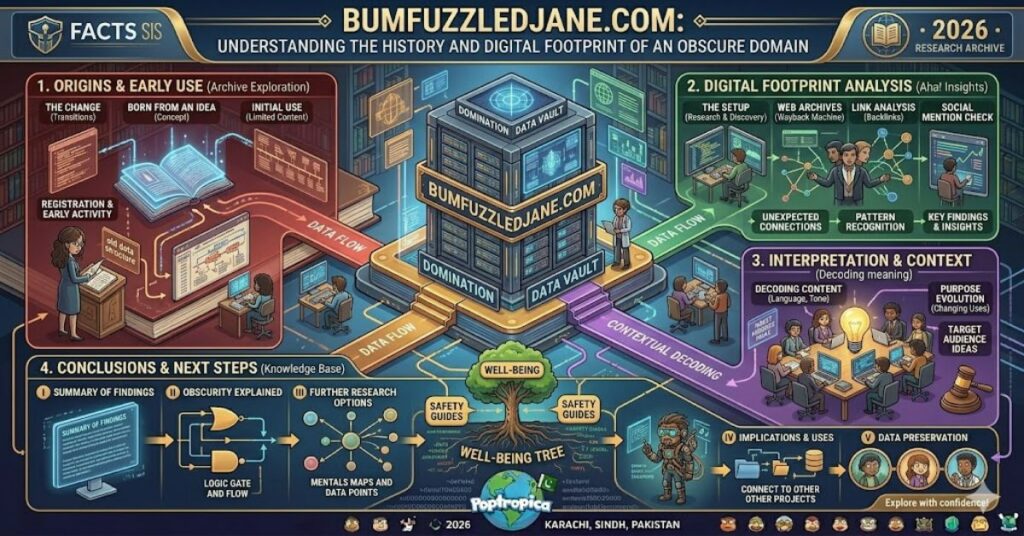
Searches for bumfuzzledjane.com often leave users with more questions than answers. Unlike well-known websites that maintain active content libraries and clear ownership histories, this domain appears to have a limited public footprint. Available references suggest connections to an online nickname or personal identity that appeared across social platforms and content-sharing communities rather than through a large independent website.
This situation is increasingly common. Many internet users established personal domains during the blogging boom of the late 2000s and early 2010s. Over time, social media platforms became the primary destination for publishing content, leaving many personal domains inactive, archived, or abandoned.
Understanding the significance of a domain like bumfuzzledjane.com requires looking beyond the website itself. The story is less about a single domain and more about how online identities evolve across platforms, communities, and changing internet trends.
What Is bumfuzzledjane.com?
Available information indicates that the domain has been associated with a personal online identity rather than a commercial business, software service, or media publication.
Several references connected to the name have historically appeared through social and content-sharing platforms rather than a dedicated website ecosystem.
This distinction matters because search engines often preserve references to usernames, aliases, and historical profiles long after the original content becomes inactive.
Why People Search for This Domain
Users typically arrive at this keyword for one of several reasons:
| Search Intent | Description |
| Identity Research | Looking for information about the person or alias behind the name |
| Website Status | Determining whether the domain is active |
| Historical Content | Searching for archived posts or older profiles |
| Domain Investigation | Understanding ownership or internet history |
The keyword therefore functions more as a digital investigation query than a traditional website search.
The Evolution of Personal Domains
During the early blogging era, owning a personal domain was considered an important part of building an online presence.
By the mid-2010s, however, many creators shifted their attention to platforms offering larger audiences and easier publishing tools.
Examples included:
- Medium
- YouTube
- X (formerly Twitter)
As a result, many personal domains stopped serving as primary publishing destinations while the associated usernames continued to appear elsewhere online.
Lessons From the Digital Footprint
One useful insight from examining domains like bumfuzzledjane.com is that a domain name alone rarely tells the complete story.
Identity Often Outlives the Website
A personal alias can remain visible through search results, archived pages, and social media accounts even when the original website no longer exists.
Search Results Can Be Misleading
Many users assume a searchable domain must represent an active website. In reality, search engines often index historical references that persist for years.
Context Matters
A domain associated with an individual should not automatically be interpreted as a business, publication, or brand without supporting evidence.
Risks of Relying on Old Domain Information
Researchers, journalists, and content creators should be cautious when referencing inactive or obscure domains.
Common Risks
| Risk | Impact |
| Outdated ownership data | Incorrect attribution |
| Expired domains | Misleading conclusions |
| Missing archives | Incomplete historical record |
| Username duplication | Identity confusion |
| Platform migration | Loss of original context |
These issues become increasingly important when investigating niche websites with limited documentation.
Broader Impact on Online Reputation
The story behind obscure domains highlights a larger challenge facing internet users today: digital permanence.
Even when a website disappears, traces of activity may remain through:
- Cached search results
- Social profiles
- Forum mentions
- Archived webpages
- Content aggregators
This means online identities can continue influencing perception long after active participation has ended.
The Future of Domain-Based Personal Branding in 2027
Looking toward 2027, personal branding is likely to become even more platform-centric.
Several trends support this outlook:
- Greater reliance on social-first publishing.
- Increased use of creator platforms.
- AI-powered search systems that aggregate information across multiple sources.
- Reduced dependence on standalone personal websites.
However, domains will still retain value as identity anchors, providing creators with ownership and control that social platforms cannot guarantee.
The challenge will be maintaining consistency between personal domains and distributed online profiles.
Key Takeaways
- Obscure domains often represent digital identities rather than active businesses.
- Search visibility does not necessarily indicate current website activity.
- Historical references can outlive original web content by many years.
- Personal branding increasingly occurs across multiple platforms.
- Verification is essential when researching inactive domains.
- Archival resources provide valuable context for digital investigations.
Conclusion
bumfuzzledjane.com serves as an interesting example of how internet identities evolve over time. Rather than functioning as a widely recognised website, it appears to be connected to a broader personal online presence distributed across different platforms and communities.
The domain’s significance lies less in what currently exists on the site and more in what it reveals about digital footprints. As users move between platforms, abandon blogs, and adopt new publishing tools, traces of earlier online activity often remain searchable for years.
For researchers and curious users alike, the key lesson is straightforward: evaluate domains within their wider digital context. A domain name is only one piece of a much larger online identity puzzle.
FAQ
Is bumfuzzledjane.com an active website?
Publicly visible information suggests it is not widely recognised as an active content platform, though domain status should always be verified through current records.
Who owns bumfuzzledjane.com?
Ownership information can change over time. Current WHOIS records provide the most reliable source for verification.
Why does the domain appear in search results?
Search engines often retain references to domains through archived content, social profiles, and historical links.
Is bumfuzzledjane.com a business?
There is no widely documented evidence that it operates as a significant commercial organisation.
Can inactive domains still influence online reputation?
Yes. Historical references, archives, and search engine indexing can continue shaping perceptions long after a website becomes inactive.
Methodology
This article was prepared using publicly available contextual information regarding the keyword, general domain research principles, and established digital identity practices. No claims regarding current ownership, active operation, or commercial status were made without independent verification.
Limitations
- Domain ownership can change over time.
- Archived records may be incomplete.
- Search engine visibility does not guarantee active operation.
Editorial Disclosure
This article was drafted with AI assistance and should undergo human editorial review before publication. Any factual claims regarding domain ownership, activity, or historical use should be independently verified through authoritative sources.