
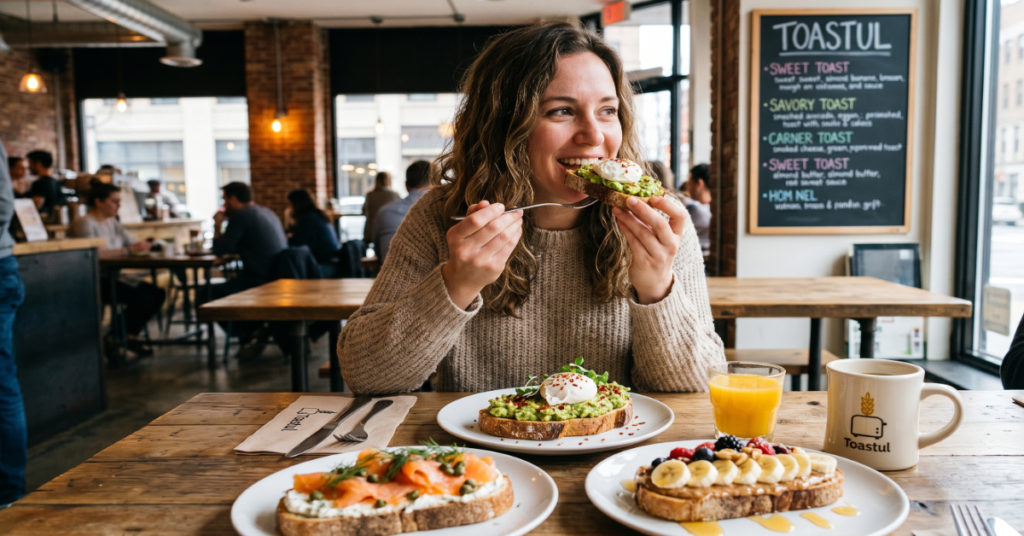
Toastul is one of the clearest examples of how modern food culture can reinvent a simple staple into something aspirational. At its core, toastul refers to elevated toast dishes that combine artisan bread with carefully layered toppings such as avocado, poached eggs, berries, nut butter, hummus, herbs, or seasonal vegetables. What once looked like ordinary breakfast toast has become a highly stylized meal category tied to café culture, wellness trends, and social media presentation.
The popularity of toastul accelerated through 2025 and into 2026 as consumers increasingly searched for affordable yet premium-feeling meals. Rising restaurant prices pushed many people toward home café experiences while short-form video platforms amplified visually striking breakfast ideas. Unlike rigid food movements, toastul succeeds because it is flexible. A single slice of bread can become savory, sweet, protein-heavy, vegan, or dessert-inspired depending on the ingredients used.
Food trend analysts also point to a broader shift in how younger consumers approach breakfast. Convenience still matters, but presentation and customization matter just as much. Toastul sits directly in that intersection. It offers speed, relatively low cost, and creative freedom without requiring advanced culinary training.
The movement also reflects broader dining behavior in 2026. Consumers increasingly value meals that photograph well, feel personalized, and support healthier ingredient choices. Toastul checks all three boxes.
For readers interested in broader breakfast culture trends, the evolving café movement covered by Postcard.fm’s food trend analysis provides useful context.
What Does Toastul Mean in the Food Trend Context?
Toastul is less a single recipe and more a style of eating. The concept revolves around turning toast into a centerpiece rather than a side item. Thick-cut sourdough, seeded rye, brioche, multigrain bread, and gluten-free alternatives are commonly used as foundations.
The defining characteristics of toastul include:
| Core Element | Role in Toastul Culture |
| Artisan bread | Provides texture and visual appeal |
| Layered toppings | Creates flavor complexity |
| Fresh ingredients | Supports health-conscious positioning |
| Visual presentation | Encourages social sharing |
| Customization | Appeals to diverse diets |
Unlike traditional toast, which often prioritizes convenience alone, toastul emphasizes balance between flavor, nutrition, and aesthetics.
One important cultural distinction is that toastul is not necessarily expensive. Premium café versions may cost significantly more than homemade options, but the concept itself thrives because consumers can recreate it easily at home.
The Origins of Toastul
The term appears to derive from “toast” combined with a more stylized culinary identity. While no formal culinary institution defines toastul, food blogs and café culture publications increasingly use the word to describe elevated toast experiences.
The movement draws influence from several earlier trends:
- Australian café brunch culture from the 2010s
- Scandinavian open-faced sandwich traditions
- Wellness-focused breakfast movements
- Instagram-era food photography
- Pandemic-era home cooking experimentation
Avocado toast arguably laid the groundwork. During the late 2010s, it became symbolic of millennial brunch culture. Toastul expanded that concept into a broader category with far more ingredient diversity.
By 2026, cafés increasingly dedicate entire menu sections to gourmet toast creations. Independent coffee shops particularly benefit because toastul items typically carry high profit margins while requiring relatively simple kitchen operations.
Why Toastul Became Popular in 2026
Several market and cultural conditions explain why toastul gained traction so rapidly.
Social Media Visibility
Toast photographs exceptionally well. Layered textures, vibrant fruits, runny egg yolks, herbs, edible flowers, and colorful spreads perform strongly on visual platforms such as TikTok and Instagram.
Unlike elaborate restaurant dishes, toastul recipes also feel achievable. That accessibility encourages replication and sharing.
Health-Conscious Eating
Consumers increasingly seek foods that appear nutritious without feeling restrictive. Toastul supports several dietary trends simultaneously:
- Plant-based eating
- High-protein breakfasts
- Mediterranean-style ingredients
- Whole-grain consumption
- Flexible portion control
A hummus-and-vegetable toast or berry-almond toast can feel indulgent while still aligning with wellness goals.
Economic Practicality
One overlooked insight is cost efficiency. Even premium toast ingredients often remain cheaper than full restaurant breakfasts. This matters in 2026 as inflation continues influencing dining decisions globally.
Consumers perceive toastul as “affordable luxury.” That positioning is particularly powerful during economic uncertainty.
Café Business Advantages
Toastul also works operationally for cafés:
| Business Factor | Benefit |
| Low preparation complexity | Faster kitchen output |
| Ingredient flexibility | Reduced waste |
| High visual appeal | Organic social marketing |
| Broad dietary compatibility | Larger customer reach |
| Strong margins | Improved profitability |
Independent cafés increasingly rely on visually marketable menu items that do not require expensive kitchen infrastructure.
Most Common Toastul Toppings
The flexibility of toastul is central to its appeal. Some combinations dominate because they balance flavor, nutrition, and visual contrast.
Savory Favorites
| Topping Combination | Flavor Profile |
| Avocado + poached egg | Creamy and rich |
| Hummus + roasted vegetables | Earthy and savory |
| Ricotta + tomatoes + basil | Fresh and Mediterranean |
| Smoked salmon + cream cheese | Salty and luxurious |
| Mushroom + herbs | Umami-heavy |
Sweet Variations
| Topping Combination | Flavor Profile |
| Peanut butter + berries | Sweet with texture |
| Mascarpone + honey + figs | Dessert-like |
| Banana + cinnamon + walnuts | Comfort-focused |
| Greek yogurt + granola | Crunchy and fresh |
| Dark chocolate + strawberries | Indulgent |
One emerging trend in 2026 is hybrid toastul. These dishes blend sweet and savory elements such as whipped feta with hot honey or strawberries paired with balsamic glaze.
Toastul and Modern Café Economics
A practical reason behind toastul’s expansion is restaurant economics.
High-end brunch items traditionally require:
- More staff
- Longer prep time
- Greater ingredient waste
- Larger kitchens
Toastul avoids many of those costs.
A café can produce multiple toast variations using overlapping ingredients. Avocado, herbs, tomatoes, eggs, and spreads appear across many menu items. This simplifies inventory management and reduces spoilage.
Industry operators have also observed that toast-focused menu items increase beverage sales. Customers pairing gourmet toast with specialty coffee create higher average transaction values.
This operational efficiency explains why toastul appears heavily in urban café districts throughout North America, Europe, and parts of Asia in 2026.
Readers exploring café design and consumer behavior may also find the hospitality coverage at Postcard.fm travel and lifestyle features useful.
Risks and Trade-Offs Behind the Trend
Despite its popularity, toastul has limitations that many trend-focused articles ignore.
Nutritional Misperception
Some toastul dishes appear healthier than they actually are. Large portions of cream-based spreads, oils, processed bread, or sugary toppings can significantly increase calorie density.
Consumers sometimes confuse “fresh-looking” with nutritionally balanced.
Price Inflation in Urban Cafés
One criticism of gourmet toast culture involves pricing. In major cities, toast-based dishes can cost nearly as much as full entrées despite relatively inexpensive ingredients.
This creates a perception gap between production cost and menu pricing.
Trend Saturation
Another hidden risk is visual fatigue. Food trends built heavily around aesthetics often face rapid oversaturation online.
Cafés relying exclusively on viral food presentation may struggle when consumer attention shifts elsewhere.
Supply Chain Pressures
Ingredients associated with toastul such as avocados, imported fruits, specialty breads, and microgreens remain vulnerable to:
- Climate disruptions
- Agricultural shortages
- Price volatility
This creates operational uncertainty for businesses built around premium produce.
How Toastul Changed Home Cooking Habits
One of the most meaningful impacts of toastul is behavioral rather than commercial.
Many consumers who previously skipped breakfast now prepare quick gourmet-style toast at home. The barrier to entry is low:
- Basic kitchen tools
- Simple ingredient prep
- Minimal cooking skills
This makes toastul unusually scalable across demographics.
Parents increasingly use customizable toast stations for children. Fitness-focused consumers adapt recipes for protein intake. Students appreciate low-cost versatility.
The trend also supports smaller household shopping patterns. Instead of preparing large breakfasts, consumers can build single-serving meals with limited waste.
An additional insight rarely discussed is toastul’s compatibility with remote work culture. As hybrid work schedules remain common in 2026, people spend more time preparing visually satisfying breakfasts at home.
The Future of Toastul in 2027
The Future of Toastul in 2027 will likely depend on three interconnected forces: sustainability, personalization, and café competition.
Food analysts increasingly expect:
- Greater emphasis on locally sourced toppings
- Expansion of plant-based protein options
- AI-assisted nutrition personalization in food apps
- Growth in regional bread experimentation
One realistic evolution is functional toastul. Cafés may market toast combinations designed around energy support, gut health, or high-protein recovery.
Another likely shift involves sustainability transparency. Consumers increasingly ask:
- Where bread is sourced
- Whether produce is seasonal
- How much food waste cafés generate
However, there are constraints.
Ingredient inflation could limit premium topping availability. Climate-related agricultural instability may especially affect avocados and berries. Independent cafés operating on thin margins could face profitability pressure if ingredient costs continue rising through 2027.
Toastul is unlikely to disappear entirely because its foundation is adaptable. Still, its visual style and ingredient priorities will probably evolve as consumer attention shifts toward sustainability and functional nutrition.
Key Takeaways
- Toastul transforms ordinary toast into a customizable gourmet meal experience.
- The trend reflects broader shifts toward visual dining culture and flexible wellness eating.
- Independent cafés benefit from strong margins and simplified preparation workflows.
- Social media significantly accelerated toastul adoption during 2025 and 2026.
- Economic uncertainty actually strengthened the trend by increasing demand for affordable luxury foods.
- Nutritional quality varies widely depending on bread choice and topping combinations.
- Sustainability concerns may shape the next phase of toastul evolution.
Conclusion
Toastul represents more than a passing food craze. Its popularity reveals how modern consumers increasingly value meals that combine convenience, presentation, flexibility, and perceived wellness. By transforming simple toast into a creative culinary platform, the trend bridges the gap between café indulgence and practical home cooking.
Its success also highlights changing economic realities. Consumers want meals that feel elevated without requiring restaurant-level expense or preparation. Toastul delivers that balance effectively, which explains why cafés, food creators, and home cooks continue embracing it throughout 2026.
Still, the movement faces genuine challenges. Ingredient inflation, trend fatigue, and nutritional misconceptions could reshape how toastul develops over the next few years. The cafés and creators that succeed long term will likely focus less on novelty and more on sustainability, flavor quality, and ingredient transparency.
The appeal of toastul ultimately comes from its adaptability. Whether savory, sweet, protein-focused, vegan, or indulgent, the format remains flexible enough to evolve alongside changing food culture.
FAQ
What does toastul mean?
Toastul refers to elevated gourmet toast dishes featuring artisan bread and creative toppings. The term describes a broader food trend centered on customization, café culture, and visually appealing breakfast meals.
What toppings are most common on toastul?
Popular toppings include avocado, poached eggs, berries, hummus, smoked salmon, nut butter, tomatoes, ricotta, herbs, and seasonal vegetables.
Is toastul considered healthy?
It can be healthy depending on ingredients and portion size. Whole-grain bread, fresh produce, and protein-rich toppings generally create more balanced meals than heavily processed or sugary variations.
Which 7-letter word can be formed from toastul?
One notable 7-letter arrangement from the letters in “toastul” is “outlast.”
How many words can be made from toastul in Scrabble?
Several dozen valid English word combinations can be formed from the letters in “toastul,” including shorter words commonly accepted in Scrabble dictionaries.
Why did toastul become popular on social media?
Toastul dishes are visually appealing, highly customizable, and relatively easy to recreate at home. These characteristics make them ideal for short-form food content and photography.
Is toastul only a breakfast food?
No. While commonly associated with breakfast and brunch, many cafés now serve savory toastul dishes for lunch, snacks, and light dinners.
Methodology
This article was developed using food trend reporting published between 2023 and 2026, hospitality market observations, café menu analysis, and ingredient pricing trends reported across restaurant industry publications. Consumer behavior insights were cross-checked against current breakfast and brunch trend reporting.
The analysis also incorporates observed menu positioning across independent cafés and documented social media food presentation trends. While toastul itself remains an emerging and loosely defined term, the broader culinary movement around gourmet toast culture is well established.
Limitations include the absence of standardized industry definitions and limited formal academic research focused specifically on toastul terminology. The article therefore focuses on observable consumer and hospitality patterns rather than speculative forecasting.
References
Datassential. (2025). Breakfast and brunch trend report 2025. Datassential Publishing.
Innova Market Insights. (2026). Top food and beverage trends 2026. Innova Market Insights.
National Restaurant Association. (2025). What’s hot culinary forecast. National Restaurant Association.
Technomic. (2025). Consumer breakfast behavior study. Technomic Research.
The Food Institute. (2026). Café dining and social food presentation trends. The Food Institute.
Whole Foods Market. (2025). Food trend predictions report. Whole Foods Market.