
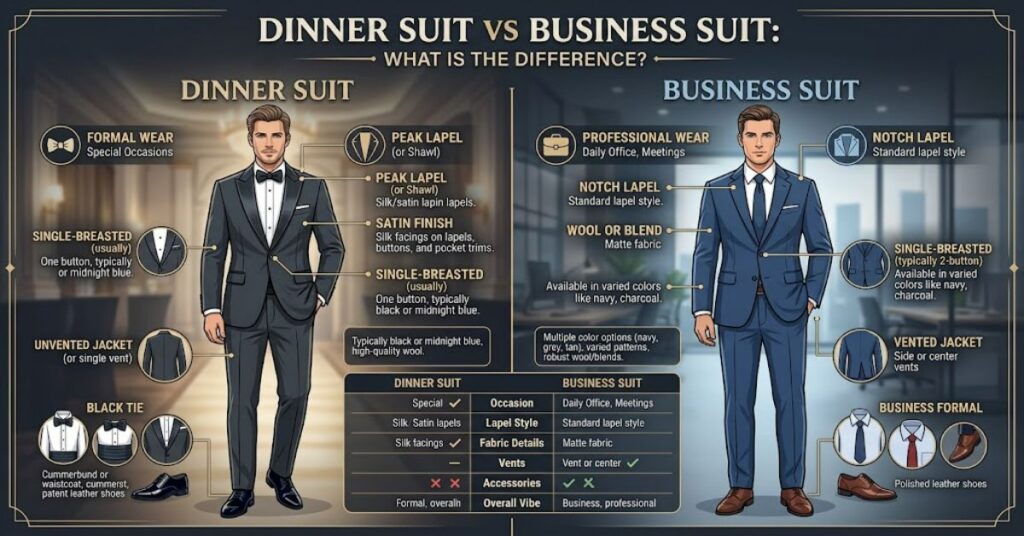
The difference between a dinner suit vs business suit is mainly about purpose, formality and construction. A dinner suit, also known as a tuxedo in American English, is a formal evening outfit traditionally worn for black-tie dinners, galas, weddings and other special occasions. A business suit is more versatile and is designed for offices, meetings, conferences and professional events.
At first glance, both outfits may appear similar. Each usually includes a jacket and matching trousers, and both can be made in dark colours such as black, navy or charcoal. The details, however, are important. A traditional dinner suit often features contrasting satin or grosgrain facings on the lapels and may include a satin stripe along the trousers. A business suit generally uses the same fabric throughout.
Understanding these differences makes choosing the right outfit much easier. A business suit can look polished and formal, but it is not automatically suitable for a black-tie event. Equally, arriving at a daytime business meeting in a dinner jacket may look unnecessarily ceremonial.
The right choice depends on where you are going, what the invitation says and the level of formality expected.
What Is a Dinner Suit?
A dinner suit is traditionally associated with evening formalwear. In the United Kingdom, the term “dinner suit” is commonly used, while “tuxedo” is more common in the United States.
The classic outfit consists of a matching dinner jacket and trousers, a formal white shirt, black bow tie and appropriate evening shoes. Traditional versions also feature distinctive lapels, usually faced with satin or grosgrain.
Dinner suits are closely connected with the black-tie dress code. Although modern fashion has introduced coloured jackets and more relaxed interpretations, the traditional purpose remains the same: formal social occasions after the daytime business environment has ended.
What Is a Business Suit?
A business suit is designed around professional versatility. It typically consists of a matching jacket and trousers made from wool or another suitable suiting fabric.
Common colours include navy, charcoal and grey. Black can also be worn, although it may appear more formal depending on the setting. A business suit is usually paired with a collared shirt, necktie and leather shoes.
Unlike a dinner suit, its purpose is not ceremonial. It is designed to communicate professionalism and can be worn during meetings, interviews, presentations, conferences and other workplace occasions.
Dinner Suit vs Business Suit: The Main Differences
The easiest way to understand the dinner suit vs business suit comparison is to look at each element separately.
| Feature | Dinner Suit | Business Suit |
| Main purpose | Formal evening events | Professional and daytime events |
| Lapels | Often satin or grosgrain faced | Usually the same fabric as the jacket |
| Shirt | Formal dress shirt | Standard business shirt |
| Neckwear | Traditionally a bow tie | Usually a long necktie |
| Trousers | May feature a satin side stripe | Same fabric throughout |
| Formality | High | Moderate to formal |
| Typical occasions | Black-tie dinners, galas, formal weddings | Offices, meetings, interviews |
The most recognisable difference is often the lapel treatment. A dinner jacket may have a visible contrast between the main fabric and the satin or grosgrain lapels. A conventional business suit normally maintains a more uniform appearance.
Fabric and Finish Matter
Fabric is one of the details that separates these two garments. A business suit is generally designed for repeated wear in different professional environments. Wool remains a common choice because it can provide structure, comfort and durability.
Dinner suits are also frequently made from wool-based fabrics, but their decorative elements create a different visual effect. Satin or grosgrain facings give the jacket a smoother, more formal appearance.
This does not mean every shiny black suit is a dinner suit. A glossy fabric alone does not create a proper tuxedo. The garment’s cut, lapels, trousers and accessories all contribute to its identity.
Lapels: A Small Detail With a Major Effect
Lapels are one of the clearest visual distinctions in the dinner suit vs business suit debate.
Traditional dinner suits commonly use:
- Shawl lapels
- Peak lapels
Business suits more often feature:
- Notch lapels
- Peak lapels on more formal or fashion-led designs
A peak lapel can appear on both types of suit, so the lapel shape alone is not enough to identify the garment. The facing and overall styling provide additional clues.
Accessories Change the Entire Outfit
Accessories are another major difference.
A dinner suit is traditionally paired with a bow tie. Depending on the level of formality, it may also include cufflinks, a waistcoat or cummerbund, and formal shoes.
A business suit is generally worn with a long tie. Accessories tend to be more restrained, although watches, pocket squares and cufflinks can add personality.
| Occasion | Better Choice | Typical Accessories |
| Office meeting | Business suit | Shirt, tie, leather shoes |
| Job interview | Business suit | Conservative tie and polished shoes |
| Black-tie gala | Dinner suit | Bow tie, formal shirt |
| Formal evening wedding | Dinner suit if black tie | Bow tie and evening accessories |
| Business conference | Business suit | Professional, understated accessories |
The invitation should always guide the decision. If an event specifically states “black tie”, a standard business suit is usually not the traditional interpretation of the dress code.
When Should You Wear a Dinner Suit?
A dinner suit is most appropriate for formal evening events. Typical examples include charity galas, award ceremonies, black-tie dinners and certain weddings.
Timing can also matter. Traditional dress conventions associate dinner suits with the evening, although modern events are often more flexible.
The safest approach is to read the invitation carefully. “Black tie” is a specific instruction and generally calls for a dinner suit or tuxedo rather than an ordinary office suit.
When Should You Wear a Business Suit?
A business suit is the practical choice for most professional occasions. It offers flexibility and can be styled differently through shirts, ties and shoes.
For example, a navy suit with a white shirt and conservative tie can work for an interview. The same suit can look more relaxed with a different shirt and no tie at an event where the dress code is business casual or smart professional.
This adaptability is one of the business suit’s greatest strengths.
The Biggest Mistake: Treating Them as Interchangeable
One of the most common style mistakes is assuming that any dark suit can replace a dinner suit.
A well-made black business suit can certainly look elegant. However, black-tie dressing has its own visual language. The bow tie, formal shirt, lapel treatment and evening-focused styling all work together.
On the other hand, wearing a dinner suit to an ordinary office meeting can make the outfit appear disconnected from the environment.
The practical lesson is simple: formality is not just about wearing the most expensive or darkest suit. It is about matching the garment to the occasion.
The Future of Dinner Suits and Business Suits in 2027
By 2027, both classic tailoring and relaxed professional dress are likely to continue existing side by side. Many workplaces have already become less formal, reducing the need for daily suit-wearing in some industries.
Formal events, however, continue to create demand for traditional eveningwear. Weddings, galas and ceremonial occasions still benefit from a clear distinction between business clothing and black-tie attire.
One likely trend is greater flexibility in colour, fit and personal styling. However, traditional details will remain useful because they communicate the expected level of formality quickly.
Key Takeaways
- A dinner suit is formal eveningwear associated with black-tie occasions.
- A business suit is designed for professional and daytime use.
- Satin or grosgrain lapel facings are common features of traditional dinner suits.
- Business suits usually use consistent fabric throughout the jacket and trousers.
- Bow ties are traditionally associated with dinner suits, while long ties are standard for business suits.
- The event dress code should always influence your final choice.
Conclusion
The dinner suit vs business suit comparison is ultimately about context. Both garments can look sophisticated, but they serve different purposes. A dinner suit is designed for formal evening occasions and follows the visual traditions of black-tie dress. A business suit is built for versatility, professionalism and repeated wear across a range of daytime settings.
The distinction often comes down to details that may seem small: lapel facings, trouser trims, shirt styles and accessories. Together, these elements determine whether an outfit reads as businesswear or formal eveningwear.
If the occasion calls for black tie, a dinner suit is the appropriate choice. For meetings, offices and professional events, a business suit remains the more practical option. Knowing the difference ensures that your outfit fits the setting rather than simply looking formal.
Frequently Asked Questions
Is a dinner suit the same as a tuxedo?
Yes. “Dinner suit” is commonly used in British English, while “tuxedo” is more common in American English. Both generally refer to formal eveningwear associated with black-tie events.
Can I wear a business suit to a black-tie event?
A business suit is not the traditional choice for a black-tie event. Unless the host specifically states that dark business suits are acceptable, a dinner suit is the safer option.
What is the main difference between a dinner suit and a normal suit?
The main differences include formality, purpose, lapel facings, accessories and styling. Dinner suits are intended for formal eveningwear, while normal suits are more versatile.
Does a dinner suit always have satin lapels?
Traditional dinner suits often feature satin or grosgrain lapel facings. Modern designs can vary, but these details remain a classic feature of formal black-tie clothing.
Can I wear a long tie with a dinner suit?
Traditional black-tie dress calls for a bow tie. A long tie may create a modern or alternative look, but it does not follow conventional black-tie styling.
Methodology
This article follows the Postcard.fm production framework, including the required keyword placement, structured comparison, practical analysis, future section, FAQ and SEO metadata. The supplied brief identifies the core distinction between dinner suits and business suits as their purpose, level of formality, fabric finish and lapel details.
The analysis is limited by differences in regional terminology and changing fashion conventions. Traditional British and American tailoring terms may also vary, particularly regarding the use of “dinner suit” and “tuxedo”.