
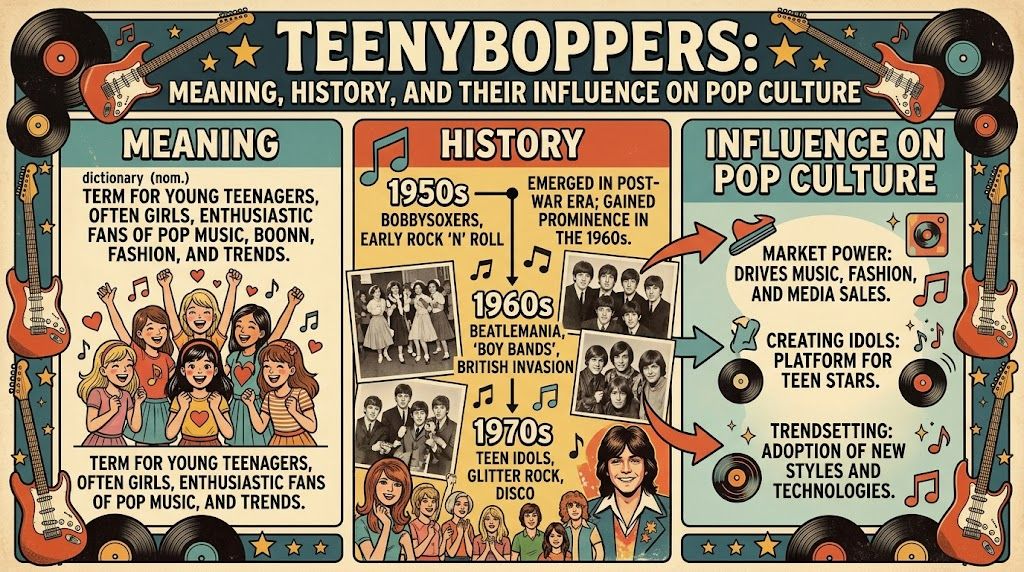
Teenyboppers is a term traditionally used to describe young teenagers who are highly interested in popular music, fashion, celebrities and entertainment trends. The word has often been associated with girls between the ages of 10 and 15 who eagerly follow their favourite singers, actors or teen idols.
The image of the traditional teenybopper might include bedroom walls covered with posters, collections of magazines, favourite song lyrics written in notebooks and endless conversations with friends about celebrities. Over the years, however, the way young fans express their interests has changed.
Today, teenagers can follow musicians and celebrities instantly through social media, streaming platforms, videos and online fan communities. They no longer need to wait for a monthly magazine or television interview to find out what their favourite star is doing.
Even though the word teenybopper may sound dated, the culture behind it remains familiar. Young people still develop strong connections with music, entertainment and celebrities. They still share favourite songs with friends, copy fashion trends and become part of communities built around common interests.
Teen fandom has also become an important part of the entertainment industry. Young audiences can influence music charts, streaming numbers, fashion trends and the popularity of celebrities. What begins as teenage enthusiasm can sometimes turn an unknown performer into a global success.
What Does Teenybopper Mean?
A teenybopper is generally a young teenager who is particularly interested in popular culture. The term is most commonly connected with enthusiasm for pop music, celebrities, fashion and entertainment.
Traditionally, teenyboppers were known as dedicated fans of singers or actors who appealed strongly to young audiences. A fan might buy posters, collect photographs, attend concerts or follow news about a favourite celebrity.
The term can sometimes be used in a light-hearted way, but it may also sound dismissive. Adults occasionally use it to suggest that young fans are overly emotional or obsessed with unimportant trends.
However, this stereotype does not always reflect reality. Music and fandom can have genuine social importance for young people. Favourite artists and entertainment interests can help teenagers form friendships and explore their developing identities.
The History of Teenybopper Culture
Teenage fandom has existed for many decades. As popular music became increasingly commercial during the twentieth century, the entertainment industry began paying closer attention to younger audiences.
Teenagers became an important consumer group. Record companies, magazines, television programmes and fashion brands all recognised the influence of young people.
During earlier decades, fans often joined official fan clubs and waited for magazines featuring interviews or photographs of their favourite stars. Posters became a popular part of teenage bedrooms, while radio and television helped introduce new performers to young audiences.
Over time, the culture continued to develop.
| Period | Popular Fan Activity | Main Entertainment Platform |
| 1950s–1960s | Fan clubs and magazines | Radio and print media |
| 1970s–1980s | Posters and television fandom | Television and music programmes |
| 1990s–2000s | Boy bands and pop groups | Music television and magazines |
| 2010s | Online fan communities | Social media and streaming |
| 2020s onwards | Global digital fandom | Short-form video and online platforms |
The methods have changed, but the excitement surrounding favourite performers has remained a constant part of youth culture.
Teenyboppers and Pop Music
Pop music has always played a major role in teen culture. Young audiences often discover artists at a stage in life when personal identity and social relationships are becoming increasingly important.
A favourite song can become connected to a friendship, school experience or particular period of life. Music can also help teenagers communicate feelings that may be difficult to express directly.
For many young fans, following a musician involves more than simply listening to songs. It may include discussing new releases, learning lyrics, watching interviews and sharing opinions with friends.
This creates a sense of community.
A teenager who feels strongly connected to a particular artist may meet other people with similar interests. In the past, this happened through schools, fan clubs and concerts. Today, it can happen through online communities involving people from different countries and cultures.
Celebrity Culture and Young Fans
Celebrities often rely heavily on audience loyalty, and teenage fans can be among the most dedicated supporters.
A performer who connects with younger audiences can develop a powerful and long-lasting fan base. Teenagers may support favourite artists by listening to their music, watching their films, attending performances and sharing content online.
The relationship between celebrities and fans has changed significantly.
In earlier decades, fans had limited access to celebrities. They might see them in magazines, newspapers or television interviews. Today, celebrities can share messages, photographs and videos directly with millions of followers.
This can make famous people appear more accessible.
However, the constant flow of online content can also create unrealistic expectations. Celebrities often present carefully selected parts of their lives, and young fans may forget that online images do not always show reality.
Fashion and the Teenybopper Identity
Fashion has always been closely connected to youth culture.
Teenagers often take inspiration from musicians, actors and other public figures. A particular hairstyle, jacket or accessory can become popular after being associated with a famous performer.
Fashion allows young people to express their interests without necessarily saying anything. Wearing clothing inspired by a favourite artist can signal membership in a particular fan community.
At the same time, teenagers are not simply passive followers of celebrity trends. Young people often adapt fashion ideas to suit their own preferences.
This creates a two-way relationship. Celebrities influence young audiences, but youth culture also influences the entertainment and fashion industries.
How Social Media Changed Teenybopper Culture
Social media has transformed the way young fans interact with entertainment.
A traditional fan might have waited weeks for news about a favourite singer. A modern fan can receive updates within seconds.
Fans can now watch interviews, comment on videos, share photographs and create their own content. Many also produce artwork, videos and discussions related to their favourite celebrities.
This has made fandom more active.
| Traditional Fandom | Modern Fandom |
| Printed fan magazines | Social media content |
| Bedroom posters | Digital images and fan pages |
| Letters to fan clubs | Online comments and communities |
| Television interviews | Livestreams and videos |
| Physical albums | Music streaming |
Modern fans can also influence trends directly. A video, song or celebrity moment can become widely discussed because thousands or millions of fans share it online.
The Positive Side of Teenage Fandom
Teenage fandom is often portrayed as excessive or irrational, but it can also have positive aspects.
Shared interests can help young people form friendships. Music and entertainment can provide emotional comfort and encourage creativity.
Some fans learn new skills through their interests. They may create artwork, write reviews, edit videos or learn about music production.
Fandom can also introduce teenagers to different cultures. International artists often attract fans from many countries, creating opportunities to learn about languages, traditions and lifestyles.
For many young people, being part of a fan community provides a sense of belonging.
Risks and Challenges
Like any form of intense interest, fandom can also create problems when it becomes unhealthy.
Spending excessive amounts of time online can affect sleep, education and real-world relationships. Young fans may also feel pressure to constantly follow celebrity news.
Online arguments between different fan groups can become hostile, while unrealistic beauty and lifestyle standards may affect self-confidence.
A balanced approach is important.
Parents and teachers do not need to reject popular culture. Instead, helping young people understand advertising, edited images and online algorithms can encourage healthier media habits.
Enjoying music and celebrities is not automatically harmful. Problems are more likely to develop when entertainment begins to dominate every part of a person’s life.
The Future of Teenyboppers in 2027
By 2027, the word teenyboppers may continue to sound old-fashioned, but the culture it describes is unlikely to disappear.
Technology will continue to change how young people discover and follow entertainers. Virtual events, interactive content and increasingly personalised media may create new forms of fan participation.
At the same time, the basic reasons people become fans are unlikely to change.
Young people will continue to use music and entertainment as a way to explore identity, connect with friends and express personal interests.
The biggest difference will be the speed and scale of fandom. A performer can now gain international attention quickly, while fans can communicate across borders almost instantly.
Key Takeaways
- Teenyboppers are traditionally young teenagers with a strong interest in pop culture and celebrities.
- Teenage fans have played an important role in the success of musicians and entertainers.
- Music can help young people build friendships and express their identity.
- Fashion is often influenced by celebrities but adapted by young people in individual ways.
- Social media has made fandom faster, more interactive and more global.
- Healthy fandom can encourage creativity and community, although excessive involvement can create challenges.
Conclusion
Teenyboppers have been an important part of popular culture for generations. The term traditionally describes young teenagers who enthusiastically follow music, fashion and celebrities, particularly teen idols and pop stars.
While the image of a fan may have changed from posters and magazines to smartphones and online communities, the basic experience of fandom remains familiar. Young people still form strong connections with music and entertainment, share their interests with friends and become part of communities built around favourite artists.
Teenage audiences also continue to influence the entertainment industry. Their enthusiasm can help create music trends, increase an artist’s popularity and shape wider cultural conversations.
The word teenyboppers may belong more strongly to an earlier era, but the behaviour it describes remains part of modern life. Technology has changed the way fans communicate, but it has not changed the excitement of discovering a favourite artist or sharing that enthusiasm with others.
FAQ
What are teenyboppers?
Teenyboppers are generally young teenagers who are enthusiastic about pop music, fashion, celebrities and entertainment. The term has traditionally been associated with fans of teen idols and popular musicians.
What age is a teenybopper?
The term is commonly associated with young teenagers, often between the ages of 10 and 15. However, it is an informal cultural term rather than an official age category.
Is teenybopper an old-fashioned term?
Yes, the word is less commonly used today than in previous decades. However, teenage fandom and interest in celebrities continue to be major parts of popular culture.
Are teenyboppers only girls?
No. Although the term has historically been associated mainly with girls, teenagers of all genders can be passionate fans of music, celebrities and entertainment.
How has social media changed teenage fandom?
Social media allows fans to follow celebrities directly, join global communities and create their own content. It has made fandom more immediate and interactive.
Is being a fan of a celebrity unhealthy?
Not necessarily. Fandom can be enjoyable and creative. It may become unhealthy only when it negatively affects education, relationships, sleep or emotional wellbeing.
Methodology
This article is based on the supplied editorial brief and its definition of teenyboppers as young teenagers who eagerly follow fashion, pop music and celebrity trends. The topic has been developed as a cultural and entertainment explainer, focusing on the history, social role and modern evolution of teenage fandom.
The analysis takes a balanced approach by considering both the positive aspects of fan communities and the possible challenges of excessive celebrity-focused behaviour. No hyperlinks or clickable links are included in this version.