
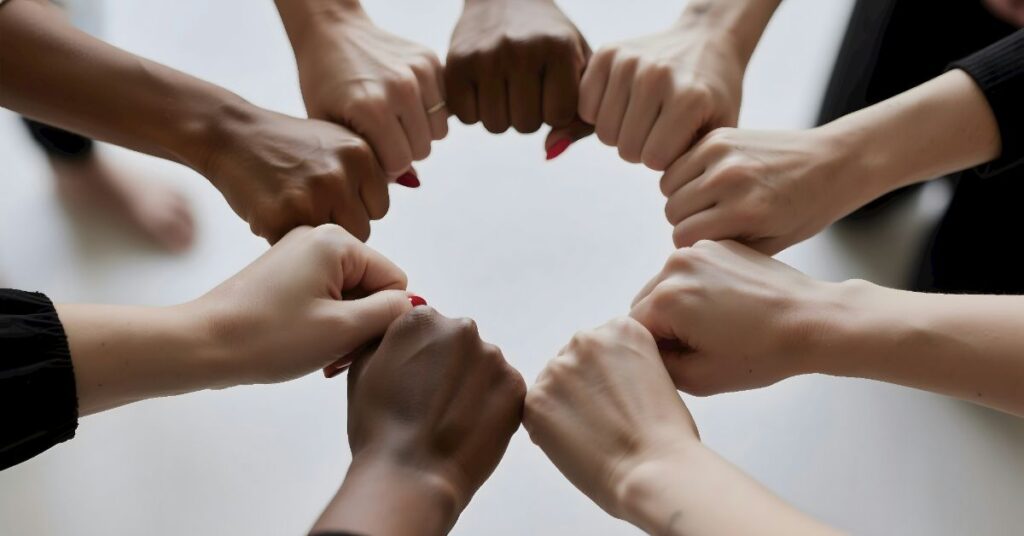
Camaraderie is often described as the invisible force that turns groups into communities. It reflects a spirit of mutual trust, friendliness, and loyalty shared among people who work, struggle, celebrate, or grow together. Whether found in military units, sports teams, classrooms, volunteer groups, or modern workplaces, camaraderie creates emotional cohesion that helps people feel connected to something larger than themselves.
The concept has become increasingly important in an era shaped by remote work, digital communication, and social fragmentation. Companies spend billions on culture initiatives, while psychologists continue studying how belonging affects emotional well-being, productivity, and resilience. Yet many organizations misunderstand the difference between superficial positivity and genuine social connection.
Real camaraderie cannot be manufactured overnight. It forms gradually through shared challenges, repeated cooperation, emotional safety, and collective achievement. Teams that experience setbacks together often develop stronger bonds than those that only celebrate victories. That pattern appears repeatedly across business environments, athletic organizations, emergency services, and creative industries.
The modern conversation around workplace culture, burnout, and loneliness has also pushed the topic into broader public discussion. According to research published by the American Psychological Association in recent years, social connection remains one of the strongest predictors of emotional resilience and long-term well-being. The implications extend beyond friendship. They influence leadership, retention, innovation, and even public trust.
Understanding how camaraderie works — and where it fails — matters more now than it did a decade ago.
What Camaraderie Really Means
The word originates from the French term camarade, meaning companion or roommate. Historically, it described soldiers who shared living quarters and endured difficult conditions together. Over time, the meaning expanded into civilian life, eventually becoming associated with solidarity, emotional support, and collective identity.
Today, camaraderie appears in several forms:
| Environment | How Camaraderie Forms | Typical Outcome |
| Workplaces | Shared projects and collaboration | Higher morale and retention |
| Sports teams | Training and competitive pressure | Trust and performance cohesion |
| Military units | Shared risk and discipline | Deep loyalty and resilience |
| Volunteer groups | Common missions and service | Community identity |
| Educational settings | Group learning experiences | Peer support and engagement |
Despite different contexts, the emotional structure remains remarkably similar. People become connected when they repeatedly rely on one another under meaningful circumstances.
Psychologists frequently distinguish camaraderie from casual friendliness. A pleasant office environment may feel socially comfortable without producing deeper trust. Genuine group cohesion usually requires vulnerability, accountability, and repeated evidence that members support each other under pressure.
That distinction explains why some highly social organizations still experience toxic internal dynamics. Surface-level positivity cannot substitute for earned trust.
Why Shared Struggle Builds Stronger Bonds
One of the clearest patterns in human behavior is that adversity often strengthens relationships. Sociologists and behavioral researchers have documented this across military history, expedition teams, athletic programs, and emergency response organizations.
During the COVID-19 pandemic, many healthcare workers reported unusually intense professional bonds after navigating exhausting hospital conditions together. Similar patterns emerged among teachers adapting to remote instruction and logistics workers maintaining supply chains during global disruption.
The mechanism is partly neurological. Shared hardship increases emotional synchronization and mutual dependency. When people overcome difficulty together, the brain tends to associate safety and resilience with the group itself.
A 2023 workplace study from Gallup found that employees who reported having strong social relationships at work also showed significantly higher engagement and lower turnover intention compared with isolated workers.
Importantly, hardship alone does not create camaraderie. Poor leadership, unequal burdens, or unsafe conditions can produce resentment instead. Shared struggle becomes socially meaningful only when group members believe sacrifices are fair and collective goals matter.
That explains why some organizations emerge stronger after crises while others fracture.
The Role of Camaraderie in Modern Workplaces
Over the last decade, workplace culture has shifted from a secondary HR concern into a major business strategy issue. Hybrid work, remote collaboration, and employee burnout forced organizations to reconsider how teams build trust.
Many companies initially assumed digital tools could fully replace in-person interaction. Productivity platforms improved communication efficiency, but they often weakened informal social bonds. Casual conversations before meetings, spontaneous brainstorming, and unstructured team interaction became harder to replicate online.
Managers across industries began noticing similar problems:
- Reduced emotional cohesion
- Increased isolation
- Lower collaborative creativity
- Faster interpersonal misunderstandings
- Weaker employee loyalty
Some organizations responded with excessive virtual social events. Employees frequently described these efforts as performative rather than authentic. Forced fun rarely produces meaningful connection.
Instead, successful teams often focused on practical collaboration habits:
| Approach | Why It Works |
| Smaller recurring teams | Builds familiarity and trust |
| Transparent leadership | Reduces social uncertainty |
| Shared accountability | Encourages mutual reliance |
| Informal discussion space | Supports emotional connection |
| Recognition of collective effort | Reinforces group identity |
In technology firms, creative agencies, and consulting environments, camaraderie increasingly influences retention more than salary alone. Workers who feel emotionally disconnected from colleagues are statistically more likely to leave even well-paying jobs.
This shift partly explains the growing popularity of leadership training around psychological safety — a concept strongly connected to social trust and open communication.
Readers interested in workplace culture trends may also explore Postcard.fm’s coverage of fractional HR models, which examines how modern organizations are restructuring employee support systems.
Sports, Competition, and Emotional Loyalty
Athletics remains one of the clearest demonstrations of how camaraderie affects performance. Elite teams often possess comparable technical skill levels. The difference frequently comes from cohesion under pressure.
Professional coaches regularly emphasize chemistry because coordinated trust improves split-second decision-making. Players who believe teammates will respond predictably tend to perform more confidently in high-pressure situations.
This dynamic appears across levels:
- Youth sports programs
- Olympic teams
- Professional leagues
- Collegiate athletics
- Amateur recreational clubs
Former Michael Jordan frequently spoke about trust developed through practice intensity and shared competitive standards rather than friendship alone. Similarly, championship teams in football and rugby often describe collective sacrifice as a defining cultural factor.
Sports psychologists also note that excessive internal competition can damage cohesion when players perceive favoritism or unequal treatment. Strong camaraderie depends on balancing individual ambition with collective identity.
That balance becomes harder in professionalized environments driven by contracts, endorsements, and constant roster movement.
Digital Communities and the Changing Nature of Connection
Online communities have reshaped how people experience belonging. Platforms like Reddit, Discord, and multiplayer gaming ecosystems allow individuals across continents to form surprisingly strong social ties.
For younger generations especially, digital friendships can feel just as emotionally significant as local relationships.
Yet online camaraderie operates differently from physical-world connection in several ways:
| Digital Connection | Physical-World Connection |
| Faster formation | Slower trust development |
| Broader communities | Deeper localized bonds |
| Identity flexibility | Greater accountability |
| Constant accessibility | More meaningful presence |
| Easier exit from groups | Stronger long-term obligation |
Gaming communities provide one of the clearest modern examples. Cooperative online games encourage coordination, shared achievement, and repeated interaction. Some players spend years participating in the same guilds, clans, or esports groups.
At the same time, digital environments can create fragile loyalty structures. Algorithms reward engagement rather than emotional durability. Communities sometimes dissolve rapidly when trends shift or moderation fails.
Researchers studying digital sociology increasingly argue that online relationships work best when combined with some form of offline grounding, even if occasional rather than constant.
Hidden Risks Behind Group Loyalty
Although camaraderie is widely celebrated, it also carries risks that organizations and communities sometimes ignore.
Strong internal loyalty can discourage dissent. Teams with intense social cohesion occasionally suppress criticism to preserve harmony. This phenomenon appears in corporate scandals, political movements, and even emergency response failures.
Researchers often refer to this as “groupthink.”
Several risks emerge when camaraderie becomes excessive:
- Resistance to outside perspectives
- Informal exclusion of newcomers
- Protection of underperforming members
- Reduced accountability
- Pressure to conform socially
A well-documented example occurred during investigations into certain corporate cultures following the 2008 financial crisis. Some firms maintained strong internal solidarity but discouraged ethical objections or risk warnings.
Healthy camaraderie therefore requires balance. Trust should strengthen accountability, not weaken it.
One overlooked issue involves remote employees. Hybrid workplaces sometimes unintentionally create “inner-circle culture,” where office-based workers develop stronger social bonds than remote staff. That imbalance affects promotions, communication flow, and team inclusion.
Organizations that ignore these dynamics may unintentionally reward proximity over performance.
Cultural Differences in How Groups Build Trust
Different societies approach group connection in distinct ways. In collectivist cultures, group harmony and shared responsibility are often emphasized from childhood. In more individualistic societies, camaraderie may emerge more gradually through voluntary participation.
Examples vary widely:
| Region | Common Social Dynamic |
| Japan | Group cohesion and social harmony |
| United States | Individual initiative balanced with team identity |
| Nordic countries | Collaborative equality and consensus |
| Latin American cultures | Relationship-driven group interaction |
These cultural differences influence leadership styles, communication expectations, and conflict management.
International companies frequently underestimate how cultural assumptions affect team cohesion. A management strategy that encourages open disagreement in one country may feel socially disruptive in another.
Cross-cultural leadership increasingly requires emotional intelligence rather than purely operational expertise.
Readers exploring broader cultural identity themes may find related perspectives through Postcard.fm’s history and culture coverage.
The Economic Value of Social Connection
Camaraderie is not just emotional. It has measurable economic implications.
Organizations with strong team cohesion often report:
- Lower turnover costs
- Better collaboration efficiency
- Reduced absenteeism
- Higher customer satisfaction
- Greater resilience during restructuring
According to Deloitte workplace research, employees who feel connected to colleagues are more likely to remain with employers long term and contribute discretionary effort during periods of organizational stress.
This matters because employee replacement costs can exceed 50% to 200% of annual salary depending on role specialization.
The financial consequences extend into education, healthcare, military performance, and public institutions. Communities with stronger social trust also tend to demonstrate better civic participation and crisis response capacity.
Economists increasingly refer to this broader concept as “social capital.”
Real-World Examples of Strong Camaraderie
Firefighters and Emergency Responders
Emergency response teams often develop unusually strong interpersonal trust because lives depend on coordination. Firefighters frequently describe stations as second families due to constant shared exposure to stress and risk.
Antarctic Research Teams
Long-duration scientific missions provide another example. Researchers isolated in extreme conditions rely heavily on emotional stability and cooperation. Studies from polar research programs consistently show that interpersonal tension becomes one of the greatest operational threats during extended missions.
Independent Music Scenes
Local music communities also demonstrate how shared creative struggle builds identity. Bands, venue operators, and independent artists often form lasting support networks through years of collaborative survival in financially unstable environments.
These examples highlight an important pattern: camaraderie grows strongest when people believe their participation matters.
The Future of Camaraderie in 2027
By 2027, social connection inside organizations and communities will likely become even more strategically important.
Several trends are already shaping this direction:
| Trend | Likely Impact |
| AI-assisted workplaces | Greater need for human emotional cohesion |
| Hybrid employment | More intentional community-building |
| Loneliness concerns | Increased investment in social wellness |
| Gig economy expansion | Weaker long-term group identity |
| Digital collaboration tools | Faster but less durable social formation |
The rise of artificial intelligence may paradoxically increase the value of human trust and emotional cooperation. As automation handles more repetitive tasks, uniquely human strengths — empathy, group coordination, leadership, and relationship-building — become comparatively more valuable.
Governments and public health institutions are also paying greater attention to loneliness as a measurable social issue. In 2023, the U.S. Surgeon General issued a major advisory describing social isolation as a public health concern with serious long-term implications.
At the same time, economic instability and remote labor trends could make stable group identity harder to sustain. Freelance and contract workers often experience weaker institutional belonging than traditional employees.
The future of camaraderie will therefore depend less on slogans and more on whether institutions genuinely create environments where trust can develop naturally.
Key Takeaways
- Camaraderie develops through repeated shared experiences, not surface-level friendliness.
- Strong group trust improves resilience, retention, and collaborative performance.
- Digital communities can create meaningful bonds but often lack long-term stability.
- Excessive group loyalty can suppress accountability and critical thinking.
- Hybrid workplaces face new challenges around inclusion and social cohesion.
- Emotional connection increasingly carries measurable economic value.
- Human trust may become more important as automation reshapes work structures.
Conclusion
Camaraderie remains one of the most influential but misunderstood forces in human life. It shapes how teams function, how communities survive hardship, and how individuals experience belonging in increasingly fragmented societies. Despite advances in communication technology, the foundations of trust have changed very little. People still build meaningful loyalty through shared effort, mutual dependence, and emotional reliability over time.
Modern organizations often attempt to manufacture connection through branding exercises or temporary morale campaigns. Those efforts rarely succeed without deeper structural trust. Genuine social cohesion cannot be automated or scripted. It grows through fairness, shared purpose, competent leadership, and consistent human interaction.
The cultural importance of camaraderie may increase over the next several years as loneliness, hybrid work, and AI-driven labor shifts reshape daily life. Institutions that understand this dynamic will likely build stronger communities and more resilient teams. Those that ignore it may struggle with disengagement, instability, and declining trust.
Human beings continue to need one another. That basic reality remains surprisingly durable.
FAQ
What is the simple meaning of camaraderie?
Camaraderie refers to feelings of trust, friendship, loyalty, and emotional connection among people who share experiences or goals together.
Why is camaraderie important in the workplace?
Strong workplace relationships improve communication, collaboration, morale, and employee retention. Teams with healthy social trust often perform better under pressure.
Can camaraderie exist online?
Yes. Online communities, gaming groups, and digital collaboration spaces can create meaningful social bonds, although they may sometimes lack long-term stability compared with in-person relationships.
What causes strong group loyalty?
Shared experiences, mutual support, fairness, repeated cooperation, and overcoming challenges together are the main drivers of lasting group cohesion.
Is camaraderie the same as friendship?
Not exactly. Friendship is usually personal and individual, while camaraderie often describes collective trust and solidarity within a group setting.
Can too much camaraderie become harmful?
Yes. Excessive loyalty can sometimes discourage criticism, exclude outsiders, or create unhealthy groupthink that weakens accountability.
How do leaders encourage camaraderie naturally?
Effective leaders create environments with fairness, shared goals, psychological safety, open communication, and opportunities for genuine collaboration rather than forced social activities.
Methodology
This article was developed using behavioral psychology research, workplace culture studies, public health reporting, and documented examples from sports, emergency response, and organizational leadership analysis. Recent reports from Gallup, Deloitte, and the U.S. Surgeon General informed sections discussing social trust, workplace engagement, and loneliness trends.
The analysis also incorporated comparative observations from hybrid work environments, digital communities, and group psychology literature. Limitations include variation across cultures, industries, and personality types, which means experiences of camaraderie are not universally identical.
Balanced perspectives were included regarding both the benefits and potential risks of strong group loyalty, including exclusion dynamics and groupthink behavior.
References
American Psychological Association. (2023). The importance of social connection for mental health. APA Publishing.
Deloitte. (2024). Global human capital trends report. Deloitte Insights.
Gallup. (2023). State of the global workplace report. Gallup Press.
U.S. Surgeon General. (2023). Our epidemic of loneliness and isolation. U.S. Department of Health and Human Services.
Putnam, R. D. (2022). The upswing: How America came together a century ago and how we can do it again. Simon & Schuster.
Edmondson, A. C. (2023). Right kind of wrong: The science of failing well. Atria Books.