
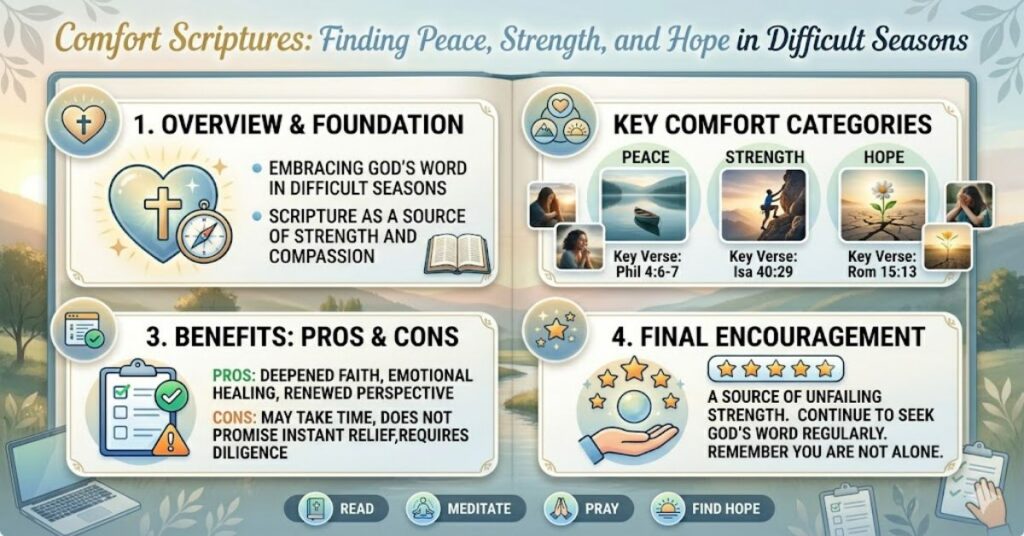
Many people search for comfort scriptures during life’s hardest moments. Whether facing anxiety, grief, illness, financial stress, or uncertainty about the future, believers often turn to the Bible for reassurance and perspective. Among the most frequently referenced passages is Philippians 4:6–7, which encourages prayer, thanksgiving, and trust in God’s peace.
The enduring appeal of biblical encouragement is not merely emotional. Scripture provides a framework for understanding suffering, hope, perseverance, and faith. Throughout history, Christians have relied on biblical passages during wars, economic hardships, personal tragedies, and periods of social change. These texts continue to shape devotional practices, counseling conversations, and spiritual care ministries around the world.
Yet not every encouraging verse serves the same purpose. Some passages focus on peace amid anxiety. Others address grief, fear, loneliness, or endurance. Understanding these distinctions can help readers find verses that speak directly to their circumstances rather than treating all biblical encouragement as interchangeable.
This guide explores some of the most meaningful biblical passages associated with comfort, examines their context, discusses practical applications, and considers why these verses continue to resonate across generations.
Why Comfort Scriptures Matter
The Bible was written across centuries and in diverse circumstances. Many passages emerged from periods of suffering, exile, persecution, and uncertainty.
As a result, scripture often addresses:
- Fear
- Anxiety
- Loss
- Loneliness
- Physical hardship
- Spiritual discouragement
The recurring theme is not the absence of difficulty but God’s presence within it.
A Historical Perspective
The Psalms, for example, contain numerous prayers written during personal distress. Likewise, many New Testament letters were written during periods of imprisonment, persecution, or uncertainty.
This historical context explains why these passages remain relevant today.
Comfort Scriptures for Anxiety
One of the most searched topics among Christians involves anxiety.
Philippians 4:6–7
This passage encourages believers to bring their concerns before God through prayer and thanksgiving while trusting Him for peace.
The significance of this instruction becomes clearer when considering that the Apostle Paul wrote Philippians while under Roman imprisonment.
Matthew 6:25–34
In the Sermon on the Mount, Jesus addresses worry about daily needs.
Key themes include:
- Trust
- Dependence on God
- Perspective
- Priorities
Rather than minimizing life’s challenges, the passage reframes them within a broader spiritual context.
Comfort Scriptures for Grief and Loss
Grief appears throughout Scripture.
Psalm 34:18
This verse emphasizes God’s nearness to the brokenhearted.
Many pastors and grief counselors reference this passage because it acknowledges pain rather than dismissing it.
Revelation 21:4
The promise of a future without death, mourning, crying, or pain has provided hope to believers for generations.
Its significance often extends beyond immediate comfort by pointing toward ultimate restoration.
Comfort Scriptures for Fear
Fear is among humanity’s oldest struggles.
Isaiah 41:10
This passage reassures believers through themes of divine presence, strength, and support.
The message is notable because it was originally delivered during a period of national uncertainty.
Joshua 1:9
Joshua received this encouragement before assuming leadership responsibilities after Moses’ death.
The verse connects courage with God’s presence rather than personal confidence alone.
Comfort Scriptures for Uncertain Times
Periods of uncertainty often combine fear, anxiety, and frustration.
Proverbs 3:5–6
This passage emphasizes trust even when circumstances remain unclear.
Romans 8:28
One reason this verse remains widely quoted is its focus on God’s ability to work through difficult situations rather than merely preventing them.
Comparison Table: Different Types of Biblical Comfort
| Life Challenge | Common Scripture Focus | Primary Theme |
| Anxiety | Philippians 4:6–7 | Peace |
| Fear | Isaiah 41:10 | Courage |
| Grief | Psalm 34:18 | Presence |
| Uncertainty | Proverbs 3:5–6 | Trust |
| Loneliness | Hebrews 13:5 | Faithfulness |
| Suffering | Romans 8:28 | Purpose |
Practical Ways to Use Comfort Scriptures
Reading encouraging verses occasionally can be helpful.
Developing a consistent practice often proves more effective.
Daily Reflection
Many believers begin or end the day with selected passages.
Journaling
Writing reflections can deepen engagement with scripture.
Memorization
Memorized verses become available during moments when a Bible may not be immediately accessible.
Prayer Integration
Combining scripture reading with prayer allows biblical themes to become part of personal spiritual practice.
Structured Insight Table
| Practice | Time Commitment | Potential Benefit |
| Daily Reading | 5–10 minutes | Consistent encouragement |
| Scripture Memorization | 10 minutes daily | Rapid recall during stress |
| Prayer Reflection | 10–15 minutes | Greater spiritual focus |
| Group Study | Weekly | Community support |
| Journaling | 10 minutes | Personal application |
Three Insights Often Missing From Discussions About Comfort Scriptures
1. Context Matters as Much as the Verse
Many popular verses are quoted without their surrounding context.
Understanding historical background often strengthens their meaning rather than limiting it.
2. Biblical Comfort Is Not Mere Optimism
Scripture rarely ignores suffering.
Instead, it acknowledges hardship while pointing toward hope and faithfulness.
3. Community Plays a Significant Role
Many biblical passages were originally written to communities rather than isolated individuals.
This reminds readers that support from others is often part of the comfort process.
Risks and Misunderstandings
Although encouraging passages provide hope, they can sometimes be misunderstood.
Potential challenges include:
- Treating verses as guarantees of immediate outcomes
- Ignoring broader biblical context
- Using isolated texts without considering surrounding passages
- Replacing practical help with spiritual slogans
Balanced application involves both faith and wisdom.
Cultural and Real-World Impact
Comfort-focused scriptures continue to influence:
- Pastoral counseling
- Hospital chaplaincy
- Grief support ministries
- Christian publishing
- Daily devotional practices
Their widespread use demonstrates the enduring role of faith-based encouragement in contemporary life.
The Future of Comfort Scriptures in 2027
Several trends are likely to shape how believers engage with scripture in the coming years.
Digital Access
Bible apps and digital devotionals continue expanding access worldwide.
Personalized Reading Plans
Technology increasingly helps readers discover passages relevant to specific life situations.
Growing Interest in Mental Health
Faith communities are placing greater emphasis on integrating spiritual encouragement with responsible mental health support.
Continuing Relevance
Despite technological changes, the core appeal of biblical comfort remains rooted in timeless themes of hope, faithfulness, and perseverance.
Key Takeaways
- Comfort scriptures address a wide range of human experiences.
- Anxiety-related passages remain among the most frequently searched Bible verses.
- Historical context often deepens understanding.
- Scripture emphasizes God’s presence during hardship rather than the absence of hardship.
- Community support frequently complements personal devotion.
- Encouraging verses are most effective when understood within broader biblical teaching.
- Digital tools are changing access but not the core message.
Conclusion
Comfort scriptures have served as a source of encouragement for generations facing uncertainty, grief, fear, and hardship. Their enduring influence stems from their honesty about suffering and their persistent focus on hope, faithfulness, and divine presence.
Rather than offering simplistic answers, many of the Bible’s most cherished passages acknowledge life’s difficulties while pointing readers toward trust and perseverance. Whether someone is struggling with anxiety, mourning a loss, or facing an uncertain future, scripture provides language for both lament and hope.
Understanding the historical and theological context of these passages allows readers to appreciate them more fully. The verses themselves remain powerful, but their meaning often becomes richer when viewed within the broader biblical narrative.
As technology changes how people access religious texts, the desire for reassurance, peace, and spiritual grounding remains remarkably consistent. These timeless themes continue to make comfort scriptures meaningful across cultures and generations.
FAQ
What are the most popular comfort scriptures?
Philippians 4:6–7, Psalm 34:18, Isaiah 41:10, Romans 8:28, and Proverbs 3:5–6 are among the most frequently cited passages for encouragement.
Which Bible verses help with anxiety?
Many believers turn to Philippians 4:6–7, Matthew 6:25–34, and Psalm 55 when seeking reassurance during anxious seasons.
What comfort scriptures help after a loss?
Psalm 34:18 and Revelation 21:4 are commonly referenced because they address grief, sorrow, and future hope.
Why do Christians read comfort scriptures?
These passages remind believers of God’s presence, promises, and faithfulness during difficult circumstances.
Are comfort scriptures only for personal struggles?
No. Many passages were originally written to communities facing collective challenges and remain relevant for families, churches, and groups.
How often should I read encouraging Bible verses?
There is no required schedule. Many people benefit from incorporating scripture reading into a daily devotional routine.
Can comfort scriptures replace professional help?
Spiritual encouragement can be valuable, but serious mental health concerns may also require support from qualified healthcare or counseling professionals.
Methodology
This article was prepared using biblical texts, theological commentary, and historical context from established Christian scholarship. Analysis focused on commonly cited passages associated with encouragement, peace, grief, fear, and trust.
Limitations include differences in biblical translation, denominational interpretation, and devotional application. Readers may encounter variations in wording depending on the Bible version used.
The article aims to provide balanced, context-aware discussion rather than promoting a single interpretive tradition.
Editorial Disclosure
This article was drafted with AI assistance and reviewed and verified by [Author Name]. All data, citations, and claims should be independently confirmed by the editorial team at Postcard.fm before publication.
References
All scripture quotations and references should be verified against the chosen Bible translation before publication.
Suggested primary sources for verification:
- Holy Bible (publisher and translation selected by editorial team).
- BibleGateway. (Current edition and translation used).
- Crossway. English Standard Version study resources.
- Zondervan. NIV study resources.
Human editorial verification is required before publication.