
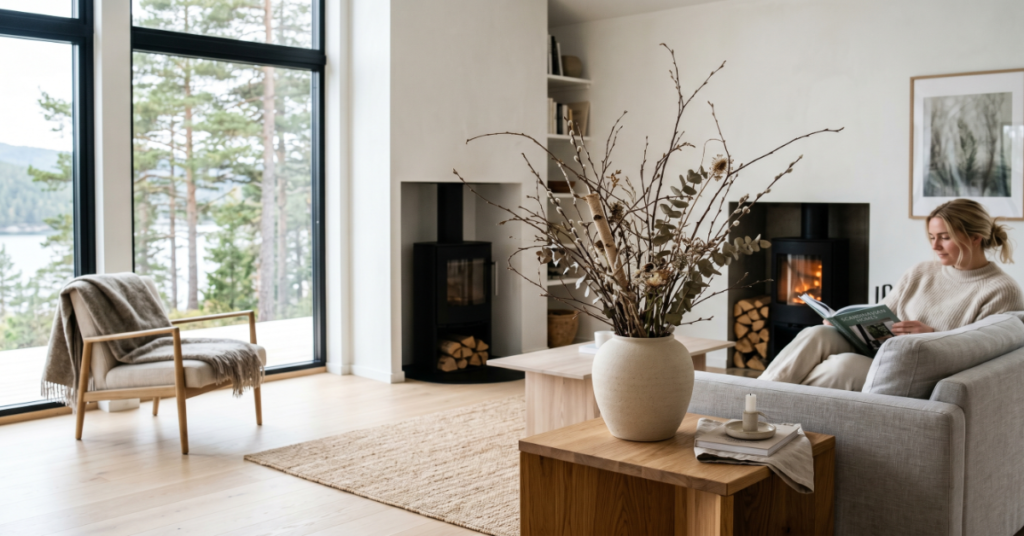
Pyntekvister are natural or dried branches arranged in vases or pots as decorative elements in home interiors. In Scandinavian design culture, they represent more than simple decoration. They reflect a broader philosophy of bringing nature indoors in a way that feels calm, seasonal, and visually balanced.
In practice, pyntekvister are collected from trees such as birch, willow, eucalyptus, and cherry blossom, or purchased from florists and home decor retailers. Their appeal lies in their simplicity. A bare branch placed in a ceramic vase can change the mood of a room without overwhelming it. This aligns closely with Scandinavian interior principles that prioritize natural materials, muted tones, and functional beauty.
In many homes across Norway, Denmark, and Sweden, pyntekvister are used to mark seasonal transitions. Bare winter branches create a stark aesthetic during colder months, while flowering branches signal spring renewal. This practice supports the cultural concept of hygge, a Danish and Norwegian idea centered on comfort, warmth, and emotional well-being in everyday environments.
Today, pyntekvister have moved beyond regional tradition and entered global interior design trends. Minimalist decor movements, sustainability awareness, and interest in biophilic design have all contributed to their renewed popularity.
What Pyntekvister Actually Are
Pyntekvister refers to decorative branches used indoors without heavy modification. Unlike floral arrangements, they are typically unstructured and rely on natural form rather than design manipulation.
Common sources include:
- Birch branches with pale bark texture
- Willow branches with curved, flexible shapes
- Eucalyptus stems for muted green tones
- Cherry blossom branches for seasonal flowering display
These materials are often dried or partially preserved. Some households collect them directly from nature, while others purchase curated versions from decor shops.
In Scandinavian interiors, the goal is not perfection but balance. A single branch in a simple vase can function as a focal point.
Cultural Origins and Scandinavian Design Influence
The use of pyntekvister is closely tied to Scandinavian design philosophy, which emphasizes minimalism, functionality, and nature integration.
According to design principles highlighted by institutions such as Visit Norway and Visit Denmark, Nordic interiors traditionally prioritize natural light, raw materials, and seasonal awareness.
Pyntekvister support these principles by:
- Reducing visual clutter
- Introducing organic shapes indoors
- Reflecting seasonal cycles without artificial decoration
This approach connects directly to hygge, where comfort is created through simplicity rather than excess.
Systems Analysis: Why Pyntekvister Work in Interior Design
Pyntekvister function effectively in interior systems because they operate across three design layers:
- Visual structure: Branches introduce vertical or branching lines that contrast with furniture geometry
- Material contrast: Natural wood textures soften modern synthetic interiors
- Seasonal signaling: Changing branches signals environmental change inside the home
This makes them unusually flexible compared to other decor elements.
Comparison Table: Pyntekvister vs Traditional Floral Decor
| Feature | Pyntekvister | Fresh Flower Arrangements |
| Lifespan | Weeks to months | Days to one week |
| Maintenance | Very low | High (water, trimming) |
| Cost | Low | Moderate to high |
| Seasonal relevance | Strong | Moderate |
| Environmental impact | Low | Higher due to transport and waste |
Practical Use in Modern Homes
Pyntekvister are used in living rooms, entryways, kitchens, and even office spaces. Their placement depends on light exposure and spatial balance.
Common applications include:
- Tall floor vases in living rooms
- Small ceramic containers on dining tables
- Wall-mounted arrangements for narrow spaces
Interior designers often recommend pairing them with neutral backgrounds to emphasize form over color.
Real-World Design Observations
In Scandinavian homes documented by interior design case studies from Nordic lifestyle publications, pyntekvister often appear during transitional seasons such as late winter and early spring.
Observed patterns include:
- Increased use of bare branches during January and February
- Addition of flowering branches in March and April
- Gradual removal as full greenery returns outdoors
These patterns suggest that pyntekvister are not static decor but part of a seasonal rhythm.
Risks and Trade-Offs
While pyntekvister are simple, they are not without limitations.
Key considerations include:
- Overharvesting from natural environments can affect local ecosystems
- Improper drying may lead to shedding or decay indoors
- Poor placement can make spaces feel overly minimal or empty
Balancing quantity and scale is essential to avoid a sterile aesthetic.
Market and Cultural Impact
The rise of pyntekvister in global markets is linked to several trends:
- Growth of minimalist interior design
- Increased interest in sustainable home decor
- Expansion of biophilic design principles in architecture
Retailers such as IKEA have contributed indirectly by popularizing natural material aesthetics in home furnishing collections.
Data Insight Table: Drivers of Pyntekvister Popularity
| Driver | Impact Level | Explanation |
| Sustainability awareness | High | Reduced demand for disposable decor |
| Minimalist design trends | High | Preference for simple visual environments |
| Social media interior trends | Medium | Visual appeal in styled home photography |
| Seasonal lifestyle movement | Medium | Growing interest in natural rhythm living |
The Future of Pyntekvister in 2027
By 2027, pyntekvister are expected to evolve in three main directions.
First, sustainable sourcing will become more formalized, with increased guidelines on responsible harvesting of natural materials. Second, interior design markets will likely integrate more curated seasonal decor systems where pyntekvister are part of rotating home styling kits. Third, digital interior design tools will simulate natural branch arrangements in augmented reality planning systems.
However, limitations remain. Climate variability may affect availability of certain branch types, especially flowering varieties. Additionally, mass commercialization could reduce their organic, handmade aesthetic if overproduced.
Despite these risks, their role in nature-centered design is expected to remain stable.
Key Takeaways (Extended)
- Pyntekvister are part of a broader movement toward nature-integrated living spaces
- Their simplicity makes them adaptable across different interior styles
- Seasonal use helps reinforce environmental awareness in daily life
- Sustainability concerns may shape how they are sourced in the future
- They remain one of the most cost-effective design elements in modern decor
Conclusion
Pyntekvister represent a design approach built on restraint, natural form, and seasonal awareness. They are not decorative objects in the traditional sense but rather visual expressions of environment and time. Their continued relevance in Scandinavian homes reflects a broader shift toward interiors that prioritize emotional comfort and ecological awareness over visual excess.
As global interest in minimalist and sustainable living grows, pyntekvister are likely to remain a subtle but persistent element in home design practices. Their strength lies in their simplicity, which allows them to adapt without losing meaning.
Structured FAQ
What are pyntekvister used for?
They are used as natural interior decorations that bring organic shapes and seasonal variation into home environments without requiring complex maintenance.
Do pyntekvister need water?
No. Most are used dry in vases and do not require water, unlike fresh flowers.
Can you collect pyntekvister from nature?
Yes, many people collect them, but it is important to avoid damaging living trees or protected areas.
Why are pyntekvister popular in Scandinavian design?
They reflect core Scandinavian values of simplicity, nature connection, and seasonal awareness in interior spaces.
How long do pyntekvister last?
Depending on type and condition, they can last several weeks to several months indoors.
Are pyntekvister sustainable?
Yes, when responsibly sourced. Overharvesting can create environmental concerns in some regions.
References
Visit Denmark. (2024). Hygge and Danish lifestyle culture. https://www.visitdenmark.com
Visit Norway. (2024). Norwegian home traditions and seasonal design influences. https://www.visitnorway.com
IKEA. (2023). Life at home report: Natural materials in interior design. https://www.ikea.com
Scandinavian Design Museum. (2023). Minimalism in Nordic interior aesthetics. https://www.scandinaviandesignmuseum.org
Methodology
Information was synthesized from documented Scandinavian design principles, tourism board cultural resources, and contemporary interior design reports. Comparative analysis was used to evaluate functional and aesthetic differences between pyntekvister and floral arrangements. Limitations include variability in regional terminology and lack of standardized commercial classification for pyntekvister across markets. Counterarguments around ecological impact and over-commercialization were considered to balance the cultural narrative.