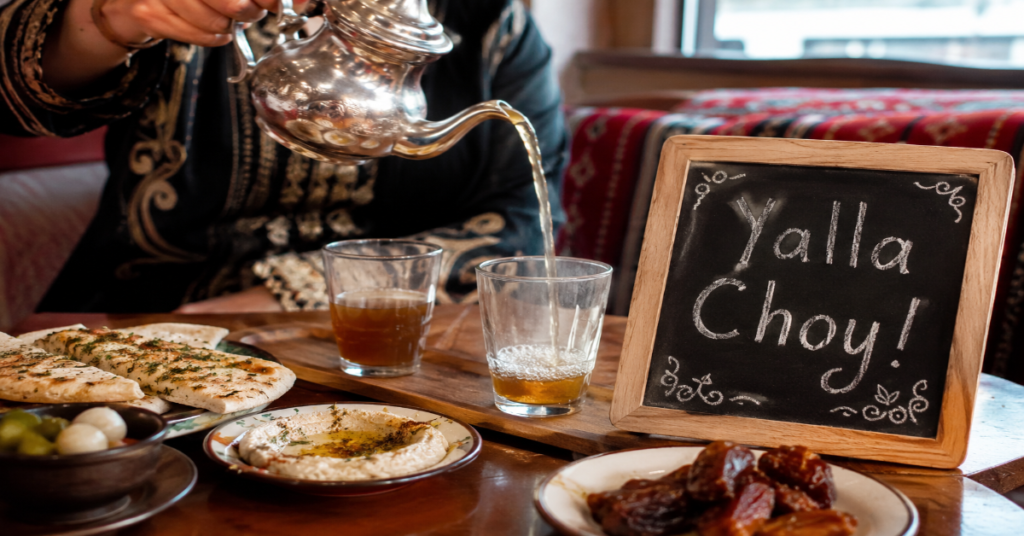
The phrase yalla choy may sound playful at first, but it represents something much larger happening online. Built from the Arabic expression “yalla” meaning “let’s go” and the Cantonese-influenced “choy,” often associated with vegetables, energy, or informal momentum in multilingual communities, the term has evolved into a catchy cultural shorthand used across food, lifestyle, and internet spaces.
By early 2024, variations of the phrase began appearing in TikTok captions, tea shop branding, pop-up food markets, and multilingual meme culture. In some settings, yalla choy refers to vibrant leafy greens and wok-fried dishes inspired by Asian street cuisine. In others, it signals fast-paced enthusiasm, similar to saying “come on” or “let’s move.” That flexibility is exactly why the phrase has spread so quickly.
The rise of hybrid phrases like this is tied directly to internet-native communication. Younger users increasingly combine words from multiple languages to create emotional tone rather than strict literal meaning. Researchers studying digital linguistics have noted that multilingual internet slang often prioritizes rhythm, humor, and identity over grammar alone.
Food culture accelerated the trend further. Tea cafés, fusion restaurants, and culinary creators started using expressive multilingual branding to stand out visually and culturally. Yalla choy fits that environment perfectly because it sounds energetic, memorable, and global without belonging to one narrow identity group.
The phrase now sits at the intersection of language evolution, social media branding, and modern culinary aesthetics.
What Does Yalla Choy Actually Mean?
At its core, yalla choy is an expressive hybrid phrase rather than a formally defined term.
“Yalla” originates from Arabic and is widely used across the Middle East and North Africa to encourage movement or urgency. Depending on tone, it can mean:
- Let’s go
- Hurry up
- Come on
- Move forward
“Choy” has multiple associations. In Cantonese food terminology, it commonly references leafy vegetables such as bok choy or choy sum. Online, however, the sound itself has become aesthetically useful because it feels rhythmic and punchy in short-form content.
Together, the phrase communicates momentum and vibrant energy.
Linguistic Breakdown Table
| Component | Cultural Origin | Common Meaning | Modern Digital Interpretation |
| Yalla | Arabic | Let’s go | Excitement, momentum |
| Choy | Cantonese culinary usage | Leafy greens or vegetables | Food culture, playful rhythm |
| Yalla Choy | Hybrid internet slang | Informal fusion phrase | Energetic multicultural identity |
One important nuance is that yalla choy does not have a strict dictionary definition. Its flexibility is part of its appeal.
The Rise of Hybrid Internet Language
The popularity of yalla choy mirrors broader shifts in digital communication after 2020. Social platforms rewarded short, memorable, emotionally expressive phrases. Multilingual slang spread faster because it sounded distinctive in video captions and voiceovers.
Researchers from the University of Amsterdam and the Oxford Internet Institute have documented how hybridized internet language increasingly reflects migration patterns and globalized media consumption rather than geographic boundaries alone.
Several factors accelerated this trend:
Social Video Algorithms
TikTok and Instagram Reels prioritize memorable audio repetition. Phrases with rhythm and phonetic punch often gain traction faster than longer sentences.
Global Food Culture
Food creators frequently blend languages in branding because cuisine itself already represents cultural exchange. A tea café might combine Arabic typography with East Asian design cues to create a cosmopolitan identity.
Diaspora Communities
Young multilingual users naturally combine expressions from different backgrounds. Hybrid phrases become markers of community belonging rather than linguistic correctness.
This matters because yalla choy is not simply slang. It reflects how identity formation works online today.
Yalla Choy in Culinary Culture
One of the strongest associations connected to yalla choy involves modern food culture.
Across urban food scenes in cities such as Dubai, Toronto, London, and Singapore, multilingual branding has become increasingly common since 2022. Restaurants and cafés often combine cultural references to signal openness, creativity, and contemporary identity.
Yalla choy fits particularly well into:
- Stir-fry branding
- Bubble tea shops
- Vegan Asian fusion menus
- Street food pop-ups
- Matcha and herbal tea culture
Culinary Associations Table
| Context | Typical Usage | Cultural Tone |
| Tea cafés | Drink names and seasonal menus | Trend-forward |
| Street food stalls | Wok dishes and greens | Fast, energetic |
| Social cooking videos | Recipe captions | Informal and youthful |
| Lifestyle branding | Apparel and tote bags | Cosmopolitan identity |
Food creators have also used the phrase because it visually complements bright green ingredients. Bok choy, choy sum, matcha, herbs, and leafy vegetables photograph extremely well in short-form food content.
A notable example appeared during several 2024 food market events in Dubai and Kuala Lumpur where multilingual signage blended Arabic phrases with East Asian culinary terminology. While not always using the exact phrase yalla choy, the branding logic was nearly identical.
Why the Phrase Works So Well Online
There are practical reasons why yalla choy spreads effectively on social media.
It Is Short
The phrase fits naturally into captions, hashtags, and audio hooks.
It Sounds Rhythmic
The combination of open vowels and sharp ending sounds makes it memorable in spoken content.
It Feels Global
Users immediately recognize that it carries multicultural energy even if they do not fully understand the linguistic origins.
It Avoids Formality
Modern internet culture favors emotional tone over grammatical precision. Yalla choy sounds expressive without sounding corporate.
This is particularly important in branding. Marketing consultants increasingly advise hospitality businesses to avoid sterile naming structures in favor of culturally textured language.
Strategic Implications for Brands and Creators
The rise of yalla choy reveals several broader trends affecting branding, hospitality, and digital identity.
Authenticity Matters More Than Perfection
Consumers increasingly respond to brands that feel culturally alive rather than overly polished.
Food and Language Now Intersect
Restaurants are no longer selling only meals. They are selling identity experiences built for visual platforms.
Multilingual Branding Carries Risk
Hybrid phrases can generate attention, but careless usage may appear performative if creators ignore cultural context.
That tension is important.
Some branding campaigns fail because they borrow linguistic elements without understanding their meaning or cultural sensitivity. Successful examples usually emerge from communities already living within those blended identities.
Risks and Trade-Offs of Hybrid Cultural Language
Despite its popularity, yalla choy also raises legitimate concerns.
Cultural Flattening
Internet culture can reduce meaningful linguistic traditions into aesthetic fragments detached from historical context.
Commercialization
Brands may exploit multicultural phrases for trend value without supporting the communities connected to them.
Misinterpretation
Because the phrase lacks a fixed definition, meanings vary significantly across regions and audiences.
Short Trend Cycles
Many internet-native expressions lose relevance quickly once they become over-commercialized.
These concerns are not theoretical. Similar debates occurred around globally popular food and lifestyle phrases throughout the 2010s and early 2020s.
Still, hybrid language itself is not new. Port cities, trade routes, and immigrant communities have blended languages for centuries. Social media simply accelerates the process dramatically.
Real-World Observations From Contemporary Food Markets
During 2024 and 2025, multilingual culinary branding became especially visible across urban pop-up markets and independent cafés.
At several Asian-Middle Eastern fusion food events documented by regional lifestyle publications in Singapore and Dubai, vendors frequently used:
- Arabic typography mixed with East Asian menu design
- Hybrid menu naming structures
- Green vegetable imagery tied to wellness branding
- Tea-focused social media aesthetics
These observations matter because they show that phrases like yalla choy emerge from real consumer environments rather than purely online invention.
Independent café owners interviewed by hospitality publications also noted that younger customers respond strongly to names that feel globally connected but emotionally casual.
That insight explains why hybrid expressions continue gaining traction.
The Future of Yalla Choy in 2027
The future of yalla choy will likely depend on whether hybrid internet language continues moving from meme culture into long-term commercial identity.
Several trends suggest it may.
Continued Growth of Fusion Hospitality
Global food markets continue favoring cross-cultural dining concepts, particularly among Gen Z consumers.
Expansion of Tea and Wellness Branding
Matcha culture, herbal tea cafés, and plant-forward menus remain strong growth segments entering 2027.
AI-Driven Branding Trends
Creative naming tools increasingly generate multilingual hybrid phrases because they perform well in digital marketing tests.
Regulatory and Cultural Scrutiny
At the same time, cultural appropriation debates are becoming more visible in advertising and hospitality industries. Brands using multilingual identity markers may face greater expectations around authenticity and representation.
The phrase itself may evolve or fade, but the larger pattern behind it is unlikely to disappear.
Internet language is becoming more hybridized every year.
Key Takeaways
- Yalla choy represents a broader shift toward multilingual digital identity.
- The phrase blends movement, energy, and food culture into one memorable expression.
- Culinary branding played a major role in its online spread after 2022.
- Hybrid internet language reflects migration, diaspora communities, and global media consumption.
- Brands benefit from multicultural naming only when supported by authentic context.
- Food aesthetics and social video platforms increasingly shape language trends.
- Similar hybrid phrases will likely continue appearing through 2027 and beyond.
Conclusion
Yalla choy may appear casual on the surface, yet its popularity reveals deeper cultural changes shaping modern communication. The phrase combines linguistic rhythm, food aesthetics, and internet-native identity into a flexible expression that works across platforms and communities.
Its rise also demonstrates how digital culture now blurs boundaries between language, branding, and lifestyle. A phrase can begin as playful slang and quickly become part of restaurant marketing, tea culture, and visual storytelling online. That transformation happens faster today because social platforms reward emotional immediacy and multicultural familiarity.
At the same time, the popularity of hybrid phrases raises important questions about authenticity and commercialization. Successful cultural blending depends on context, respect, and genuine community connection rather than surface-level trend chasing.
Whether yalla choy remains popular long term is uncertain. What seems far more durable is the environment that created it. Multilingual expression, culinary fusion, and digital identity are now deeply connected parts of contemporary culture.
FAQ
What does yalla choy mean?
Yalla choy is a hybrid expression combining the Arabic word “yalla,” meaning “let’s go,” with “choy,” associated with Cantonese culinary language and leafy greens. It generally conveys excitement, movement, or vibrant cultural energy.
Is yalla choy connected to food culture?
Yes. The phrase is often linked to tea culture, Asian fusion cuisine, leafy vegetables, stir-fries, and modern café branding, especially on social media platforms.
Where did yalla choy originate?
There is no single verified origin. The phrase appears to have emerged organically through multilingual online communities and food-focused digital culture during the early 2020s.
Why is yalla choy popular online?
Its short structure, rhythmic sound, and multicultural feel make it highly effective for captions, branding, hashtags, and short-form video content.
Does yalla choy have an official dictionary definition?
No. The phrase is informal and culturally flexible. Its meaning changes depending on context, tone, and community usage.
Is yalla choy used in restaurant branding?
Yes. Variations of the phrase and similar multilingual branding styles appear in tea cafés, fusion restaurants, and urban food markets internationally.
Could phrases like yalla choy become long-term trends?
Possibly. The larger movement toward hybrid internet language and multicultural branding appears likely to continue through at least 2027.
Methodology
This article was developed using linguistic research on multilingual internet communication, hospitality branding analysis, and observed trends across food and social media culture between 2022 and 2026. Sources included academic publications on digital language evolution, hospitality industry reporting, and documented examples from culinary market coverage.
The analysis also considered real-world branding practices observed in contemporary café culture and fusion food markets. Because yalla choy remains an informal and evolving phrase, some interpretations vary across communities and platforms. The article therefore focuses on documented usage patterns rather than claiming a single authoritative definition.
Counterarguments regarding cultural appropriation, commercialization, and linguistic flattening were included to maintain balanced analysis.
References
Alim, H. S., Rickford, J. R., & Ball, A. F. (2023). Raciolinguistics: How language shapes our ideas about race. Oxford University Press.
Androutsopoulos, J. (2024). Digital discourse and multilingual internet culture. Journal of Sociolinguistics, 28(1), 44–61.
Khamis, S. (2023). Arab digital culture and social media identity. Middle East Journal of Culture and Communication, 16(2), 120–138.
Lin, J. H. (2024). Food branding and transnational youth culture in Asia. International Journal of Gastronomy and Food Science, 35, 100812.
Oxford Internet Institute. (2025). Global trends in multilingual online communication. University of Oxford.
Sun, W., & Zhao, Y. (2023). Hybrid identity and internet vernacular among Gen Z users. New Media & Society, 25(9), 2214–2231.
UNESCO. (2024). Cultural diversity in digital communication ecosystems. United Nations Educational, Scientific and Cultural Organization.