
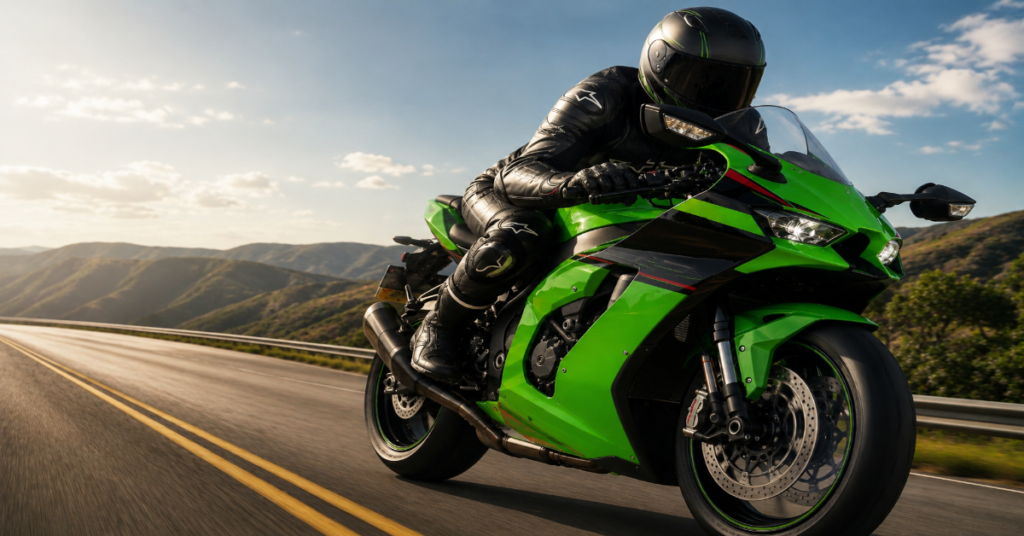
If you searched for cavazaque, you were probably looking for Kawasaki. The term is not an official manufacturer name, but it closely matches how some users hear or spell “Kawasaki” in casual speech, multilingual search, marketplace listings and voice-to-text queries. The real company behind the intent is Kawasaki Motors, a Japanese powersports manufacturer best known for Ninja motorcycles, Jet Ski personal watercraft, off-road bikes, ATVs and utility side-by-sides.
That clarification matters because a misspelled search can lead buyers toward weak listings, counterfeit parts, unofficial dealer pages or outdated model information. Kawasaki is a major global manufacturer with official regional websites, dealer locators, warranty programs and published model catalogs. If a page uses “cavazaque” to sell a bike, part or service, the reader should treat that spelling as a search clue rather than proof of authenticity.
Kawasaki’s current product universe is wide. Its European site lists motorcycle categories such as EV/HEV, hypersport, supersport and sport, supernaked, sport tourer, adventure tourer, retro sport, classic, urban cruiser, A2 bikes and motocross/enduro. The same official navigation lists other products including MULE, ATV and Jet Ski. In the U.S., Kawasaki Motors Corp., U.S.A. describes itself as a distributor of motorcycles, ATVs, side x sides, electric balance bikes and personal watercraft.
This guide explains what cavazaque usually means, how Kawasaki’s 2026 lineup is organized, how it compares with Yamaha, where buyers should find official dealers and what risks matter before purchasing.
What “Cavazaque” Usually Means
Cavazaque is best understood as a search variant of Kawasaki. It may appear because of pronunciation, keyboard error, regional spelling habits or automatic transcription. Search behavior often bends brand names toward sound rather than official spelling, especially when the word comes from another language.
The important point is simple: Kawasaki is the brand. Cavazaque is the search trail.
That distinction helps in three practical ways. First, it tells shoppers to verify the official spelling before comparing prices. Second, it helps mechanics and parts buyers avoid compatibility mistakes. Third, it protects consumers from pages that mimic brand demand without offering official dealer support.
Kawasaki itself does not market under the word cavazaque. Official Kawasaki pages use the Kawasaki name, Kawasaki Motors branding and specific registered product names such as Ninja, Z, Versys, Vulcan, KLR, KX, MULE and Jet Ski.
Kawasaki Motors at a Glance
Kawasaki Motors is part of the wider Kawasaki industrial group. Its powersports identity is rooted in motorcycles, engines, racing and recreational vehicles. Public company history records show Kawasaki motorcycle engine production beginning in the early 1950s, with Kawasaki Motors later separated as a wholly owned subsidiary of Kawasaki Heavy Industries in 2021.
Today, Kawasaki’s value comes from three overlapping strengths:
- Performance motorcycle engineering
- Off-road and utility vehicle durability
- Strong brand ownership of the Jet Ski personal watercraft identity
That mix makes Kawasaki different from many motorcycle-only brands. A buyer may enter the ecosystem through a Ninja 500, then later consider a KLR dual-sport, a MULE side-by-side for property work or a Jet Ski for recreation.
Kawasaki 2026 Product Map
Kawasaki’s official 2026 product pages show a broad powersports catalog. The European site highlights 2026 models including the Z1100, Z1100 SE, Ninja ZX-10R, Ninja ZX-10RR, Versys 1100 SE, KLE500 and KLE500 SE. The U.S. press pages also show the 2026 KLR650 lineup returning with several variants.
| Product Family | Category | Typical Buyer | Core Use |
| Ninja | Sport and supersport motorcycles | Street riders, track-day riders | Performance riding |
| Z | Supernaked motorcycles | Urban riders, experienced commuters | Aggressive street riding |
| Versys | Adventure touring | Long-distance riders | Touring and mixed road use |
| KLR | Dual-sport | Practical adventure riders | Road and light off-road |
| KX | Motocross | Racers, off-road riders | Competition dirt riding |
| Vulcan | Cruiser | Comfort-focused street riders | Relaxed road riding |
| MULE | Utility side x side | Farmers, landowners, crews | Work and hauling |
| Brute Force | ATV | Trail riders, utility users | Off-road riding and work |
| Jet Ski | Personal watercraft | Recreation buyers | Water performance |
What Models Are in Kawasaki’s Motorcycle Lineup?
Kawasaki’s motorcycle range is built around clear riding identities rather than one generic platform.
Ninja
The Ninja family is Kawasaki’s most recognizable motorcycle badge. It covers accessible sport bikes, middleweight machines and high-performance ZX models. The 2026 Ninja ZX-10R and ZX-10RR appear in Kawasaki Europe’s featured 2026 vehicle list, showing continued emphasis on superbike positioning.
The Ninja name matters because it gives Kawasaki instant recognition with new riders. Even people who do not follow motorcycles often know the Ninja badge.
Z
The Z series is Kawasaki’s naked performance line. It removes the full sport-bike fairing and gives riders a more upright, street-focused machine. Kawasaki Europe lists the Z1100 and Z1100 SE as new 2026 featured vehicles.
The Z identity is important because it captures riders who want torque, presence and everyday usability without the committed posture of a supersport bike.
Versys
Versys models focus on upright touring comfort and practical road mileage. The 2026 Versys 1100 SE appears in Kawasaki Europe’s featured vehicle list.
This segment matters because adventure touring has become one of the strongest global motorcycle categories. Riders want luggage capacity, comfort and rough-road tolerance without necessarily buying a full off-road machine.
KLR
The KLR650 is one of Kawasaki’s most durable dual-sport nameplates. Kawasaki’s U.S. motorcycle press release index lists a 2026 KLR650 lineup, describing the model as a staple in the dual-sport range.
Its appeal is not luxury. It is simplicity, range, serviceability and value.
KX and KLX
KX models serve motocross and competition-style off-road riding. KLX models cover trail and dual-sport needs. These bikes help Kawasaki maintain credibility with riders who care about suspension, ground clearance, dirt performance and rugged maintenance cycles.
Kawasaki Beyond Motorcycles
The biggest mistake in many cavazaque searches is assuming Kawasaki only means bikes. Kawasaki Motors Corp., U.S.A. explicitly distributes motorcycles, ATVs, side x sides, electric balance bikes and personal watercraft.
ATVs
Kawasaki’s ATV identity is anchored by Brute Force models. These are used for recreation, hunting, property maintenance and rural work. Kawasaki Europe’s 2026 featured products include the Brute Force 450 T-Cat, which shows the ATV category remains active.
Side x Sides
Kawasaki side x sides include MULE utility vehicles and Teryx recreation models. Kawasaki’s U.S. Teryx page describes the two-passenger and four-passenger Teryx lineup as recreational side x sides built for adventure riding.
MULE vehicles are more work-focused. They are commonly associated with farms, estates, job sites and land management.
Jet Ski Personal Watercraft
Jet Ski is one of Kawasaki’s most valuable product identities. Kawasaki continues to sell 2026 Jet Ski personal watercraft, including the Jet Ski Ultra 160LX with three-passenger seating, a 1498cc engine and a deep-V hull.
This is one reason Kawasaki’s brand influence is larger than motorcycle sales alone. “Jet Ski” became widely used as a category term, even though it originated as a Kawasaki product name.
Kawasaki vs Yamaha: How They Compare
Kawasaki and Yamaha are often compared because both are Japanese powersports brands with strong motorcycle, off-road and watercraft histories. The difference is not that one is universally better. The difference is personality, product fit and ownership priorities.
| Comparison Point | Kawasaki | Yamaha |
| Brand personality | Mechanical, aggressive, performance-forward | Smooth, refined, broad lifestyle appeal |
| Sport bikes | Strong Ninja and ZX identity | Strong R-series identity |
| Naked bikes | Z series is central to brand image | MT series is highly competitive |
| Dual-sport reputation | KLR is durable and practical | Tenere and WR-style heritage appeal to adventure riders |
| Watercraft identity | Jet Ski brand heritage | WaveRunner brand strength |
| Utility vehicles | Strong MULE reputation | Strong recreational and utility presence |
| Best fit | Riders wanting punchy character and Kawasaki styling | Riders wanting smooth delivery and wide dealer familiarity |
A buyer choosing between Kawasaki and Yamaha should start with the use case, not the logo. For a sport-bike identity, Kawasaki’s Ninja badge carries exceptional recognition. For smooth everyday power delivery, many riders gravitate toward Yamaha. For work utility, Kawasaki’s MULE line is a serious factor.
Where to Find an Official Kawasaki Dealer
The safest path is always the official Kawasaki website for your country or region. Kawasaki regional sites include dealer tools and official product catalogs. The European homepage displays a “Find a dealer” option, while the U.S. site is the main source for American product, warranty and dealer information.
Before buying, verify:
- Dealer status through an official Kawasaki site
- VIN history
- Warranty eligibility
- Recall completion
- Service records
- Whether the model is region-approved
- Whether parts match the exact model year and market
This matters more when the listing uses unofficial spelling such as cavazaque, because misspelled listings may be harmless user error or a sign of a low-quality seller.
Buyer Risks and Trade-Offs
Kawasaki’s reputation is strong, but every purchase has trade-offs.
| Risk Area | Why It Matters | Practical Check |
| Insurance cost | Sport models may carry higher premiums | Quote insurance before purchase |
| Gray-market imports | Warranty and parts support may be limited | Confirm region and VIN |
| Counterfeit parts | Popular models attract imitation parts | Buy OEM or reputable aftermarket |
| Ergonomics | Sport bikes can be tiring | Sit on the model before buying |
| Dealer distance | Service access varies by region | Confirm nearest official dealer |
| Used bike abuse | Performance bikes may be ridden hard | Inspect tires, chain, brakes and service history |
One hidden limitation is parts-market confusion. A Ninja 400, Ninja 500, ZX-6R and ZX-10R are all “Ninja” bikes, but they are not interchangeable platforms. Buyers searching casually for “cavazaque Ninja parts” may land on parts that fit the wrong engine, frame or model year.
Strategic Implications for Riders
Kawasaki’s 2026 lineup shows a company balancing heritage with expansion.
The Ninja and ZX models protect the performance image. The Z series gives Kawasaki a streetfighter identity. Versys and KLR models serve riders who want distance and practicality. MULE and Brute Force vehicles keep the company relevant outside urban motorcycle culture. Jet Ski watercraft maintain the brand’s recreational authority on water.
This multi-category structure gives Kawasaki resilience. A slowdown in sport bikes does not erase utility vehicle demand. A weak watercraft season does not eliminate dual-sport or off-road interest. That is one reason Kawasaki remains visible across motorcycles, rural equipment, racing and recreation.
Real-World Ownership Insight
A practical Kawasaki ownership pattern appears across many markets: entry through used sport bikes, then migration into different powersports products.
A rider may begin with a Ninja 300, 400 or 500 because the Ninja badge is familiar and the used market is active. Later, that rider may move to a Z model for commuting, a Versys for touring or a KLR for rough-road travel. In rural areas, Kawasaki may enter the household through a MULE or Brute Force rather than a motorcycle.
This is a brand ecosystem effect. Kawasaki benefits because the name travels across pavement, dirt, farms and water.
Three Original Insights for 2026
1. Misspelled searches create a safety problem
The word cavazaque looks harmless, but it can route users toward unofficial pages. For a motorcycle buyer, that can mean wrong parts, fake accessories or sellers who cannot verify ownership history. The fix is simple: search the official Kawasaki spelling before purchase.
2. Kawasaki’s strongest advantage is category transfer
Kawasaki does not depend on one product identity. Ninja, MULE and Jet Ski reach different buyers. Few powersports brands have that much cross-category recognition.
3. Dealer verification is more valuable than a small discount
A cheaper used Kawasaki can become expensive if warranty status, recall work or model-year compatibility is unclear. A verified dealer or well-documented private seller usually offers better long-term value than the lowest listing price.
The Future of Cavazaque in 2027
The future of cavazaque is really the future of Kawasaki search demand. Three trends are likely to shape that demand in 2027.
Electrification Will Keep Expanding Slowly
Kawasaki already lists EV/HEV as a motorcycle category on its European site. That does not mean electric motorcycles will replace gasoline models quickly. Battery cost, charging access, range anxiety and rider expectations remain real constraints.
A realistic 2027 forecast is selective expansion, not full transformation.
Adventure and Utility Demand Will Stay Strong
The 2026 appearance of models such as the Versys 1100 SE, KLE500 and KLE500 SE on Kawasaki Europe’s featured list suggests continued attention to adventure and mixed-use riding. Utility products such as MULE, ATV and Jet Ski also keep Kawasaki connected to outdoor recreation and work use.
Watercraft Will Remain a Brand Anchor
Kawasaki’s continued 2026 Jet Ski product activity shows the watercraft category remains important. By 2027, expect more emphasis on comfort, onboard tech, fishing configurations and premium recreational features rather than radical category disruption.
Takeaways
- Cavazaque is best treated as a misspelling or phonetic version of Kawasaki.
- Kawasaki’s official catalog reaches far beyond motorcycles.
- The Ninja badge remains central to Kawasaki’s global performance image.
- The KLR, Versys and KLE families show the importance of dual-sport and adventure demand.
- MULE, Brute Force and Jet Ski products make Kawasaki a wider powersports brand.
- Dealer verification matters because wrong parts, gray-market imports and unsupported used bikes can create expensive problems.
- Kawasaki’s 2027 direction is likely to mix selective electrification, adventure growth and continued utility vehicle strength.
Conclusion
Cavazaque may be an unofficial spelling, but the search intent behind it is clear. Most users are looking for Kawasaki, one of the best-known names in motorcycles and powersports. The brand’s strength comes from more than one famous bike. Ninja sport models, Z naked bikes, Versys touring machines, KLR dual-sports, KX dirt bikes, MULE utility vehicles, Brute Force ATVs and Jet Ski watercraft all sit inside the same broader identity.
For buyers, the most important step is verification. Use official Kawasaki sites, confirm dealer status, match parts by exact model year and avoid vague listings that rely on misspelled brand terms. Kawasaki can be a strong long-term ownership choice, but only when the machine, paperwork and support network are clear.
In 2026, Kawasaki remains a performance brand, a work-utility brand and a recreation brand at the same time. That range explains why even a misspelled search can lead to a serious buying decision.
FAQ
Is cavazaque a real motorcycle company?
No. Cavazaque is not an official motorcycle company. It is usually a misspelling or phonetic version of Kawasaki, the Japanese powersports manufacturer.
What does cavazaque mean in motorcycle searches?
It usually means the searcher is looking for Kawasaki motorcycles, especially Ninja sport bikes, Z naked bikes, KLR dual-sports or Kawasaki parts.
What models are in Kawasaki’s motorcycle lineup?
Kawasaki’s lineup includes Ninja, Z, Versys, Vulcan, KLR, KLX, KX, Eliminator, W-series and newer EV/HEV categories depending on region.
Does Kawasaki make vehicles besides motorcycles?
Yes. Kawasaki Motors Corp., U.S.A. distributes motorcycles, ATVs, side x sides, electric balance bikes and personal watercraft.
How do Kawasaki motorcycles compare with Yamaha?
Kawasaki often emphasizes aggressive performance and sharp styling, while Yamaha is often associated with smooth delivery, refinement and broad lifestyle appeal. The better choice depends on the rider’s use case.
Where can I find an official Kawasaki dealer?
Use the official Kawasaki website for your country or region. Kawasaki regional sites provide official product catalogs and dealer-finding tools.
Is a used Kawasaki safe to buy?
A used Kawasaki can be a good buy if the VIN, title, service history, recall status and model-year parts compatibility are verified. Avoid vague listings that cannot prove ownership or maintenance history.
Methodology
This article was prepared from the supplied editorial production brief, official Kawasaki product pages, Kawasaki Motors Corp., U.S.A. descriptions, Kawasaki Europe’s 2026 model listings, Kawasaki U.S. press-page search results and publicly available company-history records. The analysis prioritizes official manufacturer information where possible.
Known limitations: product availability varies by region, dealer stock changes frequently and used-market pricing can move quickly. Before publication, a human editor should manually verify all citations, check official regional product pages, confirm dealer tools are live and validate any local pricing or availability claims.
Suggested disclosure: This article was drafted with AI assistance and reviewed and verified by the editor. All data, citations and claims should be independently confirmed before publication.
References
Kawasaki Motors Corp., U.S.A. (2026). Kawasaki motorcycles, ATV, SxS, Jet Ski personal watercraft. Kawasaki.
Kawasaki Motors Europe. (2026). Motorcycles and other products. Kawasaki Europe.
Kawasaki Motors Corp., U.S.A. (2026). Motorcycle press releases. Kawasaki.
Kawasaki Motors Corp., U.S.A. (2026). Teryx side x side lineup. Kawasaki.
Kawasaki Motors Corp., U.S.A. (2026). Jet Ski Ultra 160LX personal watercraft. Kawasaki.
Wikipedia contributors. (2026). Kawasaki Motors. Wikipedia.