
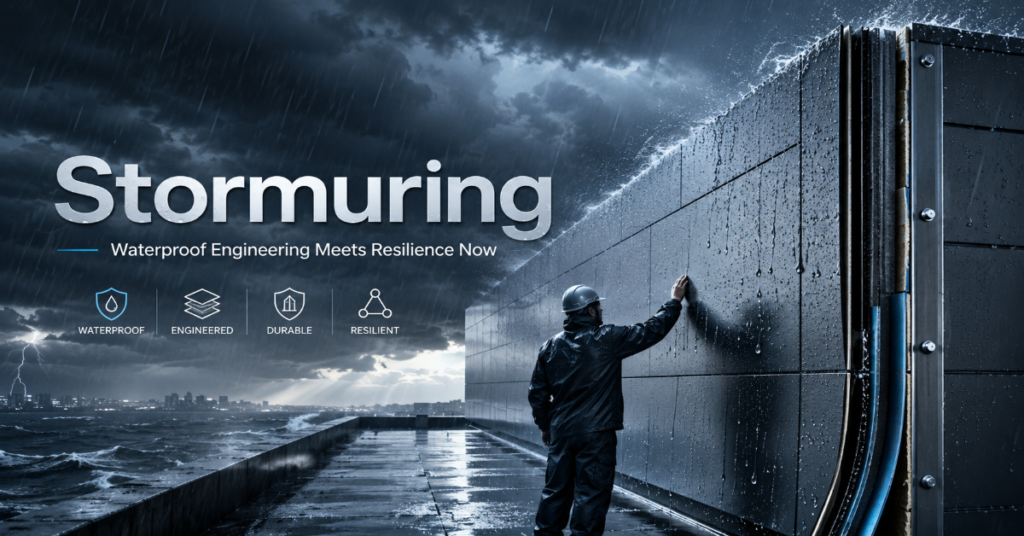
Stormuring is one of those terms that looks simple until context changes its meaning. In construction, stormuring usually points to waterproof mortar, especially Hey’di Stormuring, a fiber reinforced product used for masonry, plastering and repair work. In broader writing, the same word has started to function as a symbolic term for handling disruption with discipline, care and structural resilience.
That split meaning matters because readers may arrive with very different questions. A homeowner may want to know whether the mortar can repair a damp basement wall. A contractor may be checking water addition, working time or suitable substrates. A strategist may be using the word to describe how a company survives market shocks without becoming rigid or chaotic.
The construction meaning is the more concrete one. Hey’di’s product page describes Stormuring as a waterproof do-it-yourself multi mortar for masonry, plastering and repair. The same page says it can be used on masonry, brick, Leca and concrete, both outside and inside. The product data sheet lists practical application figures, including about 3 liters of water per 15 kg bag, material consumption of 1.7 kg per liter, maximum grain size of 1 mm and a working time of about one hour at 20 degrees Celsius and 50 percent relative humidity.
The figurative meaning is newer but useful. It turns stormuring into a language of controlled adaptation: how people, brands and organizations absorb pressure without cracking.
What Stormuring Means in Construction
In the construction context, stormuring is best understood as a waterproof, fiber reinforced mortar system for repair and rendering work. It is not just ordinary sand and cement. The fiber reinforcement helps resist cracking, while the waterproof formulation makes it suitable for exposed and moisture sensitive surfaces.
Hey’di describes its Stormuring product as a waterproof universal plaster for plastering and repair work on masonry, brick, Leca and concrete, indoors and outdoors. That makes it relevant for projects such as:
- Exterior wall rendering
- Masonry patching
- Concrete repair
- Moisture exposed basement areas
- Repairing damaged render before painting or finishing
- Small structural surface repairs where waterproofing matters
The key advantage is not that it replaces every mortar. It does not. Its value appears when the job requires adhesion, crack resistance and moisture tolerance in one material.
Stormuring Compared With Regular Mortar
| Feature | Stormuring Style Waterproof Mortar | Regular Mortar |
| Waterproofing | Built into the product design | Usually limited unless modified |
| Fiber reinforcement | Yes, in Hey’di Stormuring | Usually no |
| Crack resistance | Better suited to minor movement and repair stress | More dependent on mix quality and curing |
| Suitable surfaces | Masonry, brick, Leca and concrete, depending on product guidance | Masonry and brick, depending on mix |
| Exterior use | Designed for indoor and outdoor use | Possible, but performance varies |
| Skill sensitivity | Requires correct water ratio and surface preparation | Also sensitive, but often more forgiving on simple masonry |
| Best use case | Waterproof repair, rendering and exposed surfaces | General bedding, pointing and non-specialized masonry |
The main trade off is cost and precision. A specialized mortar often costs more than a basic mix, and it rewards careful preparation. If the wall is dirty, dusty, unstable or too dry, the product cannot compensate for poor site practice.
Technical Data That Matters on Site
Hey’di’s product data sheet gives several numbers that matter to applicators. These are not decorative details. They influence mixing, timing and coverage.
| Technical Point | Reported Value for Hey’di Stormuring | Why It Matters |
| Water addition | About 3 liters per 15 kg | Controls strength, workability and adhesion |
| Material consumption | 1.7 kg per liter | Helps estimate bag quantity |
| Maximum grain size | 1 mm | Affects finish texture and layer control |
| Working time | About 1 hour | Sets the practical application window |
| Test condition | 20°C and 50 percent RH | Real jobsite weather can shorten or extend working behavior |
A common mistake is treating the water ratio as a rough suggestion. It is not. Too much water makes mortar easier to spread, but it can weaken density, increase shrinkage and reduce durability. Too little water can make the mix stiff, poorly bonded and hard to compact.
How Stormuring Is Applied
A reliable application usually follows a disciplined sequence.
1. Inspect the Surface
The surface should be stable, clean and free of loose material. Dust, laitance, old paint, grease and crumbling render reduce bonding. This matters more with waterproof systems because failure at the substrate can mimic product failure.
2. Prepare Moisture Conditions
Masonry and concrete can pull water out of fresh mortar too quickly. Light dampening helps reduce suction, but standing water should be avoided. The goal is a controlled bond, not a soaked surface.
3. Mix With Measured Water
For Hey’di Stormuring, the technical sheet reports about 3 liters of water per 15 kg bag under standard conditions. Measure the water. Guessing creates inconsistent batches.
4. Apply Within Working Time
The reported working time is about one hour at 20°C and 50 percent relative humidity. Hot weather, wind and absorbent substrates can shorten practical handling time.
5. Cure Properly
Curing protects the mortar while hydration develops strength. Fast drying can create hairline cracks, weak surface zones and poor long term performance.
Best Surfaces for Fiber Reinforced Waterproof Mortar
Stormuring type products perform best when the base material is mineral, stable and compatible with cement based repair systems. Hey’di lists masonry, brick, Leca and concrete as suitable areas for its Stormuring product.
| Surface | Suitability | Preparation Priority |
| Concrete | Strong | Remove laitance and loose particles |
| Brick | Strong | Control suction and clean joints |
| Leca blocks | Strong | Pre-wet carefully due to absorption |
| Existing cement render | Conditional | Remove hollow or weak sections |
| Painted wall | Weak unless stripped | Coating must be removed or assessed |
| Gypsum board | Usually unsuitable | Not a typical cement mortar base |
| Wood | Unsuitable | Movement and incompatibility are major issues |
The hidden issue is not surface name alone. It is surface condition. A concrete wall with weak laitance may perform worse than old brick that has been properly cleaned and dampened.
Common Mistakes When Using Waterproof Mortar
Adding Too Much Water
This is the most common jobsite shortcut. It makes the mix easier to spread but can reduce performance. Waterproof mortar depends on density, adhesion and controlled hydration.
Applying Over Weak Material
No mortar can permanently bond to a failing base. If old render is hollow, remove it. If brick is powdering, stabilize or replace it.
Working in Harsh Weather
Wind and direct sun can dry the surface too quickly. Cold weather can slow curing and increase risk if temperatures drop too far.
Ignoring Product Documentation
Factory made rendering and plastering mortars sit within regulated performance frameworks. The European Commission notes that construction products in the EU are governed through harmonized rules under the Construction Products Regulation, including references to mortar standards such as EN 998-1 for rendering and plastering mortars.
Treating Waterproof Mortar as a Full Waterproofing System
This is a serious practical blind spot. A waterproof repair mortar can help resist moisture, but water problems may also require drainage, flashing, joint treatment, membranes, ventilation or structural correction. The product is one layer of the solution, not always the entire system.
Stormuring as a Creative and Strategic Concept
The second meaning of stormuring is figurative. It is used as a neologism that blends the force of a storm with the discipline of nurturing, structuring or quiet strategic movement.
In branding and strategy, stormuring describes a specific kind of resilience. It is not panic. It is not passive endurance. It is controlled transformation under pressure.
A company practicing this kind of stormuring might:
- Protect its core product while adjusting its business model
- Respond to climate risk without empty sustainability language
- Rebuild customer trust after disruption
- Update brand identity without abandoning recognition
- Use crisis pressure as a reason to strengthen operations
The construction metaphor works because the same logic applies. A wall does not survive storms because it is decorative. It survives because its layers, bonds and weak points have been handled before stress arrives.
Stormuring in Business, Branding and Digital Culture
As a brand concept, stormuring can be useful when a company needs to communicate change without sounding reckless. Many organizations make the mistake of framing every pivot as reinvention. That can alienate customers, employees and partners.
Stormuring offers a calmer language:
| Business Problem | Stormuring Response |
| Market disruption | Stabilize core value before changing outward messaging |
| Brand confusion | Clarify identity before launching new campaigns |
| Climate pressure | Upgrade operations before making bold public claims |
| AI transformation | Change workflows while protecting human accountability |
| Reputation damage | Repair trust through visible process improvements |
This is where the word becomes more than a novelty. It gives writers and strategists a way to describe transformation that is firm, careful and non-destructive.
Real World Impact: Why the Word Fits 2026
Stormuring feels timely because two pressures are rising at the same time.
First, buildings face increasing moisture, flooding and weather stress in many regions. Waterproofing trade coverage has connected recent extreme weather events with the need for more resilient waterproofing approaches, materials and standards.
Second, organizations face their own storms: AI disruption, cost pressure, supply chain uncertainty, climate regulation and changing public expectations. The term works because it connects material resilience with strategic resilience.
That does not mean every company should start using the word in public messaging. New terms can sound forced. Stormuring is strongest when the context already involves weather, resilience, repair, construction, transformation or controlled change.
Risks and Trade Offs
Stormuring has risks in both meanings.
In construction, the risks are practical:
- Higher cost than basic mortar
- Greater dependence on correct preparation
- Misuse as a complete waterproofing solution
- Weak results if applied over unstable surfaces
- Performance problems when mixed outside manufacturer guidance
In strategy, the risks are linguistic:
- The word may confuse readers if not defined
- It may sound invented in formal business writing
- It may become vague if used as a catch all term for change
- It can hide hard decisions behind soft resilience language
The safest editorial approach is to define the term immediately, then use it sparingly.
The Future of Stormuring in 2027
The future of stormuring in 2027 will likely split into two tracks.
The construction track is more stable. Demand for moisture resistant repair systems is likely to remain relevant as buildings face heavier rain, flood exposure and maintenance pressure. Climate resilience studies continue to show that building adaptation often lags behind policy ambition, especially in existing residential buildings. That gap creates a practical need for better repair materials, better installer training and clearer maintenance planning.
The language track is less certain. Stormuring may become a useful niche term in branding and resilience writing, or it may remain a small creative expression. Its success will depend on whether writers use it precisely. If it means “resilient transformation under pressure,” it has value. If it becomes a vague synonym for innovation, it will lose force.
The best 2027 use case is likely hybrid: construction brands, climate adaptation firms, restoration companies and strategy consultants using stormuring to connect physical durability with organizational resilience.
Key Takeaways
- Stormuring is not a single meaning term. It can refer to waterproof mortar or a strategic resilience concept.
- Hey’di Stormuring is a fiber reinforced waterproof mortar used for masonry, plastering and repair on mineral surfaces.
- Correct water measurement matters because the product data sheet gives a specific ratio of about 3 liters per 15 kg bag.
- Waterproof mortar should not be treated as a complete waterproofing strategy in every case.
- As a metaphor, stormuring works best when it describes controlled change rather than generic innovation.
- The term has strong editorial potential in construction, climate resilience, branding and transformation content.
Conclusion
Stormuring is useful because it carries two connected ideas at once. In construction, it points to a waterproof, fiber reinforced mortar built for repair, rendering and moisture exposed surfaces. In strategy and creative writing, it describes disciplined resilience: the ability to absorb pressure, repair weak points and adapt without losing structural identity.
The construction meaning should always come first when the reader is looking for product guidance. The figurative meaning should be handled carefully and defined early. Used well, stormuring gives builders a practical material language and gives strategists a sharper metaphor for change.
The word’s future depends on precision. If it stays grounded in repair, resilience and controlled transformation, it can become more than a passing keyword. It can become a useful way to talk about strength under pressure.
FAQ
What is stormuring?
Stormuring can mean a fiber reinforced waterproof mortar used in construction or a figurative concept for controlled resilience under pressure. The construction meaning is more established, especially through Hey’di Stormuring.
What is Hey’di Stormuring used for?
Hey’di says Stormuring is used for masonry, plastering and repair work on masonry, brick, Leca and concrete, both indoors and outdoors.
How much water does Stormuring need?
Hey’di’s product data sheet lists water addition at about 3 liters per 15 kg bag under stated technical conditions. Always follow the current product sheet before application.
Is stormuring better than regular mortar?
It is better for certain jobs, especially waterproof repair and rendering where fiber reinforcement and moisture resistance matter. Regular mortar may still be suitable for simpler masonry tasks.
Can stormuring stop leaks?
It may help with moisture resistant repairs, but active leaks can require drainage, membranes, joint sealing or structural correction. Waterproof mortar should not automatically be treated as a full waterproofing system.
What does stormuring mean in branding?
In branding, stormuring means guiding change under pressure without losing identity. It is useful for resilience, transformation and crisis response narratives when clearly defined.
What are the biggest mistakes when applying stormuring?
The biggest mistakes are adding too much water, applying over dusty or weak surfaces, ignoring weather conditions and skipping proper curing.
Methodology
This article was prepared from the provided Postcard.fm production prompt, including the required keyword brief, structure rules, search intent and editorial requirements. Product details were checked against Hey’di’s public product page and product data sheet. Construction context was cross checked against EU construction product information and mortar standard references. Climate resilience context was supported by recent waterproofing and building adaptation sources. No firsthand product test was conducted for this draft, so all application guidance should be verified against the current manufacturer data sheet and local building requirements before publication.
References
European Commission. (n.d.). Construction Products Regulation. European Commission.
Hey’di AS. (2023). Hey’di Stormuring produktdatablad. Hey’di.
Hey’di AS. (2024). Hey’di Stormuring 15kg. Hey’di.
Seebauer, S. (2025). Ambition and reality in the climate resilience of residential buildings. ScienceDirect.
Waterproof! Magazine. (2025). Waterproofing in the era of climate change: Building for an uncertain future.