
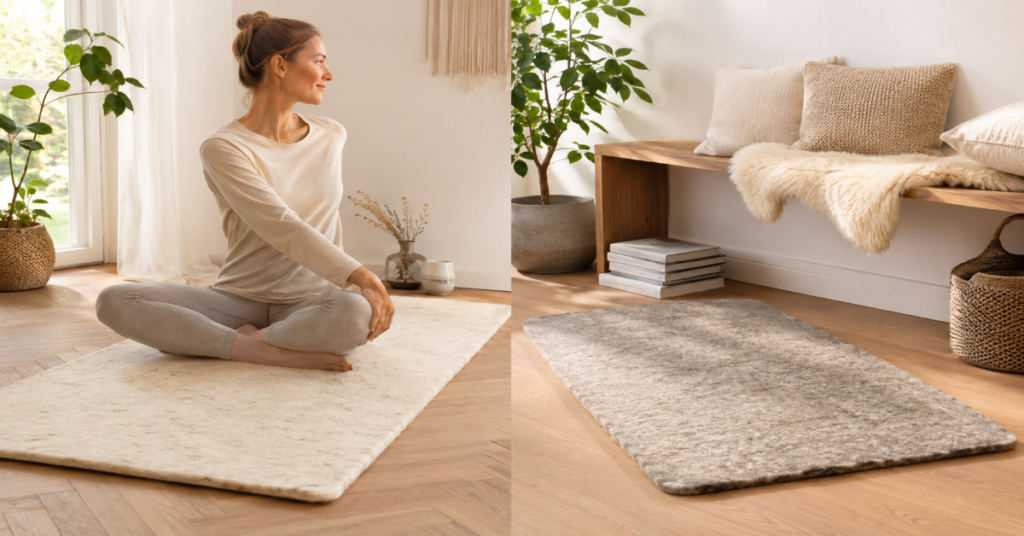
Wollmatten are mats or rugs made from natural wool fibers, usually sheep wool, designed to add warmth, softness and practical comfort to indoor spaces. They are commonly used as floor coverings, bedside mats, wellness mats and yoga mats, including Schurwoll-Yogamatten made from virgin sheep wool. Their appeal comes from a simple fact: wool is not just decorative. It performs.
A good wool mat can insulate cold floors, absorb excess moisture, reduce noise, resist odors and create a softer surface underfoot. This makes it useful in modern homes where tile, marble, laminate or concrete flooring can feel cold and hard during winter.
The growing interest in sustainable home materials has also pushed wool back into the design conversation. Many shoppers now want products that last longer, feel better and rely less on petroleum-based synthetics. Wool fits that shift because it is renewable, biodegradable and naturally functional.
That does not mean every wool mat is worth buying. Quality varies widely. Some mats are tightly felted and firm. Others are loosely woven and decorative. Some are ideal for yoga while others belong in bedrooms or living rooms. This guide explains how Wollmatten work, where they make sense, what they cost in practical terms and how to care for them correctly.
What Are Wollmatten?
Wollmatten are floor mats, rugs or wellness mats produced from wool fibers. The word comes from German: “Wolle” means wool and “Matten” means mats. In practical use, the term can describe several product types, including decorative wool rugs, felted floor mats, sheep wool yoga mats and compact wool pads for wellness or home use.
The best versions are made from natural sheep wool, sometimes labeled as Schurwolle, meaning virgin wool taken from a living sheep. This type of wool has not been reclaimed from old textiles and usually offers better fiber strength, softness and resilience.
Wool mats are often chosen for three reasons:
- They feel warm and soft underfoot.
- They regulate moisture better than many synthetic mats.
- They age more gracefully when properly maintained.
That combination explains why they appear in both traditional homes and modern wellness interiors.
Why Wool Works So Well as a Mat Material
Wool has a unique fiber structure. Each strand contains natural crimp, which creates tiny air pockets. Those air pockets help trap warmth while still allowing the material to breathe.
This is why wool can feel warm in winter without becoming clammy in normal indoor conditions. It does not behave like plastic-based fibers that often trap heat on the surface while resisting moisture movement.
Wool also contains lanolin, a natural waxy substance that helps repel dirt and moisture. While processing can reduce lanolin levels, many wool products still retain some natural resistance.
The main performance benefits include:
Thermal comfort: Wool helps insulate against cold flooring.
Moisture buffering: Wool can absorb and release moisture from the air.
Odor resistance: Wool tends to hold fewer smells than many synthetic fibers.
Sound absorption: Dense wool mats soften foot noise and reduce room echo.
Natural fire resistance: Wool is harder to ignite than many synthetic textiles.
These qualities make Wollmatten especially useful in homes where comfort and material quality matter.
Common Types of Wollmatten
Felted Wool Mats
Felted wool mats are dense, compact and stable. They are made by matting wool fibers together through pressure, moisture and friction. These mats often have a clean, minimalist look and are useful in bedrooms, offices, meditation rooms and yoga spaces.
Woven Wool Mats
Woven mats are made on looms and can range from simple flatweaves to decorative patterned rugs. They are often used in living rooms, dining spaces and hallways.
Hand-Knotted Wool Rugs
These are usually more expensive and decorative. They can last decades if made well and maintained properly. They are best treated as long-term home investments rather than temporary floor coverings.
Schurwoll-Yogamatten
These yoga mats are usually made from virgin sheep wool. They are popular for restorative yoga, meditation, breathwork and relaxation practices because they feel warmer and softer than rubber or PVC mats.
Wool Blend Mats
Some products combine wool with cotton, jute or synthetic backing. These can improve grip or reduce cost, but buyers should check the actual wool percentage before assuming the mat is fully natural.
Wollmatten vs Synthetic Mats
| Feature | Wollmatten | Synthetic Mats |
| Main material | Natural sheep wool | Polyester, polypropylene, PVC, nylon or foam |
| Surface feel | Warm, soft and organic | Often smooth, rubbery or uniform |
| Insulation | Strong natural insulation | Varies by thickness and foam density |
| Moisture behavior | Absorbs and releases moisture | Often resists absorption |
| Odor control | Naturally better in many cases | May retain odor over time |
| Fire resistance | Naturally high | Depends on chemical treatment |
| Durability | Long-lasting when cared for | Often shorter lifespan |
| Sustainability | Renewable and biodegradable | Usually petroleum-based |
| Cleaning | Requires gentler care | Often easier to wash aggressively |
| Price | Usually higher upfront | Usually cheaper upfront |
The comparison shows why wool mats are not direct substitutes for cheap synthetic mats. They serve a different buyer: someone who values comfort, material quality and longevity.
Best Uses for Wollmatten at Home
Living Rooms
In living rooms, wool mats add warmth and texture. They also reduce echo, especially in rooms with hard flooring, bare walls or minimal furniture. A medium-thick woven wool mat can make a seating area feel more complete without looking overly formal.
Bedrooms
Bedrooms are one of the best places for wool mats. A soft mat beside the bed creates immediate comfort on cold mornings. Wool also suits bedroom design because it feels calm, quiet and natural.
Home Offices
Hard floors can make home offices noisy and visually cold. A wool mat under or near the desk adds softness and helps absorb sound. For rolling chairs, however, a dense flatweave is better than a thick pile mat.
Yoga and Wellness Rooms
For restorative yoga, meditation and breathwork, wool mats offer warmth and a grounded surface. They are less suited to sweaty power yoga unless they include a washable cover or are used with a towel.
Children’s Rooms
Dense wool mats can soften play areas and make floors warmer. Parents should choose low-shedding, securely backed designs and avoid loose fibers for very young children.
Practical Insight Table: Which Wool Mat Fits Which Space?
| Space | Best Type | Ideal Thickness | Key Benefit | Watch Out For |
| Bedroom | Felted or woven wool mat | 10 to 20 mm | Warmth and softness | Sun fading near windows |
| Living room | Woven wool rug | 8 to 18 mm | Texture and sound control | Furniture pressure marks |
| Yoga room | Schurwoll-Yogamatte | 8 to 15 mm | Comfort and insulation | Grip during sweaty practice |
| Hallway | Flatwoven wool runner | 5 to 10 mm | Durability | Needs anti-slip backing |
| Nursery | Dense organic wool mat | 10 to 18 mm | Soft surface | Regular cleaning needed |
| Home office | Low-pile wool mat | 5 to 10 mm | Acoustic comfort | Chair wheels may snag pile |
How Wollmatten Support Sustainable Living
The sustainability case for wool is strong, but it should be discussed honestly.
Wool is renewable because sheep grow new fleece every year. It is biodegradable under the right conditions and does not depend on fossil-fuel polymers in the same way as many synthetic mats. A durable wool mat can also reduce replacement waste because it may last many years.
The strongest sustainability advantage comes from longevity. A product that lasts 10 to 20 years usually has a better use profile than a cheaper item replaced every few seasons.
Still, wool is not impact-free. Sheep farming requires land, water and responsible animal care. Dyeing, shipping and chemical treatments can also affect the final environmental footprint. Buyers who care about sustainability should look for clear sourcing, responsible wool standards, low-impact dyes and transparent production information.
The Comfort Advantage: Why Wool Feels Different
Many people describe wool mats as warmer, but the real difference is surface response. Wool does not feel cold in the same way tile, stone or synthetic foam can. It cushions the foot gently and returns to shape because of natural fiber elasticity.
This matters in homes where people walk barefoot. A wool mat beside a bed, under a reading chair or in a meditation corner changes how the room feels physically, not just visually.
In wellness settings, this tactile comfort can support longer relaxation sessions. For restorative yoga, a wool surface feels less clinical than rubber and more inviting than cotton.
Risks and Trade-Offs
Higher Upfront Cost
Good Wollmatten usually cost more than synthetic alternatives. The price reflects raw material cost, processing and sometimes handcraft. Budget buyers may find wool expensive at first.
Cleaning Requires Care
Wool should not be scrubbed harshly or soaked unnecessarily. Excess water can distort shape or encourage mildew if drying is poor.
Not Ideal for Every Yoga Style
For hot yoga or intense flow sessions, wool may feel too warm and may not grip like rubber. It works better for calm, grounding practices.
Possible Shedding
New wool mats can shed lightly. This usually reduces over time, but low-quality products may continue shedding.
Moth Risk
Untreated wool can attract moths if stored poorly. Clean, dry storage is essential.
How to Choose the Right Wollmatte
Start with the use case. A living room mat and a yoga mat should not be chosen by the same criteria.
For home décor, look for:
- Dense weave
- Stable edges
- Good backing or natural grip
- Colorfast dyes
- Suitable pile height
For yoga or meditation, look for:
- Virgin sheep wool
- Firm backing
- Washable or removable cover
- Low chemical treatment
- Enough thickness for comfort
For children’s spaces, look for:
- Low shedding
- Non-slip backing
- Easy spot cleaning
- Certified materials where possible
A simple rule helps: the more movement the mat will face, the flatter and denser it should be.
How to Care for a Wollmatte Properly
Wool care is not difficult, but it is different from synthetic care.
Regular Cleaning
Vacuum gently once or twice a week using suction only. Avoid aggressive brush rollers because they can pull fibers.
Spot Cleaning
Blot spills immediately. Do not rub. Use a clean cloth, lukewarm water and wool-safe detergent if needed.
Drying
Air dry completely. Never leave a wool mat damp on the floor. Moisture trapped underneath can damage both the mat and flooring.
Deep Cleaning
For large mats, professional wool rug cleaning is safer than home soaking. For small yoga mats, follow the manufacturer’s care label.
Storage
Store clean, dry and rolled rather than folded. Add natural moth deterrents such as cedar where suitable.
Are Wollmatten Good for Allergies?
Wool is often misunderstood in allergy discussions. Many people assume wool causes allergies, but true wool fiber allergy is uncommon. Irritation is more often caused by coarse fibers, dust buildup or chemical treatments.
Properly maintained wool mats can be suitable for many allergy-sensitive homes because wool holds dust rather than allowing it to circulate easily. The key is regular vacuuming and choosing low-shedding, high-quality wool.
People with severe sensitivities should test a small product first before buying a large mat.
Cost and Long-Term Value
A cheap synthetic mat may seem more practical at checkout, but replacement cycles matter.
Example:
| Product Type | Estimated Price | Expected Use Life | Approximate Annual Cost |
| Budget synthetic mat | $25 | 2 years | $12.50 |
| Mid-range synthetic rug | $80 | 5 years | $16 |
| Quality wool mat | $180 | 12 years | $15 |
| Premium wool rug | $400 | 20 years | $20 |
This does not mean every expensive wool mat is good value. It means a well-made wool mat can become cost-efficient when used for many years.
The hidden value is comfort. If a mat improves daily use of a bedroom, office or wellness space, the practical return can be higher than the price suggests.
The Future of Wollmatten in 2027
The future of Wollmatten in 2027 will likely be shaped by three forces: sustainability expectations, wellness design and material transparency.
Consumers are becoming more skeptical of vague eco claims. By 2027, brands selling wool mats will face stronger pressure to show where the wool comes from, how animals are treated and what chemicals are used in dyeing or finishing.
Wellness interiors will also keep influencing demand. Home yoga rooms, meditation corners and quiet workspaces have become normal features in many homes. Wool fits that trend because it offers comfort without looking like fitness equipment.
The biggest constraint is price. Natural wool will remain more expensive than synthetic mass-market materials. That means growth will likely come from buyers who care about durability, comfort and design rather than the lowest possible price.
In practical terms, 2027 should bring more hybrid designs: wool tops with natural rubber backing, washable wool covers and clearer labeling around wool origin.
Key Takeaways
- Wollmatten are best understood as performance home textiles, not just decorative rugs.
- Wool’s strength comes from insulation, moisture regulation, sound absorption and natural resilience.
- Schurwoll-Yogamatten are excellent for calm yoga, meditation and restorative practice.
- Wool is sustainable when sourcing, animal welfare and durability are taken seriously.
- The right mat depends on location, thickness, backing and cleaning expectations.
- Wool mats cost more upfront but can offer strong long-term value.
- Poor maintenance is the fastest way to shorten the life of a wool mat.
Conclusion
Wollmatten make sense for people who want a warmer, softer and more natural home environment. They are not the cheapest mats on the market and they do require thoughtful care, but their advantages are real. Wool insulates cold floors, manages moisture, softens sound and adds a tactile quality that synthetic materials often imitate but rarely match.
The best use cases are clear: bedrooms, living rooms, quiet workspaces, meditation areas and restorative yoga settings. Buyers should choose based on construction rather than appearance alone. A dense flatweave suits busy spaces, a felted mat works well in minimalist rooms and a Schurwoll yoga mat belongs in slower wellness practice.
For sustainable interiors, wool remains one of the most credible natural materials available. The smartest purchase is not the thickest or most expensive option. It is the mat that fits the room, the routine and the level of care the owner can realistically provide.
FAQ
Welche Wollmatte eignet sich am besten für Yoga?
A Schurwoll-Yogamatte is usually best for yoga, especially restorative yoga, meditation and gentle stretching. It offers warmth, softness and good moisture comfort. For hot yoga or fast flow practice, a rubber mat may offer better grip.
Wie pflege ich eine Wollmatte richtig?
Vacuum gently, blot spills immediately and use wool-safe detergent for spot cleaning. Avoid soaking the mat. Always dry it fully before placing it back on the floor.
Welche Vorteile hat Schafschurwolle gegenüber Synthetik?
Schafschurwolle is warmer, more breathable and more naturally odor-resistant than many synthetic fibers. It is also renewable and biodegradable, while most synthetic mats are petroleum-based.
Sind Wollmatten für Allergiker geeignet?
They can be suitable for many allergy-sensitive users if they are low-shedding and cleaned regularly. Dust buildup, not wool itself, is often the bigger issue. Sensitive users should test a small wool product first.
Wie nachhaltig sind Wollmatten wirklich?
They can be highly sustainable when made from responsibly sourced wool and used for many years. The main concerns are animal welfare, dyeing processes, shipping distance and whether the brand provides transparent sourcing.
Können Wollmatten auf Fußbodenheizung verwendet werden?
Many wool mats can be used with underfloor heating, but thickness matters. Very dense or thick mats may reduce heat transfer. Always check the manufacturer’s instructions before use.
Sind Wollmatten für Kinderzimmer geeignet?
Yes, dense wool mats can work well in children’s rooms because they are soft, warm and durable. Choose low-pile, low-shedding designs with secure backing for safer everyday use.
Methodology
This article was prepared using the provided Postcard.fm production brief, the supplied keyword details and general material knowledge about wool mats, home textiles and wellness use cases. The analysis focuses on practical buyer decisions, common product types, maintenance requirements and realistic trade-offs.
No private product testing was conducted for this draft. Before publication, a human editor should verify all product claims, sustainability references, care recommendations and any brand-specific statements against manufacturer documentation or independent textile sources.