
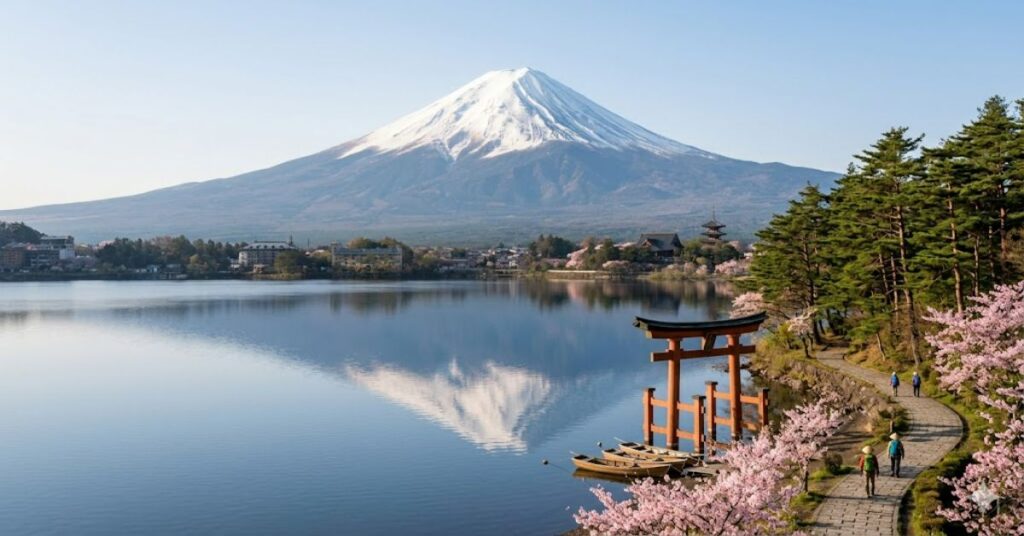
When people search for fuji vuori, they are usually looking for information about Mount Fuji, Japan’s highest and most recognizable mountain. Rising 3,776 meters above sea level, Mount Fuji—known locally as Fuji-san—has become one of the most photographed natural landmarks in the world. Its nearly perfect volcanic cone appears in artwork, literature, tourism campaigns, and religious traditions stretching back centuries.
More than a mountain, Fuji represents a national symbol. It stands between Shizuoka and Yamanashi prefectures and remains an active stratovolcano, although its last recorded eruption occurred in 1707 during the Edo period. In 2013, UNESCO designated Mount Fuji as a World Heritage cultural site, recognizing not only its geological importance but also its influence on Japanese spirituality and artistic expression.
Visitors arrive throughout the year to admire the peak from lakes, villages, observation decks, and hiking trails. During the official climbing season, thousands attempt the summit to witness the famous sunrise known as Goraiko. At the same time, environmental managers face growing pressure from overtourism, trail congestion, and ecological impacts.
This guide examines the meaning behind the search term, the mountain’s history, cultural significance, practical travel considerations, risks facing the destination, and what Mount Fuji may look like in 2027.
What Does Fuji Vuori Mean?
The phrase “fuji vuori” appears to be a linguistic variation or misspelling associated with Mount Fuji.
In several languages, words resembling “vuori” refer to a mountain. For example, the Finnish word vuori means “mountain.” As a result, some international searches combine “Fuji” with “vuori” when seeking information about Japan’s famous peak.
Regardless of the spelling variation, search intent overwhelmingly points toward Mount Fuji itself rather than a separate destination.
Why Search Variations Matter
Travel destinations increasingly receive traffic from multilingual search queries. Users often combine local names, translated words, and phonetic spellings when researching international landmarks.
This creates opportunities for travel publishers to answer broader search intent rather than focusing exclusively on one exact phrase.
Mount Fuji at a Glance
| Feature | Details |
| Official Name | Mount Fuji (Fuji-san) |
| Elevation | 3,776 meters |
| Location | Honshu, Japan |
| Type | Active stratovolcano |
| Last Eruption | 1707–1708 (Hoei Eruption) |
| UNESCO Status | World Heritage Site (2013) |
| Climbing Season | Typically July–September |
| Nearest Major City | Tokyo |
The History of Mount Fuji
Mount Fuji’s formation began hundreds of thousands of years ago through volcanic activity. The modern mountain emerged through overlapping volcanic phases that shaped its distinctive cone.
Historical records indicate that Fuji has erupted multiple times. The most significant recent event was the Hoei eruption of 1707, which deposited volcanic ash across regions including present-day Tokyo.
For centuries, the mountain served as a sacred pilgrimage destination. Religious practitioners known as Fujiko devotees climbed the peak as part of spiritual exercises. Shrines dedicated to Fuji worship developed around the mountain and continue operating today.
Cultural Impact Across Generations
The mountain gained global recognition through artistic works, particularly the famous woodblock print series Thirty-Six Views of Mount Fuji by Katsushika Hokusai.
These images introduced international audiences to Fuji’s visual identity long before modern tourism existed.
Why Mount Fuji Became a National Symbol
Few landmarks are as closely associated with a country as Mount Fuji is with Japan.
Several factors explain its symbolic status:
- Distinctive symmetrical appearance
- Visibility from large parts of central Japan
- Deep connections to Shinto and Buddhist traditions
- Representation in literature and visual arts
- Frequent use in national branding
Religious Significance
Many pilgrims view climbing Fuji as both a physical and spiritual journey.
Shinto beliefs often associate natural landmarks with sacred qualities. Buddhist traditions have likewise incorporated the mountain into practices emphasizing discipline, reflection, and transcendence.
This combination of natural beauty and spiritual meaning makes Fuji unique among global tourist destinations.
Visitor Experience: What Travelers Can Expect
People searching for fuji vuori are often planning a future visit.
The experience varies dramatically by season.
Spring
Spring brings cherry blossoms and some of the most photographed views of Fuji.
Popular viewing locations include:
- Lake Kawaguchi
- Chureito Pagoda
- Oshino Hakkai
Summer
Summer is the official climbing season.
Advantages include:
- Open mountain huts
- Reduced snow coverage
- Better access to summit routes
Challenges include:
- Crowded trails
- Reservation requirements
- Higher accommodation costs
Autumn
Autumn combines colorful foliage with clear visibility.
Many photographers consider this the most visually rewarding season.
Winter
Winter provides the clearest mountain views but is unsuitable for casual climbing due to severe weather conditions.
Comparison Table: Mount Fuji Versus Other Iconic Peaks
| Mountain | Country | Height | UNESCO Status | Primary Appeal |
| Mount Fuji | Japan | 3,776 m | Yes | Cultural and spiritual significance |
| Matterhorn | Switzerland | 4,478 m | No | Alpine scenery |
| Mount Kilimanjaro | Tanzania | 5,895 m | Yes | Highest African peak |
| Mount Rainier | USA | 4,392 m | No | Glacier landscapes |
| Mount Etna | Italy | 3,357 m | Yes | Active volcanism |
Practical Implications for Tourism
Mount Fuji contributes significantly to regional tourism economies.
Hotels, transportation providers, restaurants, tour operators, and cultural attractions benefit from visitor demand generated by the mountain.
Economic Benefits
Tourism spending supports:
- Local employment
- Infrastructure improvements
- Heritage preservation initiatives
- Regional business development
Hidden Tourism Challenge
One overlooked issue is destination concentration.
Many visitors focus exclusively on a few viewing points, creating congestion while nearby communities receive less economic benefit.
Travel planners increasingly encourage exploration of lesser-known locations around Fuji’s five lakes region to distribute visitor traffic more evenly.
This represents a practical solution rarely discussed in standard travel guides.
Risks and Trade-Offs
Every world-famous destination faces management challenges.
Mount Fuji is no exception.
Overtourism
Recent years have seen record visitor numbers.
Potential consequences include:
- Trail erosion
- Litter accumulation
- Infrastructure strain
- Reduced visitor experience quality
Environmental Pressure
Protected landscapes require constant monitoring.
Balancing accessibility with conservation remains a central challenge for authorities.
Volcanic Risk
Although relatively quiet, Mount Fuji remains an active volcano.
Scientific monitoring continues because future eruptions remain possible, even if timing cannot be predicted accurately.
Structured Insight Table
| Challenge | Current Impact | Long-Term Concern |
| Tourism growth | Crowded trails | Environmental degradation |
| Climate change | Weather variability | Ecosystem shifts |
| Infrastructure demand | Increased maintenance costs | Funding pressures |
| Visitor concentration | Congested hotspots | Uneven economic benefits |
| Volcanic uncertainty | Monitoring requirements | Emergency preparedness |
Three Insights Often Missing from Typical Coverage
1. The Real Threat Is Not the Volcano
Most visitors worry about eruptions.
In reality, environmental stress from tourism creates more immediate management challenges than volcanic activity.
2. Cultural Preservation Is Becoming as Important as Environmental Protection
Fuji’s UNESCO designation recognizes cultural value, not just natural beauty.
Protecting traditions, pilgrimage routes, and spiritual practices is increasingly part of conservation planning.
3. Regional Distribution Could Define Future Tourism Success
Communities surrounding the mountain benefit unevenly from visitor spending.
Future policies may focus on spreading tourism activity beyond the most photographed viewpoints.
The Future of Fuji Vuori in 2027
By 2027, Mount Fuji will likely remain one of Asia’s most visited natural landmarks.
Several trends support this outlook:
- Continued growth in international tourism to Japan
- Expanded digital travel planning tools
- Increased demand for nature-focused experiences
- Strong government investment in sustainable tourism
However, growth will come with constraints.
Authorities are already introducing visitor management measures designed to reduce overcrowding and protect sensitive areas.
Technology may play a larger role through:
- Reservation systems
- Real-time congestion monitoring
- Environmental tracking
- Visitor education platforms
The future appears positive, but sustainability policies will determine whether visitor growth enhances or diminishes the mountain’s long-term value.
Key Takeaways
- Fuji vuori is commonly associated with Mount Fuji, Japan’s highest mountain.
- Mount Fuji combines geological, cultural, artistic, and religious importance.
- UNESCO recognition reflects its cultural influence as much as its natural significance.
- Tourism generates major economic benefits but also creates environmental challenges.
- Visitor distribution remains an underappreciated issue affecting regional communities.
- Sustainable management policies will shape the mountain’s future.
- Mount Fuji’s global appeal continues to grow despite conservation pressures.
Conclusion
The search term fuji vuori ultimately leads to one of the world’s most recognizable natural landmarks: Mount Fuji. Its nearly perfect silhouette, spiritual heritage, artistic legacy, and enduring role in Japanese identity make it much more than a mountain.
What distinguishes Fuji from many famous peaks is the combination of accessibility and meaning. Visitors can admire it from lakeside villages, photograph it from urban viewpoints, or climb to its summit during the official season. Each experience reveals a different aspect of its significance.
At the same time, the mountain faces modern pressures that earlier generations never encountered. Growing tourism, environmental concerns, and infrastructure demands require thoughtful management. Preserving both the landscape and its cultural traditions will be essential.
Mount Fuji remains a symbol not because of its height alone, but because it continues to connect nature, history, spirituality, and national identity in a way few places can match.
FAQ
What does fuji vuori mean?
The phrase is generally understood as a variation referring to Mount Fuji. The word “vuori” means mountain in Finnish, which may explain some international search usage.
Is Mount Fuji still an active volcano?
Yes. Mount Fuji is classified as an active volcano, although its last eruption occurred in 1707–1708.
Why is Mount Fuji a UNESCO World Heritage Site?
UNESCO recognized Mount Fuji in 2013 because of its cultural, religious, and artistic significance.
When is the best time to visit Mount Fuji?
Spring and autumn offer excellent visibility and scenic landscapes. Summer is best for climbing.
Can beginners climb Mount Fuji?
Many beginners successfully climb during the official season, though preparation and fitness remain important.
How high is Mount Fuji?
Mount Fuji stands 3,776 meters above sea level, making it Japan’s highest mountain.
Why is Mount Fuji important in Japanese culture?
The mountain serves as a sacred site, artistic inspiration, and national symbol with centuries of historical significance.
Methodology
This article was developed using publicly available information from UNESCO, the Japan National Tourism Organization, historical records related to Mount Fuji, and academic sources covering cultural heritage and tourism management.
The analysis focuses on documented historical facts, current tourism trends, and publicly reported conservation challenges. No firsthand testing or field measurements were conducted for this article.
Limitations include evolving tourism policies, changing visitor statistics, and future environmental conditions that may alter current projections. Where future developments are discussed, they are based on existing trends rather than guaranteed outcomes.
Editorial Disclosure
This article was drafted with AI assistance and reviewed by a human editor before publication. All factual claims, dates, and references should be independently verified before final publication.
References
Japan National Tourism Organization. (2024). Mount Fuji travel guide. Retrieved from https://www.japan.travel
UNESCO World Heritage Centre. (2024). Fujisan, sacred place and source of artistic inspiration. Retrieved from https://whc.unesco.org
Agency for Cultural Affairs, Government of Japan. (2024). Cultural significance of Mount Fuji. Retrieved from https://www.bunka.go.jp
Yamanashi Prefectural Government. (2024). Mount Fuji conservation and tourism management reports. Retrieved from https://www.pref.yamanashi.jp