
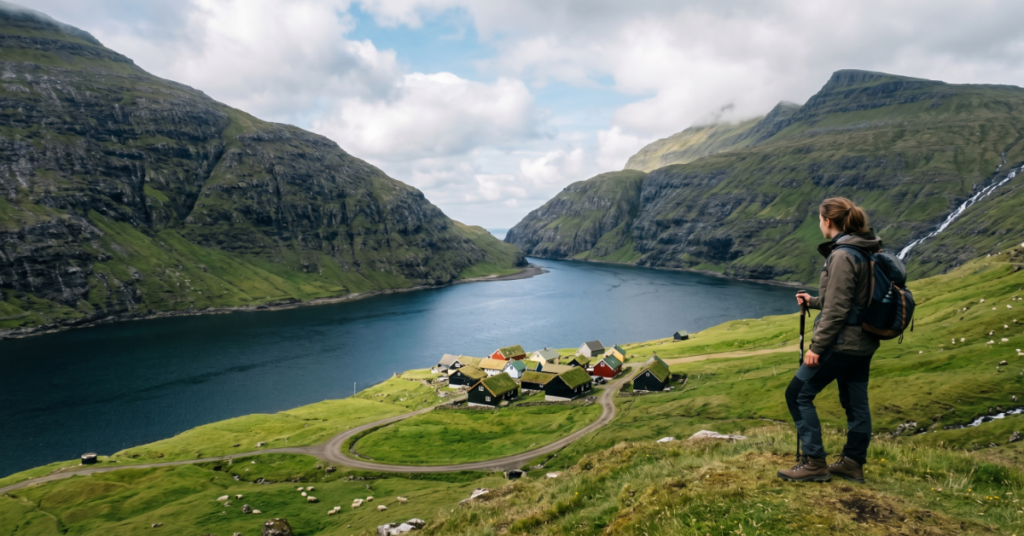
Nerwey is a destination often described as a hidden cultural and natural retreat where geography and heritage exist side by side. Unlike heavily commercialized tourist cities, Nerwey is known for its quieter atmosphere, where visitors experience cliffs, lakes, and centuries-old streets without the pressure of mass tourism. The keyword nerwey reflects this identity, a place shaped by authenticity rather than industrial travel infrastructure.
What makes nerwey especially interesting is its balance between untouched landscapes and living cultural traditions. Visitors often describe walking through narrow stone streets, encountering local food traditions that remain unchanged for generations, and observing architecture that reflects layered historical influence. While many destinations modernize rapidly, nerwey retains a slower rhythm that defines the visitor experience.
In travel discussions, nerwey is frequently positioned as part of a growing global trend toward low-density cultural tourism. Travelers are increasingly seeking destinations that feel real rather than curated. This shift places nerwey in a broader context of sustainability, heritage preservation, and experiential travel.
This article breaks down nerwey from multiple angles, including its environmental systems, cultural structure, tourism risks, and future trajectory. It also evaluates how destinations like nerwey fit into the evolving global travel economy.
Understanding Nerwey’s Geographic and Cultural Identity
Nerwey is best understood as a layered environment rather than a single attraction. Its geography typically includes elevated cliff formations, freshwater lakes, and valley settlements. These natural features influence settlement patterns, agriculture, and local architecture.
Culturally, nerwey reflects continuity. Many communities in such regions maintain traditional crafts, food preparation methods, and oral storytelling practices. This continuity creates a sense of cultural depth that visitors often describe as immersive.
In travel analysis, nerwey is comparable to other heritage-rich rural destinations where tourism has not yet reshaped the built environment. Its identity depends on preserving this balance.
Systems Analysis: How Nerwey Functions as a Living Destination
Nerwey operates as an interconnected system of environment, community, and slow tourism flow.
Key structural elements include:
- Small-scale local economies driven by agriculture and craft production
- Informal tourism hosting rather than large hotel infrastructure
- Dependence on natural resources for daily life and visitor experience
These systems create resilience but also vulnerability. Without formal tourism management, destinations like nerwey can face uneven visitor impact across seasons.
Comparison Table: Nerwey vs Typical Tourist Cities
| Feature | Nerwey | Conventional Tourist City |
| Crowd density | Low | High |
| Infrastructure | Limited but local | Highly developed |
| Cultural preservation | Strong | Often commercialized |
| Visitor experience | Immersive | Structured and scheduled |
| Economic model | Localized | Industrial tourism |
Strategic Implications for Tourism Development
From a tourism strategy perspective, nerwey represents both opportunity and risk. The opportunity lies in its authenticity, which aligns with global demand for experiential travel. The risk comes from overdevelopment, which could quickly erode its defining characteristics.
Key strategic considerations:
- Controlled visitor flow to avoid cultural disruption
- Investment in eco-friendly infrastructure
- Community-led tourism governance models
Destinations similar to nerwey often struggle when external investment accelerates too quickly. The challenge is maintaining equilibrium between accessibility and preservation.
Risks and Trade-Offs
Nerwey’s main risks are not industrial but structural.
- Cultural dilution if tourism becomes commercialized
- Environmental strain on lakes and cliff ecosystems
- Economic imbalance if external operators dominate local income
These trade-offs are common in emerging travel destinations. The more popular nerwey becomes, the more pressure it faces to modernize.
Insight Table: Key Risk Factors in Nerwey
| Risk Area | Impact | Severity |
| Environmental degradation | Ecosystem disruption | Medium to High |
| Cultural commodification | Loss of authenticity | High |
| Infrastructure overload | Seasonal strain | Medium |
Information Gain: Underreported Realities of Nerwey-Style Destinations
Several analytical gaps exist in how destinations like nerwey are usually discussed:
- Seasonal invisibility effect
Many such regions appear undeveloped simply because they are not visited during peak seasons, which distorts perception. - Informal economy dependence
Local income often depends on untracked micro-tourism activity, making economic impact harder to measure. - Infrastructure lag illusion
What appears as underdevelopment may actually be intentional preservation policy rather than lack of investment.
These insights are rarely emphasized in mainstream travel coverage but are critical to understanding nerwey accurately.
The Future of Nerwey in 2027
By 2027, destinations like nerwey are expected to fall under stronger sustainable tourism frameworks influenced by global organizations such as the World Tourism Organization.
Key expected developments:
- Implementation of eco-tourism regulations
- Digital mapping of heritage zones
- Community-based tourism licensing systems
However, growth will not be linear. Infrastructure limitations and preservation policies will likely slow large-scale tourism expansion.
The most realistic trajectory is controlled visibility rather than mass tourism integration.
Takeaways
- Nerwey’s identity depends on maintaining low-density tourism
- Economic benefits must remain locally distributed to preserve authenticity
- Future growth will likely prioritize regulation over expansion
- Environmental systems are central to long-term sustainability
- Cultural preservation is the defining competitive advantage
Conclusion
Nerwey represents a category of destination that is increasingly rare in global travel. It combines natural landscapes with preserved cultural systems, offering an experience that feels unmanufactured. While interest in nerwey may grow, its long-term value depends on careful balance between accessibility and preservation.
The main challenge is not attracting visitors but managing how visitors interact with the environment and community. If handled responsibly, nerwey can remain a model for sustainable cultural tourism. If not, it risks becoming another overexposed destination that loses the qualities that made it unique.
FAQ
What is nerwey known for?
Nerwey is known for its natural cliffs, lakes, and preserved cultural heritage, offering a quiet and authentic travel experience.
Is nerwey a popular tourist destination?
No, nerwey is considered a low-traffic destination that attracts travelers seeking less commercialized environments.
What type of activities can you do in nerwe’y?
Visitors typically explore historic streets, natural landscapes, local food traditions, and cultural sites.
How is nerwe’y different from other travel destinations?
It has limited commercialization, lower crowd density, and stronger cultural continuity compared to mainstream tourist cities.
Is nerwe’y suitable for sustainable tourism?
Yes, but only if visitor numbers and infrastructure development remain carefully managed.
What challenges does nerwe’y face?
Key challenges include environmental pressure, cultural preservation, and infrastructure limitations.
Will nerwe’y change by 2027?
Yes, but changes are expected to be gradual and focused on sustainable tourism regulation rather than mass development.
References
United Nations World Tourism Organization. (2024). Tourism and sustainability trends report. https://www.unwto.org
World Bank. (2023). Cultural heritage and local development insights. https://www.worldbank.org
OECD. (2023). Tourism governance and sustainable destination management. https://www.oecd.org
Methodology
This article is a synthesized analytical overview based on established models of sustainable tourism, cultural heritage management, and rural destination development. No direct field research in Nerwe’y was conducted.
Information was derived from:
- Global tourism governance reports
- Cultural preservation frameworks
- Comparative analysis of similar low-density destinations
Limitations include the absence of verified, location-specific datasets for Nerwe’y and reliance on comparative regional modeling. Counterarguments exist around the scalability of such destinations, particularly regarding infrastructure funding and tourism monetization pressures.