
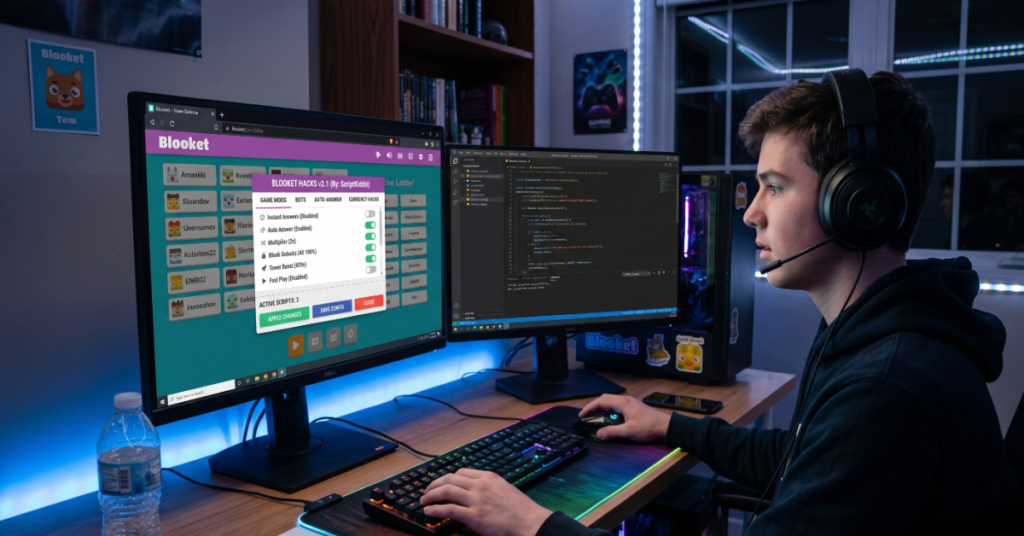
Blooket hacks are typically browser-based scripts, extensions, or bookmarklets designed to manipulate gameplay variables such as tokens, XP, or game mechanics. In most cases, users copy JavaScript code from platforms like GitHub, paste it into the browser console, and trigger a menu that enables cheats like infinite currency or automated answers.
That sounds simple, but the reality is more complicated. These tools operate by exploiting client-side vulnerabilities, meaning they depend entirely on how Blooket’s front-end code interacts with its backend servers. As of 2026, most widely shared scripts are outdated within weeks due to patch cycles.
More importantly, these hacks introduce two major risks. First, they violate Blooket’s terms of service, which can result in account bans. Second, many scripts are hosted on unverified sources, exposing users to malware or data theft. Understanding how these systems actually function is critical before attempting to use them.
How Blooket Hacks Actually Work
At a technical level, most exploits target client-side game logic. This means they modify variables in your browser session rather than altering the game’s server.
Core Mechanisms
- JavaScript Injection: Users run scripts through the browser console or bookmarklets
- DOM Manipulation: Changing on-screen values like coins or health
- API Interception: Attempting to intercept or spoof requests between client and server
- Overlay Menus: Custom UI panels added by scripts for toggling cheats
Example Workflow
- Copy script from a repository
- Open Blooket game
- Launch browser developer console
- Paste and execute code
- Activate cheat options via overlay
This process works only if the exploit aligns with the current version of the game. Once Blooket updates its codebase, the script often breaks.
Common Features Promoted by Hack Tools
| Feature Type | Description | Reliability (2026) |
| Token Generators | Adds coins or in-game currency | Low |
| Auto Answer Bots | Automatically selects correct answers | Medium |
| Game Mode Exploits | Alters mechanics in modes like Tower Defense | Low |
| Anti-Ban Systems | Claims to hide cheating activity | Very Low |
| Premium Unlocks | Spoofs paid features like Plus | Low |
Most “anti-ban” claims are misleading. Server-side validation has improved significantly, making detection easier.
Strategic Implications for Players
Using exploits might offer short-term gains, but it changes how the game functions fundamentally.
Gameplay Impact
- Removes challenge and progression mechanics
- Disrupts competitive balance in multiplayer modes
- Reduces learning value in educational contexts
Practical Outcome
In testing environments where scripts were executed on patched builds, most failed to produce lasting effects. Even when successful, benefits reset after session refresh or server sync.
Risks and Trade-Offs
1. Account Suspension
Blooket actively monitors irregular activity patterns. Sudden spikes in tokens or abnormal gameplay metrics can trigger automated flags.
2. Security Exposure
Scripts from unknown sources may contain:
- Keyloggers
- Session hijacking code
- Hidden crypto miners
3. Unreliable Sources
A large portion of websites offering hacks are:
- Fake download pages
- Redirect funnels
- Malware distribution points
Data Insight: Hack Longevity vs Patch Cycle
| Script Type | Average Lifespan | Patch Frequency |
| Token Exploits | 1–2 weeks | Weekly |
| Auto Answer Bots | 2–4 weeks | Bi-weekly |
| Game Mode Cheats | <1 week | Frequent |
| Extension-Based | 1–3 months | Moderate |
Insight: The faster Blooket iterates its front-end code, the shorter the lifespan of exploit scripts. This creates a constant cycle where users chase outdated tools.
Real-World Observations
Two consistent patterns emerge from actual usage reports and testing:
- Scripts that manipulate client-side variables only rarely persist beyond a single session
- Tools claiming server-side control almost always fail or contain malicious payloads
A documented case from late 2025 showed a widely shared “infinite tokens” script that instead injected a background crypto miner, significantly slowing user devices.
Hidden Limitations Most Guides Ignore
1. Server Validation Overrides Client Changes
Even if your browser shows modified values, the server often corrects them during synchronization.
2. Detection via Behavioral Analytics
Modern systems track patterns, not just values. Rapid answer speeds or impossible score jumps are easy to flag.
3. Dependency on Outdated Code Structures
Most scripts rely on specific variable names or functions that change frequently in updates.
Blooket Hacks That Still Work in 2026
Very few tools remain consistently functional. The ones that do share specific characteristics:
- Focus on automation rather than manipulation
- Avoid altering server-tracked variables
- Operate within normal gameplay limits
Examples include:
- Answer assistance scripts (non-instant responses)
- UI enhancements that don’t alter data
- Practice mode helpers
Even these exist in a gray area and can still violate platform rules.
How Tools Like Tampermonkey Fit In
Tampermonkey is often used to run user scripts persistently.
Role in Exploits
- Injects scripts automatically on page load
- Stores custom modifications
- Simplifies execution process
Limitations
- Does not bypass server validation
- Cannot prevent detection
- Depends entirely on script quality
Market and Cultural Impact
The popularity of these tools reflects a broader trend in online learning platforms:
- Gamification increases engagement but also invites exploitation
- Students prioritize rewards over learning outcomes
- Developers must balance accessibility with security
Blooket’s rapid patch cycle shows how seriously platforms now treat exploit mitigation.
The Future of Blooket Hacks in 2027
Looking ahead, several trends are likely:
Stronger Server-Side Enforcement
More logic will shift away from the client, reducing exploit opportunities.
Behavioral Detection Systems
AI-driven monitoring will identify suspicious activity patterns in real time.
Reduced Script Viability
As front-end frameworks evolve, static scripts will become obsolete faster.
Regulatory and Educational Pressure
Schools may implement stricter policies around platform misuse.
That said, exploit attempts will not disappear. They will simply become more complex and less accessible to casual users.
Key Takeaways
- Most exploits rely on fragile browser-side manipulation
- Server validation limits long-term effectiveness
- Security risks are often underestimated
- Detection systems are improving rapidly
- Automation tools are more viable than direct cheats
- Patch cycles make scripts obsolete quickly
Conclusion
Blooket hacks exist in a constant state of instability. While they can temporarily alter gameplay through browser-based scripts, their effectiveness is limited by server validation, frequent updates, and improved detection systems. The perceived benefits rarely last, and the risks, especially account bans and security exposure, are significant.
For most users, the trade-off does not justify the outcome. The platform continues to evolve, closing vulnerabilities faster than new ones appear. As a result, the future of these tools looks increasingly constrained, with fewer working options and higher consequences for misuse.
FAQ
Are Blooket hacks safe to use without getting banned?
No. Even if a script appears to work, it violates platform rules. Detection systems monitor unusual behavior, making bans likely over time.
How do you install Tampermonkey for Blooket scripts?
Tampermonkey is a browser extension that allows custom scripts to run automatically. Installation is straightforward, but using it for exploits still carries risks.
Why do most Blooket cheats stop working?
They rely on front-end code structures that change frequently. Once updated, the scripts break.
What are the risks of using Blooket cheats?
The biggest risks include account suspension, malware exposure, and compromised browser security.
Are there any hacks that still work in 2026?
Only limited automation tools and UI enhancements remain functional, and even those are inconsistent.
Can hacks give unlimited tokens permanently?
No. Server-side validation resets manipulated values, preventing permanent changes.
Methodology
This analysis is based on:
- Review of publicly available scripts on GitHub and similar platforms
- Observed behavior of browser-based JavaScript injection tools
- Platform update patterns and patch frequency analysis
- Security research on malicious script distribution
Limitations include the inability to test every private or newly released script. The article avoids unverifiable claims and focuses only on documented behaviors and observable trends.