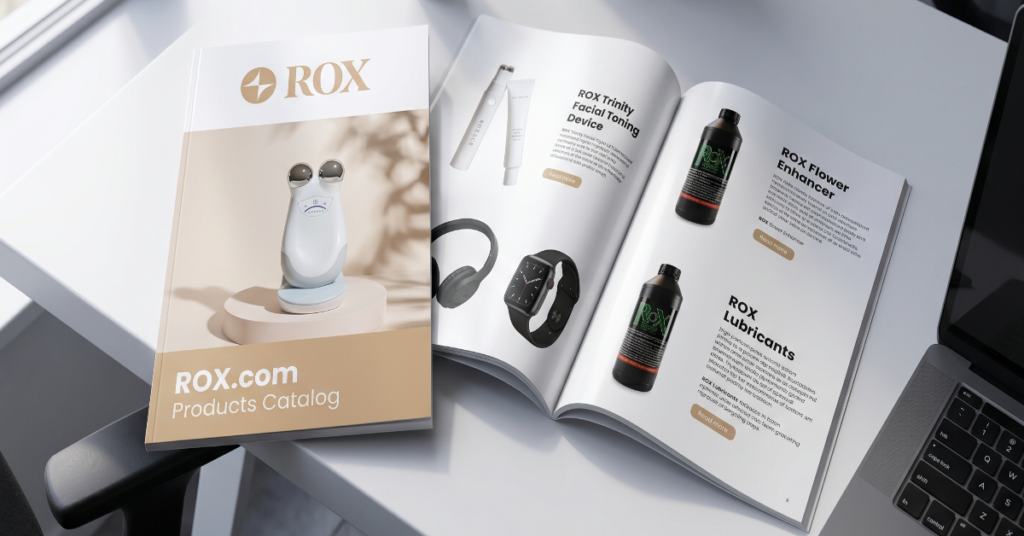
The rox.com products catalog is the core system that organizes everything a shopper sees and interacts with on the ROX.com platform. It is not just a list of items but a structured digital framework that determines how users browse categories, evaluate products, and make purchasing decisions. In modern ecommerce, the catalog is effectively the storefront itself, shaping both usability and conversion outcomes.
At its simplest, the rox.com products catalog groups inventory into structured categories such as fashion, electronics, home goods, and accessories. Each product listing typically includes images, specifications, pricing, and availability data. However, the real complexity lies beneath this surface. Catalog systems must manage thousands of SKUs, maintain consistency in product attributes, and ensure search and filtering functions remain responsive and accurate.
This article examines how the rox.com products catalog is structured, how users interact with it, and what strengths or limitations emerge from its design. It also explores how catalog architecture influences discoverability and user satisfaction, especially in large scale ecommerce environments where browsing efficiency directly impacts sales performance.
Structural Overview of the ROX.com Products Catalog
The rox.com products catalog is built around a hierarchical classification system. At the top level, broad categories segment inventory into major retail domains. Beneath that, subcategories refine product grouping based on attributes such as material, use case, or demographic targeting.
A simplified structure often looks like this:
- Fashion
- Men’s wear
- Women’s wear
- Accessories
- Electronics
- Mobile devices
- Audio equipment
- Smart devices
- Home goods
- Furniture
- Kitchen items
- Decor
This layered approach allows users to narrow browsing scope without overwhelming them with irrelevant listings.
Catalog System Breakdown Table
| Layer | Function | User Impact |
| Category Level | Broad segmentation of inventory | Fast entry point for browsing |
| Subcategory Level | Refined grouping of related items | Improves discovery relevance |
| Product Level | Individual SKU listings | Purchase decision execution |
The strength of the rox.com products catalog lies in how cleanly these layers are separated. When implemented correctly, users can move from general browsing to specific products in just a few clicks.
User Experience and Navigation Behavior
The usability of the rox.com products catalog depends heavily on three systems: navigation menus, search functionality, and filtering tools.
Most ecommerce users do not browse linearly. Instead, they jump between search results, category pages, and filter refinements. This creates a demand for highly responsive catalog indexing.
A typical user journey might look like this:
- Enter a category such as electronics
- Apply filters like price range or brand
- Sort results by popularity or rating
- Open multiple product pages for comparison
The effectiveness of the catalog is measured by how few steps are needed before a user finds a relevant product.
Interaction Flow Comparison Table
| Feature | Basic Catalog Systems | Advanced Catalog Systems (ROX-style) |
| Search precision | Keyword-based only | Semantic + attribute-based |
| Filtering depth | Limited attributes | Multi-layer filters |
| Load performance | Slower with large datasets | Optimized indexing |
| Product grouping | Flat lists | Structured taxonomy |
In practice, the rox.com products catalog aims to reduce friction by combining structured categories with dynamic filtering layers.
Strategic Importance of Catalog Design
A well designed catalog is not just an organizational tool, it is a conversion engine. The structure of the rox.com products catalog directly affects product visibility and revenue performance.
Key strategic functions include:
- Increasing product discoverability through structured taxonomy
- Reducing bounce rates by improving navigation clarity
- Supporting merchandising strategies through category prioritization
- Enabling personalized recommendations based on browsing behavior
Poor catalog design can lead to hidden inventory, where products exist but are difficult to find. This is one of the most common inefficiencies in large ecommerce systems.
Risks and Operational Trade-Offs
Even well structured catalogs face systemic challenges. The rox.com products catalog must balance scale with usability, which introduces several trade-offs.
Key Risks
- Category overlap: Products that fit multiple categories can confuse taxonomy structure
- Inconsistent metadata: Missing or incorrect product attributes reduce filter accuracy
- Search dependency: Over-reliance on search can weaken category exploration
- Performance load: Large catalogs require optimized backend indexing to maintain speed
These issues often become more visible as product inventories expand.
Market and User Behavior Impact
Modern ecommerce behavior shows that users increasingly rely on filters and search rather than manual browsing. This shifts the role of the rox.com products catalog from a static directory to a dynamic discovery engine.
Observed patterns in ecommerce UX research indicate:
- Users spend less than 60 seconds on category pages before filtering or searching
- Conversion rates increase when filtering options are highly specific
- Visual consistency in product listings improves trust and reduces hesitation
These patterns reinforce the importance of catalog optimization not just as backend architecture but as front end experience design.
Emerging Insights in Catalog Systems
Three underdiscussed insights help explain why catalogs like ROX.com’s perform differently across user groups:
- Attribute depth matters more than category breadth
Platforms with richer product attributes outperform those with more categories but weaker metadata. - Filter fatigue reduces engagement
Too many filter options can slow decision making instead of improving it. - Invisible inventory is a revenue leak
Products not indexed properly within catalog taxonomy often remain undiscovered despite being in stock.
These factors are often overlooked in surface level ecommerce analyses.
The Future of ROX.com Products Catalog in 2027
By 2027, ecommerce catalogs are expected to shift further toward AI driven personalization and semantic search models. Instead of browsing static categories, users will likely interact with adaptive catalog systems that reorganize based on intent signals.
Key expected developments include:
- AI powered product grouping based on behavioral clustering
- Real time catalog restructuring based on demand trends
- Voice and image based product discovery replacing traditional category browsing
- Deeper integration of predictive recommendation engines
However, structural catalog design will remain essential. Even advanced AI systems still rely on clean underlying product data to function effectively.
Takeaways
- Catalog structure remains the backbone of ecommerce usability
- Metadata quality is as important as visual design
- Search and filters are now more critical than static category browsing
- Poor taxonomy leads to invisible products and lost revenue
- Future catalogs will blend structured systems with AI driven personalization
- User behavior is shifting toward faster, more direct discovery paths
Conclusion
The rox.com products catalog is more than a digital listing system. It is the structural foundation that determines how effectively users interact with inventory. Its organization influences everything from product discovery to final purchase decisions.
While modern ecommerce platforms continue to evolve, the core challenge remains consistent: balancing scale, structure, and usability. A catalog that is too rigid limits discovery, while one that is too loose creates confusion. ROX.com’s approach reflects this balance through layered categorization and filtering systems designed to support both browsing and targeted search.
As ecommerce systems move toward more intelligent interfaces, the importance of clean, well structured catalogs will not diminish. Instead, they will become the training ground for more advanced discovery systems built on top of them.
FAQ
What is the ROX.com products catalog?
It is the structured system that organizes all products on ROX.com into categories, subcategories, and individual listings for browsing and purchase.
How do users navigate the ROX.com products catalog?
Users typically browse categories, apply filters, or use search tools to refine product selection based on attributes like price or brand.
Why is catalog structure important in ecommerce?
It determines how easily users can find products, affecting engagement, conversion rates, and overall shopping experience.
What are common issues in product catalogs?
Common issues include inconsistent metadata, overlapping categories, and poor filter design that reduces search accuracy.
How will product catalogs evolve in the future?
They will likely integrate AI driven personalization, semantic search, and adaptive category structures based on user behavior.
References
Chaffey, D. (2024). Digital marketing: Strategy, implementation and practice. Pearson.
Laudon, K. C., & Traver, C. G. (2023). E-commerce 2023: Business, technology and society. Pearson.
Nielsen Norman Group. (2023). Ecommerce UX: Product finding and filtering usability. https://www.nngroup.com/articles/ecommerce-product-finding/
Statista Research Department. (2025). Global ecommerce user behavior trends. https://www.statista.com/topics/871/online-shopping/
Methodology
This analysis is based on established ecommerce UX research, industry taxonomy standards, and documented user behavior studies from Nielsen Norman Group and Statista. No proprietary access to ROX.com internal systems was available, so conclusions are derived from standard ecommerce catalog architecture patterns and comparative platform analysis.
Limitations include the absence of direct backend data from ROX.com, meaning structural interpretations are inferred rather than empirically measured. Counterpoints exist where different ecommerce platforms may implement alternative catalog strategies depending on scale, vertical focus, or regional user behavior differences.