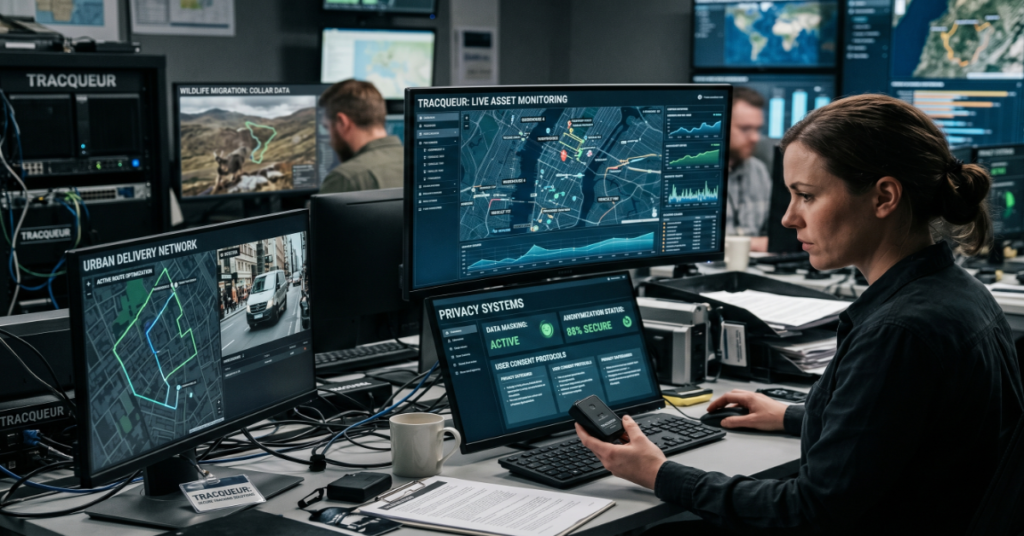
The term tracqueur is commonly used to describe a wide range of tracking systems that monitor movement, behavior or digital activity. In practical terms, it covers technologies used in web analytics, vehicle location tracking and even field tracking in hunting or logistics environments. While the word originates from French, its usage has expanded globally as tracking systems become embedded in everyday digital infrastructure.
In digital environments, tracqueur systems refer to scripts or tools that observe user behavior across websites, recording actions such as clicks, browsing time and navigation paths. In physical systems, the term is associated with GPS-based recovery devices and fleet monitoring tools used to locate vehicles or assets in real time. Companies like Traqueur SA, founded in France in 1997, have built hardware solutions that combine GPS, GSM and radio frequency technologies for asset recovery and security applications.
Understanding how a tracqueur operates is increasingly important because tracking is now deeply integrated into advertising ecosystems, logistics operations and security infrastructure. At the same time, privacy concerns and regulatory frameworks such as GDPR in Europe have reshaped how these systems are designed and deployed.
This article breaks down the technical structure, real-world applications, risks and future direction of tracqueur systems across digital and physical environments.
What Tracqueur Means in Modern Context
The concept of a tracqueur is not limited to one technology. It is a general category of tracking systems that observe, record and transmit information about behavior or location.
In digital environments, it refers to scripts embedded in websites that follow user activity. In physical systems, it refers to GPS or radio-based devices used for tracking assets or people. In ecological or hunting contexts, it describes individuals trained to follow animal movement patterns.
This broad usage makes tracqueur a hybrid concept spanning cybersecurity, logistics and environmental monitoring.
Web Tracking Systems and Behavioral Monitoring
A major category of tracqueur systems operates on the web. These systems are embedded in websites and applications to monitor user interactions.
Common mechanisms include cookies, local storage and device fingerprinting. These tools collect data such as browsing history, time spent on pages and click patterns. The collected information is often transmitted to analytics platforms or advertising networks for segmentation and targeting.
Modern tracking systems go beyond cookies. Fingerprinting techniques analyze browser configuration, screen resolution and system fonts to uniquely identify users without storing data locally.
Comparison of Web Tracking Methods
| Tracking Method | Data Collected | Persistence | Detection Difficulty |
| Cookies | Session behavior, login state | Medium | Low |
| Local Storage | Preferences, session data | High | Medium |
| Fingerprinting | Device and browser traits | High | High |
These systems collectively form a tracqueur layer embedded across most digital platforms.
Vehicle Tracking and Traqueur SA Systems
Another major application of tracqueur technology is vehicle and asset tracking. This is particularly relevant in fleet management and theft recovery.
Traqueur SA is a French company founded in 1997 specializing in vehicle recovery systems. Their solutions combine GPS, GSM and radio frequency technologies to locate stolen vehicles even in environments where GPS signals are weak or blocked.
Devices such as Traqueur Nano are designed for long-term deployment in cars, motorcycles and equipment. They operate on low power consumption while maintaining periodic location updates.
Unlike web tracking, these systems are physically embedded and rely on satellite positioning and cellular networks.
Key Technologies Behind Tracqueur Systems
Tracqueur systems depend on multiple technologies working together. These include satellite navigation, mobile networks and data analytics engines.
PV=nRTPV = nRTPV=nRT
PPP
VVV
nnn
TTT
Core technology comparison
| Technology | Function | Use in Tracqueur Systems | Key Limitation |
| GPS | Satellite positioning | Vehicle and asset tracking | Signal loss indoors |
| GSM | Mobile data transmission | Sending location updates | Network dependency |
| Cookies | Session tracking | Web behavior tracking | User deletion possible |
| Fingerprinting | Device identification | Cross-site tracking | Legal restrictions |
Each of these technologies contributes to a layered tracqueur ecosystem that spans both digital and physical environments.
Risks, Privacy and Regulatory Pressure
The expansion of tracqueur systems has raised significant privacy concerns. Web tracking, in particular, has become heavily regulated under frameworks such as the General Data Protection Regulation (GDPR) in the European Union.
Users are often tracked without explicit awareness, especially through third-party cookies and embedded scripts. This has led to increased adoption of browser-level protections and tracking blockers.
In vehicle tracking systems, risks are more operational. Unauthorized access to GPS data can expose movement patterns, raising concerns for both individuals and organizations.
The balance between utility and privacy remains a central tension in the evolution of tracqueur technologies.
Strategic Implications Across Industries
Tracqueur systems are no longer limited to niche applications. They are central to advertising, logistics, insurance and security industries.
For advertisers, behavioral tracking enables precise targeting and performance optimization. For logistics companies, GPS tracking improves fleet efficiency and asset utilization. For law enforcement and recovery services, tracking devices provide critical location data during theft recovery operations.
However, increased dependency on tracking systems also introduces systemic vulnerabilities. Data breaches, spoofing attacks and regulatory non-compliance can significantly impact operational reliability.
Market and Cultural Impact
The normalization of tracqueur systems has reshaped digital culture. Users now routinely interact with platforms that monitor behavior in real time. This has influenced expectations around personalization, convenience and privacy.
At the same time, public awareness of tracking practices has increased. This has led to demand for privacy-focused browsers, encrypted communication tools and ad-blocking technologies.
In physical tracking markets, demand continues to grow in fleet management, insurance and logistics sectors, where real-time visibility is considered essential.
The Future of Tracqueur in 2027
By 2027, tracqueur systems are expected to become more decentralized and privacy-aware. Regulatory pressure will likely reduce reliance on third-party cookies, pushing companies toward first-party data ecosystems.
In vehicle tracking, integration with AI-based predictive analytics may allow systems to anticipate theft patterns or maintenance needs rather than simply reporting location.
However, constraints such as energy efficiency, signal reliability and legal compliance will continue to shape system design. The evolution will likely favor hybrid models that combine edge computing with secure cloud infrastructure.
Key Takeaways
- Tracqueur systems operate across digital and physical tracking environments
- Web tracking relies heavily on cookies and fingerprinting technologies
- Vehicle tracking systems like those from Traqueur SA use GPS and GSM for real-time positioning
- Privacy regulations are reshaping how tracking data is collected and processed
- Future systems will likely shift toward privacy-first and AI-assisted tracking models
Conclusion
Tracqueur systems sit at the intersection of technology, privacy and real-world utility. Whether embedded in websites or installed in vehicles, they provide continuous streams of behavioral or positional data that power modern digital and logistical ecosystems. Their value is undeniable in fields such as security, advertising and fleet management, yet they also introduce ongoing debates around surveillance and consent.
As regulations tighten and user awareness grows, the design of tracqueur technologies will continue to evolve toward more transparent and privacy-conscious frameworks. The balance between operational efficiency and individual privacy will remain central to their development.
FAQ
What is a tracqueur in simple terms?
It refers to any system that tracks behavior or location, including web trackers, GPS devices and monitoring tools used in logistics or security.
How do web tracqueur systems work?
They use cookies, scripts and fingerprinting techniques to record browsing activity and send data to analytics or advertising servers.
Is Traqueur SA still active?
Yes, it operates in vehicle tracking and recovery systems using GPS and GSM-based technologies for real-time positioning.
Can tracqueur systems be blocked?
Web tracking can be partially blocked using browser settings, extensions and privacy-focused browsers, though some tracking methods are harder to detect.
What data do vehicle tracqueur devices collect?
They typically collect GPS location, movement history and sometimes diagnostic or status data depending on the device model.
Are tracqueur systems legal?
Yes, but their use is regulated in many regions. Laws like GDPR require transparency and user consent for data collection.
References
European Parliament. (2022). General Data Protection Regulation (GDPR) overview. https://www.europarl.europa.eu
World Wide Web Consortium. (2023). Privacy and tracking technologies on the web. https://www.w3.org
European Data Protection Board. (2023). Guidelines on consent and tracking technologies. https://edpb.europa.eu
National Institute of Standards and Technology. (2024). Security considerations in location tracking systems. https://www.nist.gov
Methodology
Information was compiled from regulatory publications, technical documentation on web tracking standards and publicly available descriptions of GPS-based tracking systems. Analysis focused on synthesizing how tracqueur systems operate across digital and physical environments.
Limitations include the absence of proprietary technical specifications from Traqueur SA devices and variability in tracking implementations across vendors. Where direct operational data was unavailable, only publicly documented behavior and industry standards were used.